Showing posts with label indoor air pollution. Show all posts

Thursday, October 3, 2024

Press Release: AGH launches Firewood Community Safety Initiative to support high wood heating communities


Photo of Firewood from Dine Baadeiti Wood Bank in Moenkopi, AZ
Firewood from Dine Baadeiti
Wood Bank in Moenkopi, AZ

Oct. 3, 2024 - Today the Alliance for Green Heat announced the Firewood Community Safety Initiative, to help communities address wood heating safety issues. The initiative is funded by a three year grant from USDA’s Wood Education Research Center.


“Wood heating, when done well,  is an important renewable energy”, said John Ackerly, President of the Alliance for Green Heat. “This new initiative will provide safe wood heating resources and strategies suitable for wood burning communities”


According to the Rural Energy Consumption Survey approximately 10-13 million U.S. households use wood heat. Wood stoves have long been at the forefront of reducing fossil fuels in rural, lower-income homes.  Unfortunately, many households use old, inefficient and poorly maintained wood stoves that leak smoke inside and outside of the home.


The Firewood Community Safety Initiative is aimed at any firewood bank or high wood-burning town.  Those who participate will receive technical assistance from AGH staff to improve the safety of low-income homes who heat with wood.  A free toolkit, including smoke detector, indoor air sensor, educational resources and other items, is available for towns and firewood banks who sign up for the initiative.


The Alliance is working with Hopi tribal members that lead Pikyanivi Warmth for Hopi and Tewa firewood bank to put air quality monitors in classrooms to educate students about indoor air PM2.5 concentrations. After taking readings at school, each student will take the monitor home for a few days and take readings in the room with their wood stove or heating appliance and see the difference. Almost all homes on the Hopi reservation rely on wood or coal and they hope to identify dangerous stoves and find funding to replace them.


Sixteen other firewood banks have signed up for the Initiative, and some will engage in indoor air quality testing like the Hopi, and others will focus on other strategies. The initiative is part of a larger program that provides small grants to firewood banks to help them serve low income homes who can’t afford to heat their homes.  To date, the Alliance for Green heat has provided over 100 grants to tribes, churches, towns, non-profits and volunteer groups that run firewood banks.


Also part of this initiative is educational activities like webinars and the first one is "Common Problems and Solutions to Self-Installed Wood Stoves" On Oct. 17, from 1:00 - 2:30 EST. 


The Firewood Community Safety Initiative is made possible by a grant from the Wood Education Center at the USDA Forest Service.


For more information contact Hannah Stinson at Hannah@forgreenheat.org. To sign up your firewood bank or community, please fill out the form here.

Photo of Firewood from Ancestral Lands Conservation Corp in Kykotsmovi Village, AZ
Ancestral Lands Conservation Corp in Kykotsmovi Village, AZ

The Alliance for Green Heat promotes modern wood and pellet heating systems as a low-carbon, sustainable and affordable energy solution. The Alliance works to advance renewable residential heating technology, particularly for low and middle-income families. Founded in 2009, the Alliance is an independent non-profit organization headquartered in Maryland with staff in Arkansas, Wisconsin and Wyoming. www.forgreenheat.org


Friday, June 28, 2024

Survey: Pellet stove owners love their stoves – and are also interested in heat pumps and solar panels

 Pellet stove adoption is growing and reached 25% of market compared to wood stoves in New England 

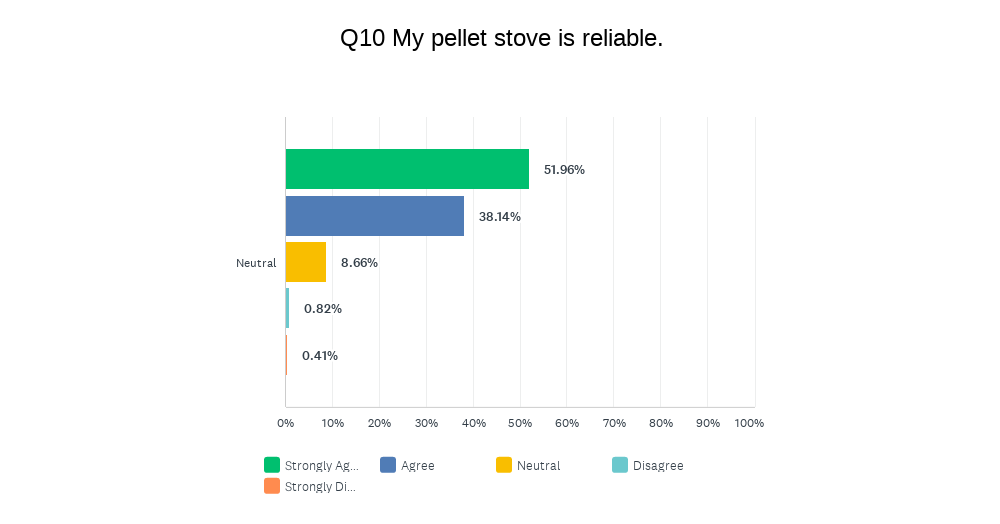
A survey taken by 486 people who use pellet stoves revealed some predictable and some unpredictable results. For instance, an overwhelming majority of pellet stove owners, 85%, said they would buy another pellet stove if theirs broke and 90% say their stove is reliable or very reliable, challenging a perception that pellet stoves are not very dependable. 


Pellet stoves are cleaner and more efficient than wood stoves and make up 25% of the stove market in New England, and 10% nationally, according to the US Energy Information Administration (EIA), Table CE7.1.  Until recently, likely around 5 years ago, American homes still made more renewable energy from wood and pellets than they did from residential solar photovoltaics, which have since surged past wood and pellet heat. 


The survey was undertaken between April and June of 2024 by the Alliance for Green Heat, an independent non-profit. AGH chose the Survey Monkey platform and circulated it through scores of social media pages, newsletters and neighborhood listservs. Thus, the survey is not rigorously scientific and likely over-represents pellet stove enthusiasts. Keeping that in mind, the data offers a glimpse into an important demographic of pellet stove users. By segmenting the data, we were also able to compare the views and values and pellet stove users based on income, region, motivation to buy a pellet stove and other characteristics. 


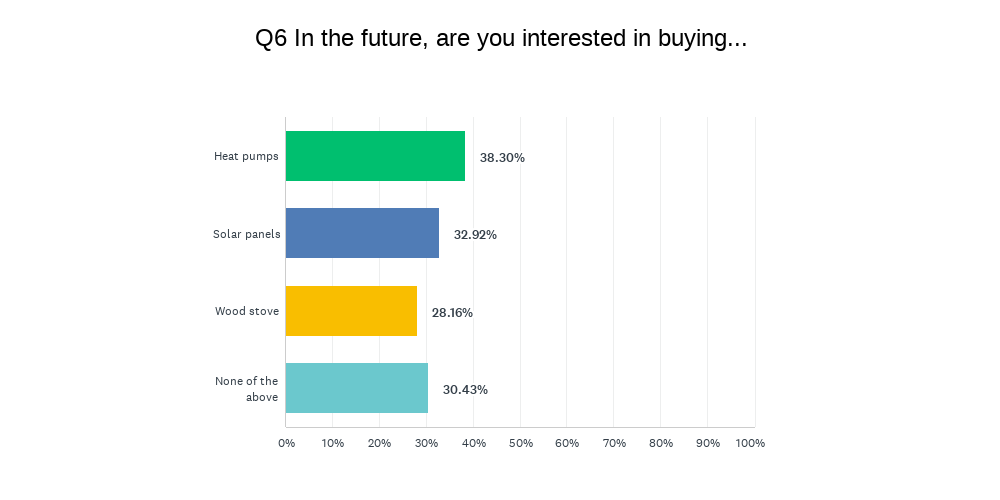
Of this group, 61% of the 486 respondents used their stoves for primary heat and in the future 38% were interested in buying heat pumps and 33% were interested in buying solar panels. Unlike households adopting solar panels, the primary reason homes adopt pellet stoves is for the substantial short term cost saving.  In the survey, all income groups except one listed “saving money” as the most common reason to heat with pellets.


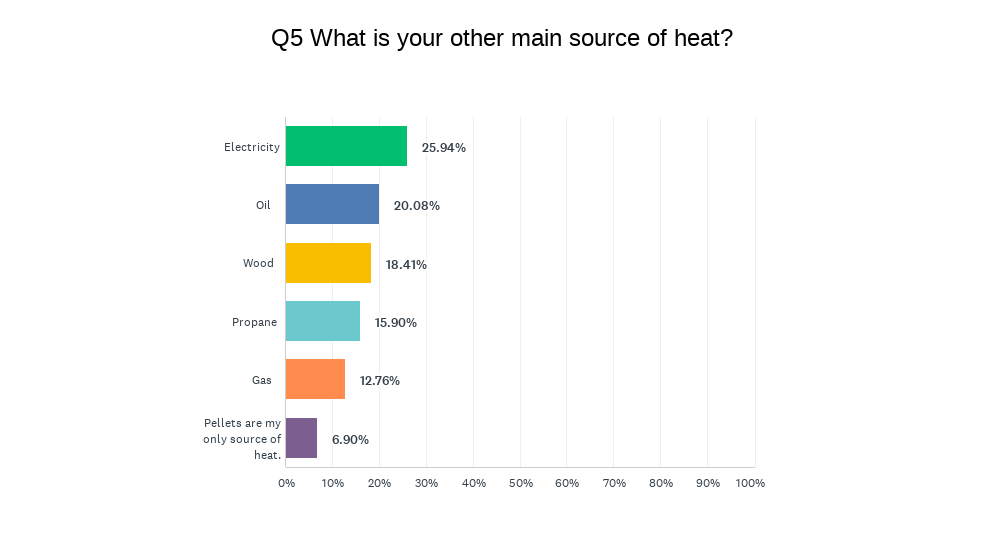
Twenty-six percent of households with pellet stoves displaced electric heat (both resistance and heat pumps) 20% displaced oil, and 18% displaced wood, 16% displaced propane and 13% displaced gas. This along with several other questions showed a high crossover with wood and pellet stoves, as many households that used to heat with wood have moved to pellet heat. In some cases, the reverse also happens with homes moving from pellets to wood fuel. 


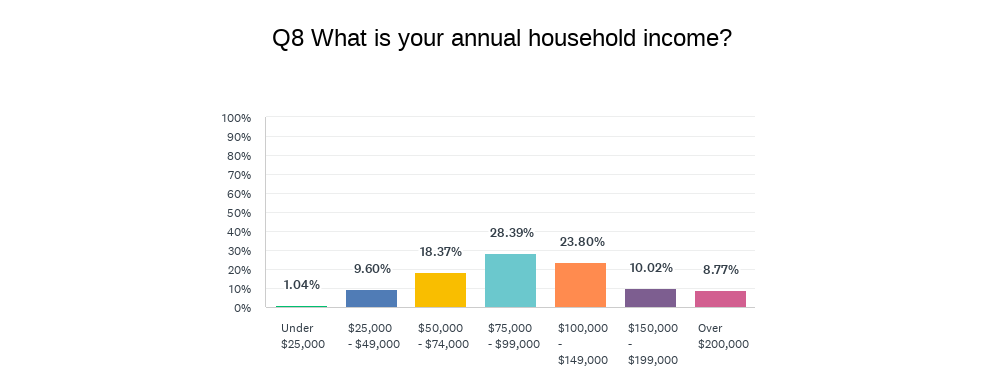
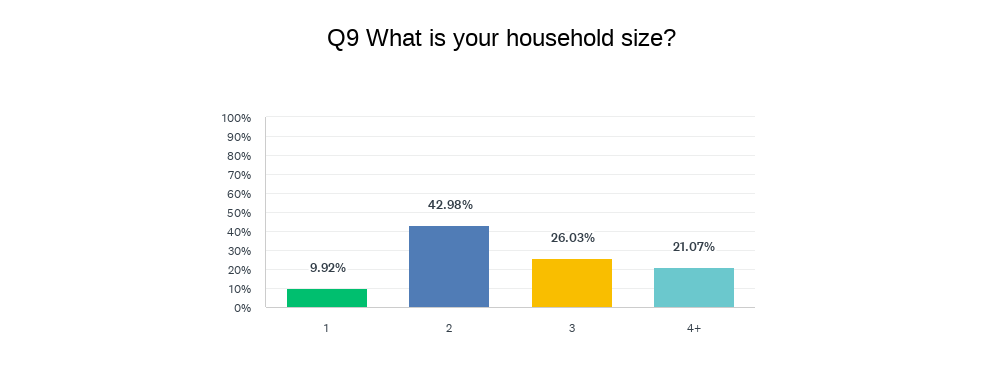
The median annual household income group was $75,000-$99,000, higher than than the national median ($74,580), and significantly lower than the median average income of homes with solar panels ($117,000 in 2022). The number of people per household was close to the national average with an average of 2.58. The national average is 2.51.


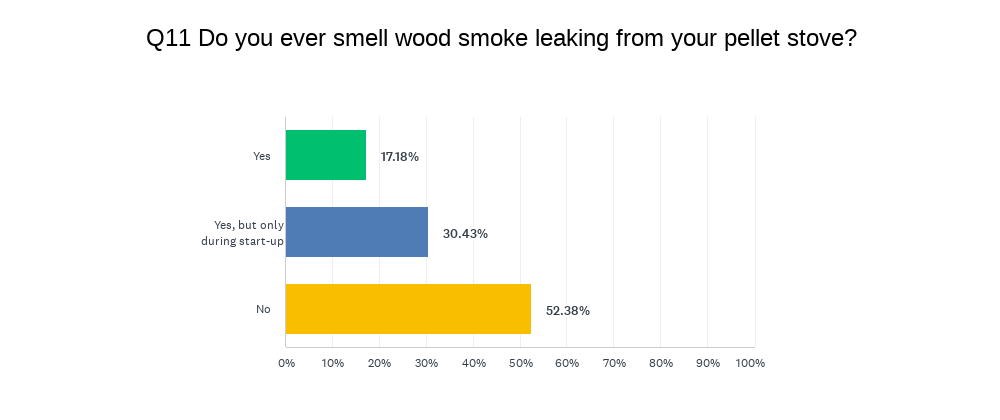
The survey also asked if pellet stove owners smelled smoke from their stoves and 17 % said they did, and 52% said they didn’t. In between those groups, 30% said they only smelled it during start-up which in most homes is no more than once a day. 


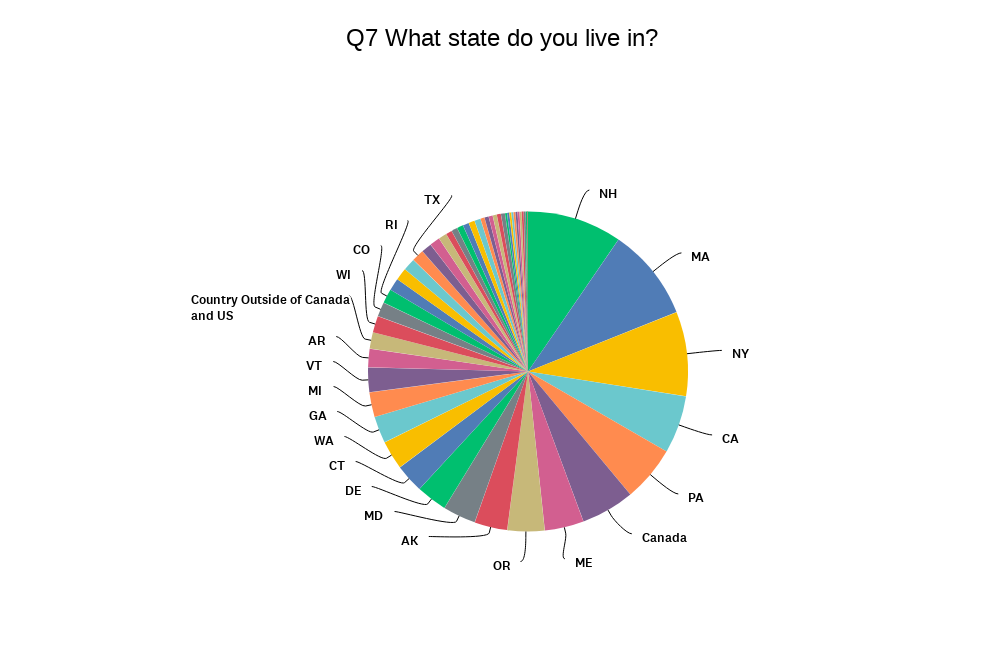
Survey respondents were from across the county, with respondents from every state except five, mostly in the deep south. The top 5 states were New Hampshire (10% of responses), Massachusetts (9%) and New York (9%), California (6%) and Pennsylvania (6%). Canada and countries outside of Canada and the US had 7% of responses. 


Scores of state and national studies show that small scale wood and pellet heat is enormously important to the transition away from fossil fuels both here and throughout Europe, in part because it does not strain the grid in the winter, and complements available renewable electricity.


Pellet heating has grown considerably in America, but public education lags, and there remains a lot of confusion about the export of pellets to make electricity versus the use of pellets for domestic heating.  The US Energy Information Administration publishes vital data about pellet production in America that can help clear up some of this confusion. 


Data from Each Question

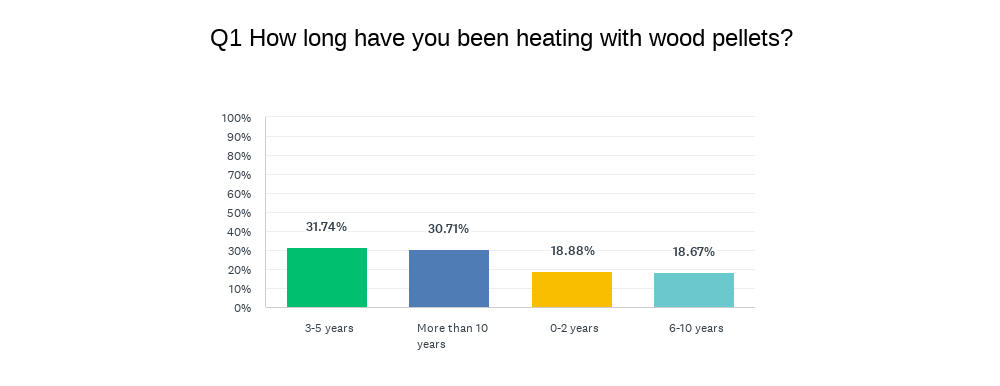
Q1. How long have you been heating with pellets? The responses show a range of households who are just starting to use a wood stove, to those who have used them for a long time. That indicates that there is continued interest by new people in starting to use pellet stoves.

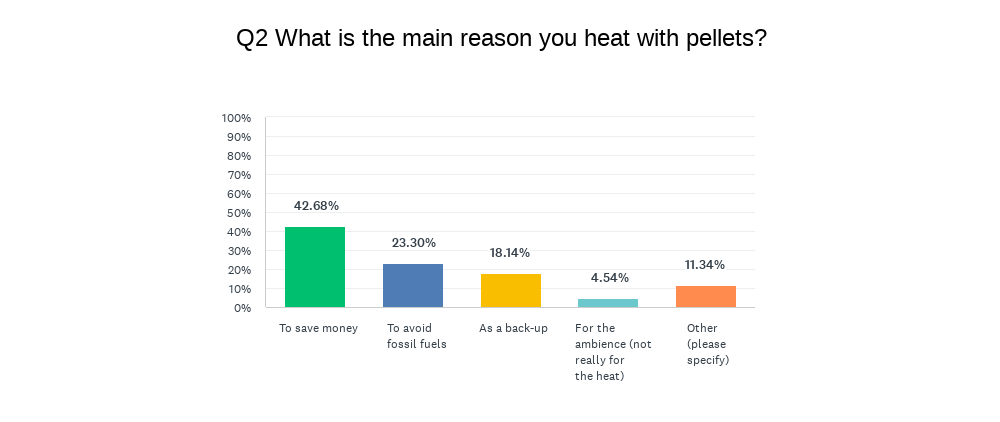
Q2. What is the main reason you heat with pellets? Respondents were only allowed to pick one answer. Predictably, “saving money” was the leading reason, with 43% choosing this as their main motivation. But the surprising aspect is that so many people chose avoidance of fossil fuel as their main motivation (23%). The 18% choosing “as a back-up” could either be a regular or periodica back-up to another heating system or an emergency back-up if their other heating system broke down. Or, it could be people who have battery back-ups or generators so they can use a pellet stove during a power outage.

The three most common “Other (please specify)” comments were related to the following categories:

  1. The ease of use and consistency of pellet heat over log wood heat with comments such as, “Switched from firewood. Easier to deal with,” “Wood-fired heat, but more controllable than a wood stove,” and “Too old for firewood.”

  2. It’s popularity in supplementing other heat or areas of home with comments like, “Heat compensation, my furnace doesn’t keep up with a big drafty house,” and “Supplement heat for my basement.”

  3. Those heating with pellets because they are associated with the industry (pellet stove dealers, engineers, etc.)


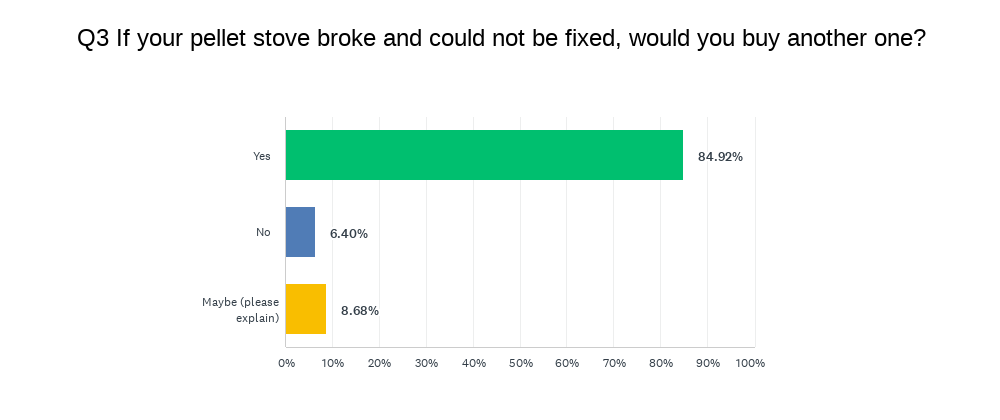
Q3. Would you buy another? This may be one of the most surprising results: 85% said they would buy another pellet stove if their current one could not be fixed, with another 9% choosing “Maybe.” This indicates a strong loyalty to the appliance. For those who selected “Maybe (please explain),” their answers were concerned with whether the price of pellets remained reasonable and if their health still allowed them to deal with the physicality of pellets. Another popular reason for explaining further was that they were confident they could fix their pellet stove if it ever stopped working: “I’d probably just fix it because they’re easy to repair.” 
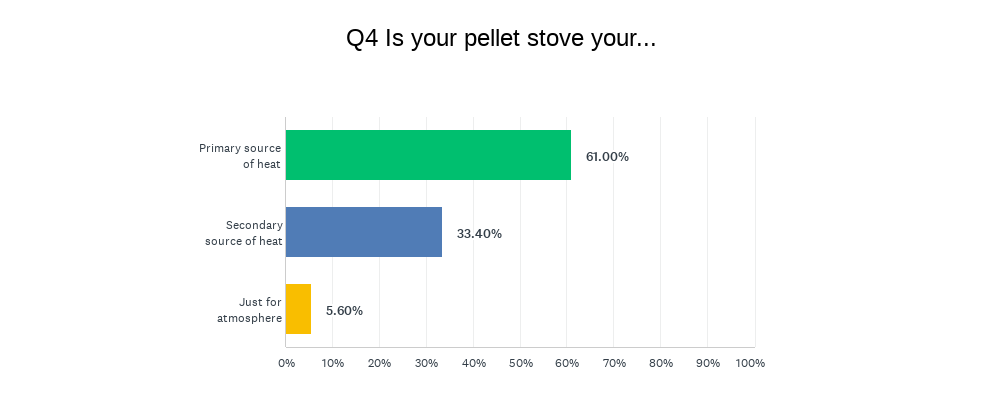
Q4. Primary or Secondary Heat? That 61%so many respondents use their pellet stove as a primary heater is somewhat surprising, since nationally, the number of people who use wood or pellet as a secondary heat source is higher than primary heat source. This may be because we tapped into a more enthusiastic demographic, or it may be an indication that pellet stove users use their stove for primary heating more than wood stove users. We also didn’t ask about house size, though we did ask about the number of people in the household, which averaged only 2.58. Thus, it may be that people who completed this survey have smaller homes, possibly close to the national median of 2,299 square feet for a single family home.
Q5. Other Main Source of Heat? Nothing surprising here. Electricity is the highest percentage with 26%, and many of those are likely homes with electric resistance heat or early model heat pumps which are not nearly as efficient as modern ones. It may come as a bit of a surprise to some that 18% of pellet stove users have cord wood as their other main source of heat. Cord wood is the third most common “other main source of heat” after electricity and oil, another indication that we may have reached a more hardcore, dedicated biomass heat demographic.
Q6. Interest in Heat Pumps or Solar Panels. Respondents could choose multiple answers on this one. On average, a respondent chose 1.3 options. We found it somewhat surprising to see such high interest in heat pumps and solar panels.
Q7.State of residence. No surprises here. The fact that we had such a good demographic diversity shows that our data doesn’t just represent one part of the country. 
Q8. Household income. According to the US Census, the median household income was $74,580 and the average was $74,755 in 2022. Both fall right below the median income bracket of the respondents of our survey ($75,000 - $99,000). This shows a lower household income for this group compared to homes that have solar panels, or drive electric cars.

Q9.Household size. The average household size is 2.58, slightly larger than the national average of 2.51.
Q10. Is your stove reliable? The number of households who strongly agreed or agreed that their pellet stove is reliable is remarkably high (90.1%). 
Q11. Do you smell wood smoke? While a majority did not smell any smoke in their house, 30% smelled some on start-up. And the fact that 17% of this group say they smell it more regularly is significant enough to warrant further study into this problem. AGH has done some at-home testing and found start-up smoke to produce about the same amount of PM as making breakfasts or dinners that involve frying, using a griddle or making well-done toast. While this was not an in-depth study, AGH believes that the very small amount of smoke during start up could be partially caused by stoves not being sufficiently cleaned, or it may be a design flaw in some stoves that are not completely airtight and can leak.
Q12. Concern about health impacts of wood smoke. This question was not worked as well as it could have been, because it could be interpreted two ways: first, are you concerned about the health effects of wood smoke generally, or are you concerned about the health effect of wood smoke from your own pellet stove. Thus, someone could be extremely concerned about the health implications but answered that they weren’t concerned because they didn’t smell it in their own home. 


All of these tables can also be viewed on the Survey Monkey platform.


Overlaying Responses from Two Different Questions


Survey Monkey allows you to take the individual answers of a question and see how those people answered another question, because all answers are attached to an IP address. Thus, we were able to see how different demographics answered different questions.


Income and main reason to heat with pellets
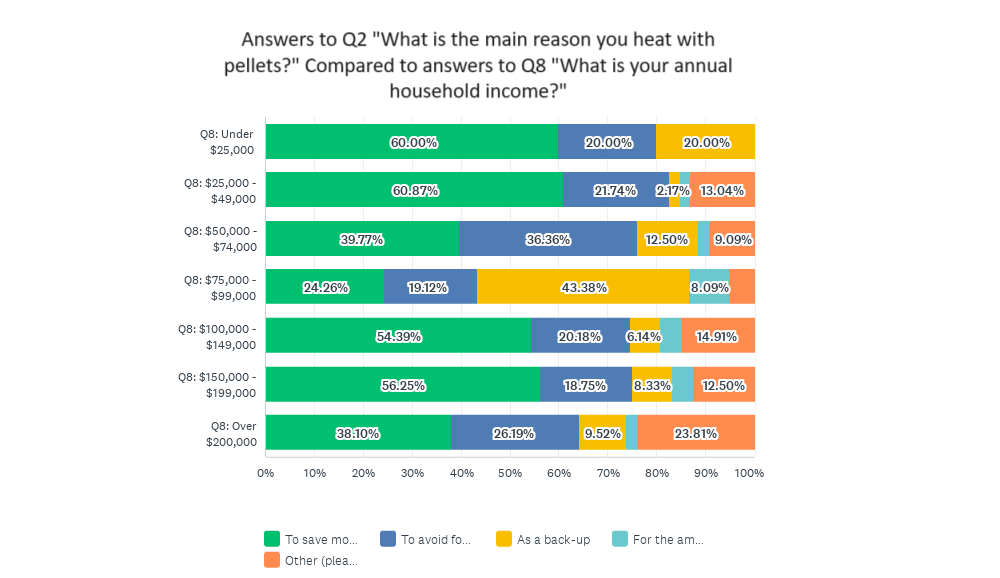

On Q2 overlaid with Q8, reasons for heating with pellets vs. income, saving money was the top rationale for all income categories exempt the middle, median income bracket. Lower income brackets favored saving money to some extent, and no one in the lowest bracket used their stove for ambience. As for being motivated to reduce fossil fuels, there is no clear pattern based on this sample of 486 people. 


Main reason to heat with pellets and interest in buying other appliances
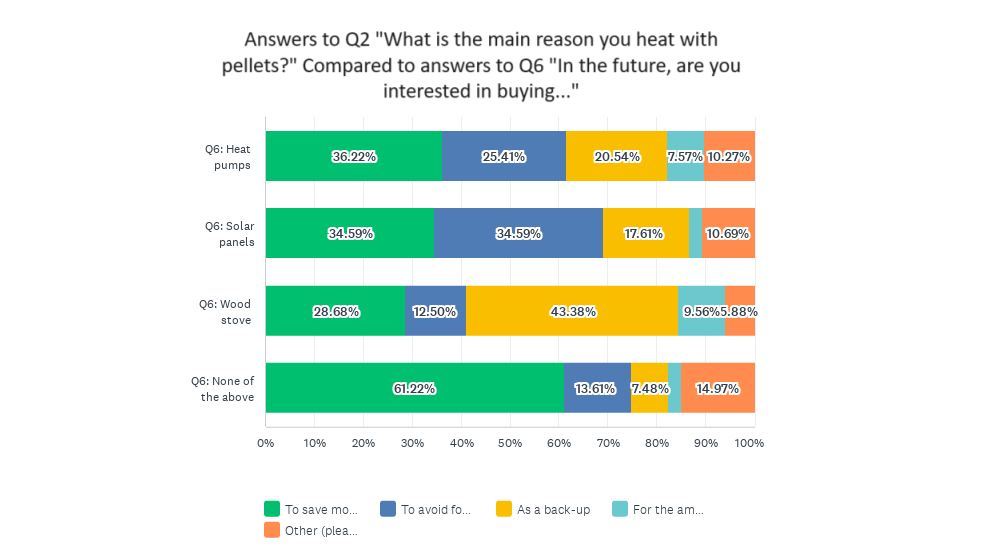


Comparing Q2 and Q6 unsurprisingly shows that people who heat with pellets who are more motivated to reduce fossil are the most likely to be interested in buying solar panels. And people who are more motivated to save money least interested in solar or heat pumps.


Reliability vs. interest in buying another pellet stove 
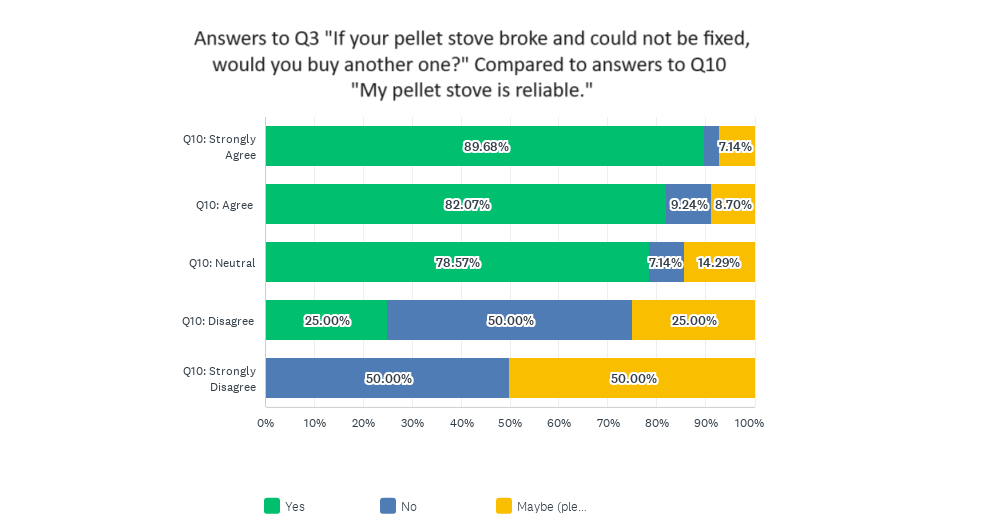


Unsurprisingly, overall those who agreed or strongly agreed that their pellet stove was reliable were most likely to want to buy another one if it broke down. Those who strongly agreed that their pellet stove was reliable were more than twice as likely to want to buy another. 


Reliability and length of ownership
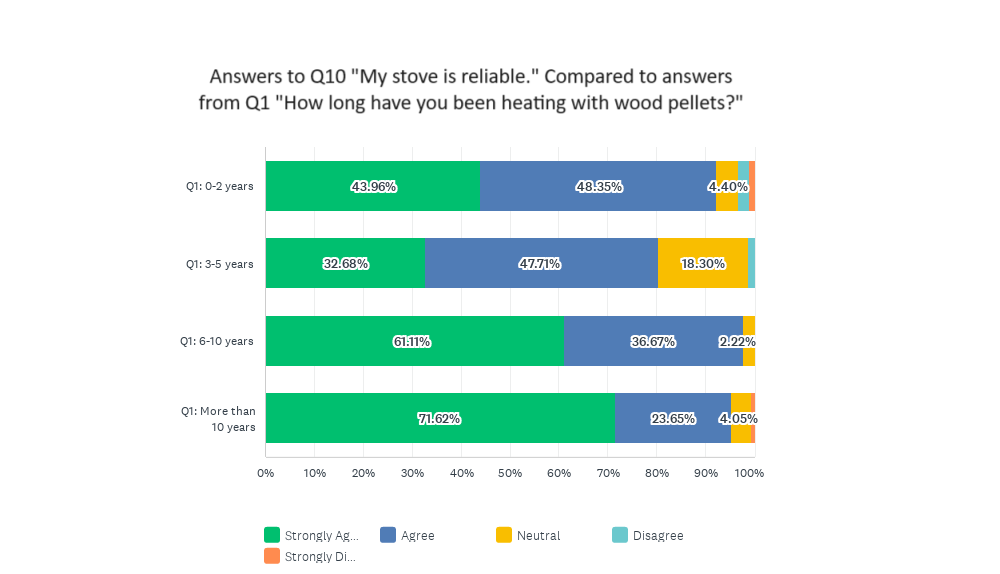

In this comparison, those who had their stove for longer than 10 years reported higher levels of satisfaction with reliability. And it was the group who owned stoves for 3 - 5 years who reported lower levels of satisfaction with reliability, possibly indicating that this is the period that repairs may be the highest.


Smelling smoke and length of ownership
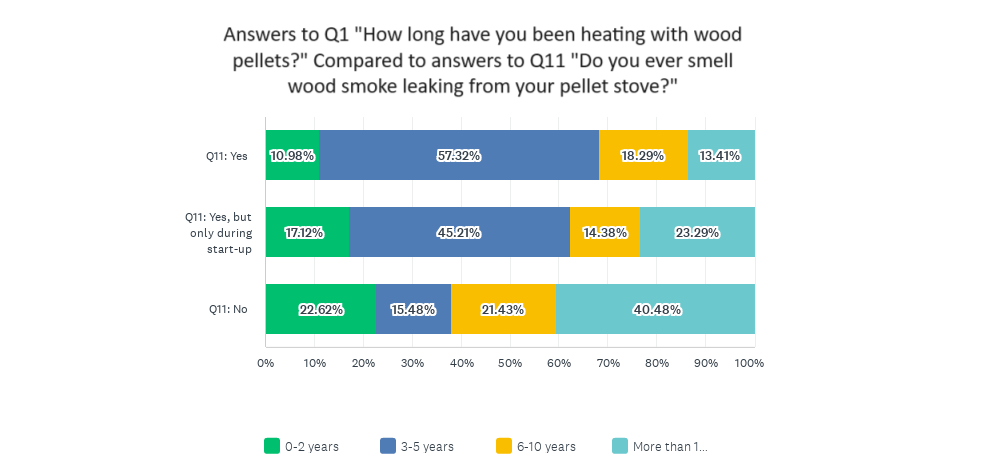

This indicates that the group who smells smoke the most is 3 - 5 year ownership and that the longer you own a stove the less smoke you report smelling. 


Overlap between smelling wood smoke and being concerned about it 
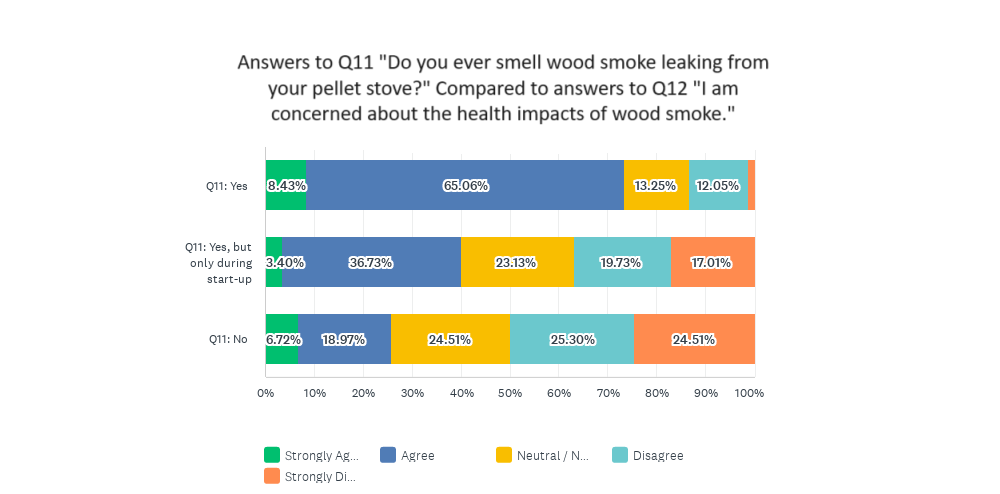

When comparing the answers of concern to those having reported that they were smelling smoke, a majority of those smelling smoke were also concerned about the impacts of wood smoke. Those who did not smell wood smoke from their stove were least likely to consider it a health issue. (Again, the ambiguous wording of Q12 makes this comparison less useful.)


Issues and Limitations of the Survey Data


AGH intentionally created a short and simple survey to increase respondent activity but this also naturally made it more susceptible to bot activity. In addition, we offered two $75 gift cards which likely increased bot activity even more. Survey Monkey also did not have an option to include a CAPTCHA at the end of the survey, which would have been a simple tool that could have stopped some bot activity. 


Where IP addresses were repeated, and where the states also differed, the data was excluded from the analysis. Out of the original 626 responses, 140 of these were excluded on that basis. Bot activity appeared to be especially prevalent from batches of respondents identifying as being from Guam that also consistently submitted the same answer, with only one variation, for each submission. The exclusion of these responses did not significantly alter the results of any of the answers. 


Tuesday, June 4, 2024

Wood stoves essential in transition to heat pumps, say tribal experts

Shaina Oliver is from the Northern
Navajo Nation and represented Mom's
Clean Air Force at the Conference. 
In a series of meetings at the annual National Tribal Forum on Air Quality , experts voiced a consistent message: as we install heat pumps in tribal homes, we should also keep wood stoves.

Nowhere are wood stoves as common as on many tribal reservations, who have long relied on both wood and coal for residential heating. Some homes are still being outfitted with coal stoves that can also burn wood, whereas wood stoves cannot safely burn coal.


There is a historic amount of money available to tribes and other underserved communities that can be used for residential home energy upgrades, and this funding was possibly the most common theme of the air quality conference, held on the land of the Eastern Band of Cherokee Indians near the Great Smoky Mountains National Park.

AGH was part of a panel workshop along with EPA’s Burn Wise, the Tribal Healthy Homes Network, Red Feather Development Group, and the Nez Perce Air Quality Program. Among the core topics were how change-out funds can best be used, how to reduce indoor wood smoke, improving firewood bank programs, switching from wood to electric heat pumps, etc. Some change out programs have been conducted, but the number of dangerously installed old stoves remains enormous. AGH now has funding for tribal firewood banks, which includes assistance in seasoning wood, and steps toward getting stoves inspected and repaired.

From left: John Ackerly, Joe Seidenberg,
Darian Dyer, Larry Brockman and
Danielle Johnson.
AGH's funding for firewood banks is helping tribal communities in the four corners area to transition away from coal heat. According to Shaina Oliver, an indigenous people's rights advocate and field organizer for Mom's Clean Air Force, a treaty forced on the Navajo Nation included a deal to mine coal on Navajo land, and tribal members were given free coal for heating, cooking - or selling. But when the mine closed, thousands of households struggled to heat their homes, even though coal can still be scavenged in some places. "We may not be able to control what we breath outdoors, but we can control the indoor air quality," said Shaina Oliver, which is why the National Tribal Air Association has pushed for replacements of wood stoves to newer ones that reduce indoor smoke.

The key problem with the conversion to heat pumps is mainly that they are expensive, and it could take decades for even a majority of tribal homes to have them. “Wood heating is vital for maintaining healthy homes in the Navajo and Hopi Nations and it is deeply ingrained in their cultures, representing healing, remembrance, and togetherness,” according to Joe Seidenberg, Executive Director of Red Feather Development Group that has been involved in many change-outs on the Hopi and Navajo reservations, and has one of the best wood heat education sites in the country.


An abnormally high percent of 
wood stoves on reservations are
dangerously installed.

“While the wave of electrification and heat pump technology will bring significant benefits to these communities, wood heating will never be completely replaced,” Mr. Seidenberg said. “The Colorado Plateau, rich in forested landscapes, provides ample wood resources, and using this wood helps preserve healthy ecosystems by preventing catastrophic wildfires through active thinning operations,” he continued.

The number of people who identify as Native Americans in the US, jumped from around 5 million in 2010 to more than 9 million in 2020, with about 78% living outside of reservations. The highest percentage of Native Americans in the U.S. are in Alaska, Oklahoma, New Mexico, South Dakota, Montana, and North Dakota.

Compared to other races or ethnic populations, American Indian and Alaskan Native populations (AI/AN) have the highest poverty rates (24.1%)—almost twice the national rate (12.8%). Poverty, combined with living in rural areas, is one of the biggest determinants of whether wood or coal will be your primary source of heat.

For many of the large western tribes, particularly in the southwest, outdoor ambient wood smoke issues were far less of a problem than indoor wood smoke issues. As a result, there appears to be a trend away from wood stove change outs, toward a far more cost-effective solution: indoor air purifiers. There is also the expectation that heat pumps will reduce the amount of time that wood stoves are used.
AGH's Pam Porter with the
Cherokee firewood bank
staff. 

Many speakers voiced concern about the ongoing cost of heat pumps for homes that had been relying on wood, which is often cheaper. But for the many tribal homes that have electric baseboard heating, or propane heat, heat pumps can lower monthly bills significantly, sometimes to a fraction of the cost.

There are a number of funding opportunities open to tribes and non-profits that could be used for wood stove changeouts, for larger firewood bank projects, and to deploy heat pumps. EPA’s Burn Wise team at the conference urged tribes to explore this funding, including the EPA’s The Environmental Justice Thriving Communities Grantmaking Program. Applicants typically apply in stages, starting with $150,000, and then going to $250,000 and finally $350,000. AGH could also partner with one of more firewood banks to apply for this funding.

Friday, October 29, 2021

How to inspect a wood stove: A visual guide for safety & performance

Updated October 2024

The Alliance for Green Heat developed a visual guide for inspecting wood stoves for the energy audit and weatherization community as those communities have lacked appropriate training in how to inspect stoves.  Safety inspections of wood stoves are supposed to be required for all stoves, whether they are primary or just occasional heaters for DOE funded programs, such as for low-income homes covered by WAP – the Weatherization Assistance Program.

Download visual guide here
This easy-to-use guide provides photos of the most common safety issues found in wood stoves that should be checked by energy auditors - as well as other energy and hearth professionals.  It can also be useful for homeowners.  Coming soon is a checklist that will indicate the status of each item and whether it needs repair.  The guide is broken down into what needs to be checked on the exterior of the stove, the interior of the stove, the exterior of the house - and many special circumstances.  Some items are in grey areas of what an energy auditor is responsible for checking - such as the storage and moisture of the firewood - and we encourage states and counties with high rates of wood stove installations to engage in a more expansive audit.

The problem is that there is little evidence to indicate that stoves are being inspected in a meaningful and consistent way within many WAP programs.  Most states use forms that provide many options to add detail about the inspection of a furnace, but little or none for wood stoves.  Some states list wood stoves as a heating appliance and a few states, like Idaho, ask if the stove is “operable, failing or inoperable.”  Furnaces on the other hand are turned on and have their flue gases tested, producing a written record on CO, PM, temperature efficiency and draft.  This provides useful, objective indicators of the health of the furnace or boiler.  There is no corollary data input options for wood stoves that would provide a written record showing the stove had received a meaningful or even minimal inspection.


In recent weeks, AGH did PowerPoint presentations to two important stakeholder groups: the DOE WAP Training Consortium and the National Residential Wood Smoke Workgroup.  Both of

Download PowerPoint here.

these presentations were very productive and led to substantive follow-up work with many of the attendees.  Kelly Cutchin who heads up the WAP Training Consortium has been particularly helpful as AGH navigates the bureaucracy that surrounds WAP standards, update, trainings, etc.  


But while this project has gained a lot of traction and improvements are happening, we are still far away from our goal: changing the standards that the DOE uses to approve state work specification documents that have minimal attention to wood stoves.  Most states are not living up to DOE requirements that all heating systems be inspected and repaired, as needed, or possibly replaced. One problem is that DOE regulations provide far more specificity about fossil fuel furnaces and boilers. For example, “WPN 19-4 Revised Energy Audit Attachments”, a key guidance document for the Weatherization Program, mentions boilers 19 times, furnaces 21 times, and wood stoves only 1 time. The result permeates the inspections and attention that each heater receives throughout the value chain. Thus, in the sections about repairing heating equipment, there is no guidance about how to repair a stove, while there is a long list of things relevant to boilers and furnaces. This continues year after year, despite the fact that there are more wood stoves than residential boilers in the United States (around 9 million homes are heated with oil, gas and propane boilers, while 10.1 million wood stoves provide primary or secondary heat nationwide). 


There are plausible explanations for why WAP materials often have far more detail about inspecting and repairing furnaces compared to wood stoves. First, wood stoves are more often than not, a secondary heater, where furnaces are almost always primary heaters. Second, wood stoves are very infrequent in urban areas and in southern states. And third, there could be an implicit bias against wood stoves by agency officials who view them as a relic of the past and underestimate their numbers, safety issues and their importance for the rural poor.


The integration of wood heaters more fully in the WAP program ultimately should include changes to state “Standard Work Specifications” (SWS) documents, which are updated every 5 years to assure they reflect industry-accepted practices. Significant updates in the area of combustion safety occurred in the last 5 years but it is unclear if wood stoves were included in any significant way.


Sometimes, WAP documents say little more than a stove should be replaced if it shows “structural failure.” Some states seem to interpret that as having a crack in the heat exchanger, which in the case of a wood stove means a crack in the body of the stove. Maine is more restrictive and says replacement is "allowed only when there is a crack in the heat exchanger than may cause a carbon monoxide problem or a fire danger."  Montana is unique and at the opposite extreme where non-EPA certified stoves are considered de facto "unsafe for program purposes." 


Changes in these DOE funded programs will also influence the way that states, utilities and private companies conduct energy audits.  When AGH polled its supporters who have had energy audits recently, a majority said their wood or pellet stove was completely ignored.  Considering so many wood stoves are self-installed, this oversight is ripe for change.


Many thanks to everyone who has been working with AGH on his project, and special thanks to the CSIA, EPA and the WAP Trainers Consortium.


For further reading:

Common Problems – and Solutions – for Self-Installed Wood Stoves, Oct. 2024

Identifying Barriers to Integrating Wood Stoves in WAP Energy Audits and Weatherization Programs, Oct. 2024

Wood stove inclusive energy audit standards still missing in America, Aug. 2021
BPI Energy Auditing Standards Open for Public Comment, Oct. 2013
Unsafe Wood Stoves Routinely Overlooked During Energy Audits, May 2012

Friday, January 25, 2013

EPA: More Children Have Asthma, but Severity Declines


EPA today released “America’s Children and the Environment, Third Edition,” a comprehensive compilation of information from a variety of sources on children’s health and the environment. The report shows trends for contaminants that may affect children and childhood illnesses and health conditions.

The press release for the report says:
In the case of asthma, researchers do not fully understand why children develop the condition. However, substantial evidence shows exposure to certain air pollutants, including particulate matter and ozone, can trigger symptoms in children who already have asthma. Although the report found the percentage of children reported to currently have asthma increased from 8.7 percent in 2001 to 9.4 percent in 2010 and that minority populations are particularly affected by asthma, the severity of children’s asthma and respiratory symptoms has declined. The rate of emergency room visits for asthma decreased from 114 visits per 10,000 children in 1996 to 103 visits per 10,000 children in 2008. Between 1996 and 2008, hospitalizations for asthma and for all other respiratory causes decreased from 90 hospitalizations per 10,000 children to 56 hospitalizations per 10,000 children.
The report makes only a few references to wood smoke, including this one:
PM and NO2, discussed previously as outdoor air pollutants, also pollute indoor air when they are emitted from gas stoves, gas or oil furnaces, fireplaces, wood stoves, and kerosene or gas space heaters. Indoor concentrations of these combustion byproducts can reach very high levels in developing countries where solid fuels are used extensively for cooking and home heating, but may also affect the respiratory health of children in developed countries, especially during the winter when use of fireplaces and space heaters is more common.
Visit http://www.epa.gov/ace/ to see the full report.