Showing posts with label heat pumps. Show all posts

Friday, June 28, 2024

Survey: Pellet stove owners love their stoves – and are also interested in heat pumps and solar panels

 Pellet stove adoption is growing and reached 25% of market compared to wood stoves in New England 

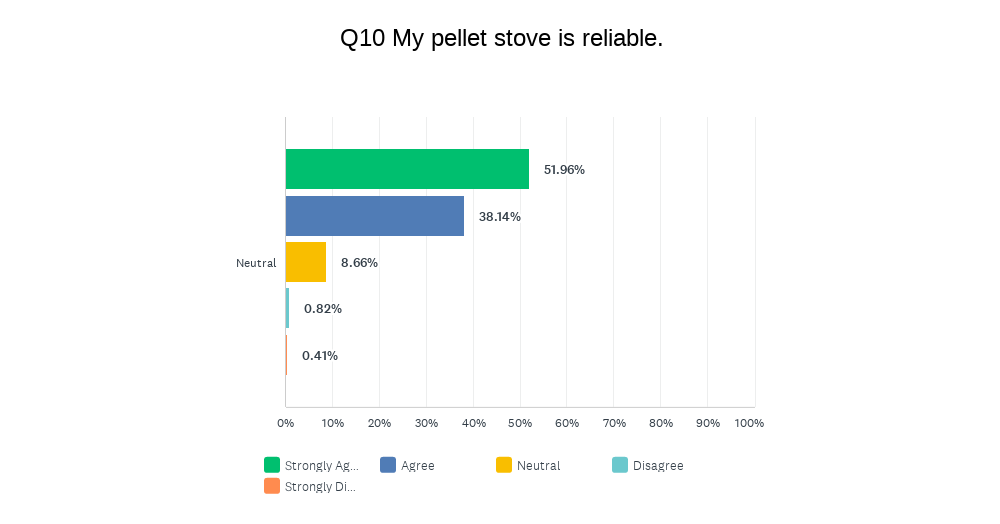
A survey taken by 486 people who use pellet stoves revealed some predictable and some unpredictable results. For instance, an overwhelming majority of pellet stove owners, 85%, said they would buy another pellet stove if theirs broke and 90% say their stove is reliable or very reliable, challenging a perception that pellet stoves are not very dependable. 


Pellet stoves are cleaner and more efficient than wood stoves and make up 25% of the stove market in New England, and 10% nationally, according to the US Energy Information Administration (EIA), Table CE7.1.  Until recently, likely around 5 years ago, American homes still made more renewable energy from wood and pellets than they did from residential solar photovoltaics, which have since surged past wood and pellet heat. 


The survey was undertaken between April and June of 2024 by the Alliance for Green Heat, an independent non-profit. AGH chose the Survey Monkey platform and circulated it through scores of social media pages, newsletters and neighborhood listservs. Thus, the survey is not rigorously scientific and likely over-represents pellet stove enthusiasts. Keeping that in mind, the data offers a glimpse into an important demographic of pellet stove users. By segmenting the data, we were also able to compare the views and values and pellet stove users based on income, region, motivation to buy a pellet stove and other characteristics. 


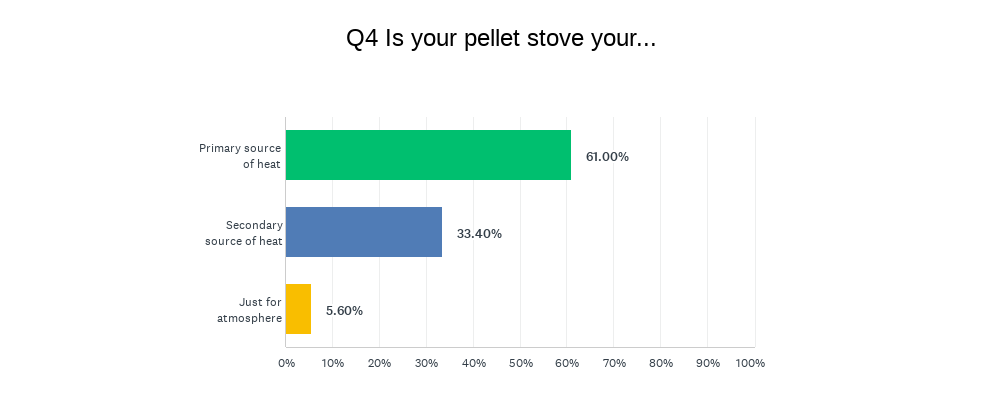
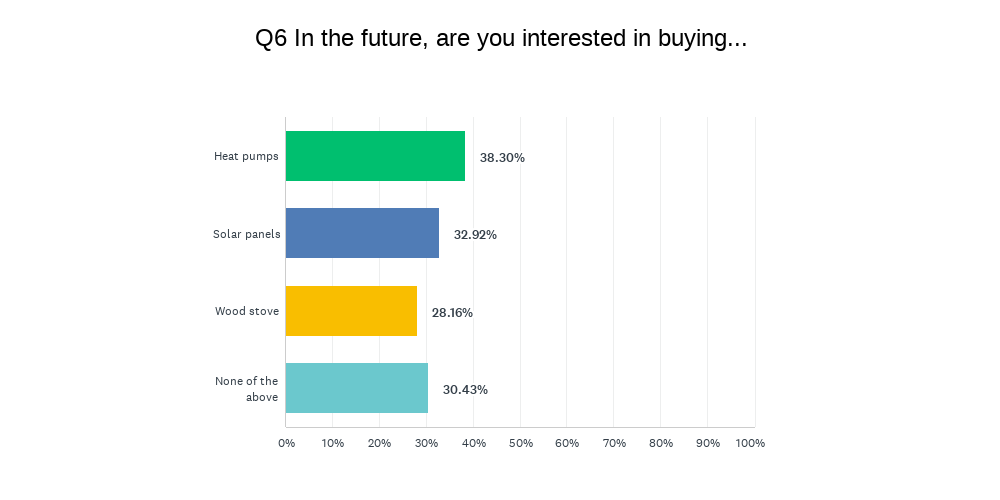
Of this group, 61% of the 486 respondents used their stoves for primary heat and in the future 38% were interested in buying heat pumps and 33% were interested in buying solar panels. Unlike households adopting solar panels, the primary reason homes adopt pellet stoves is for the substantial short term cost saving.  In the survey, all income groups except one listed “saving money” as the most common reason to heat with pellets.


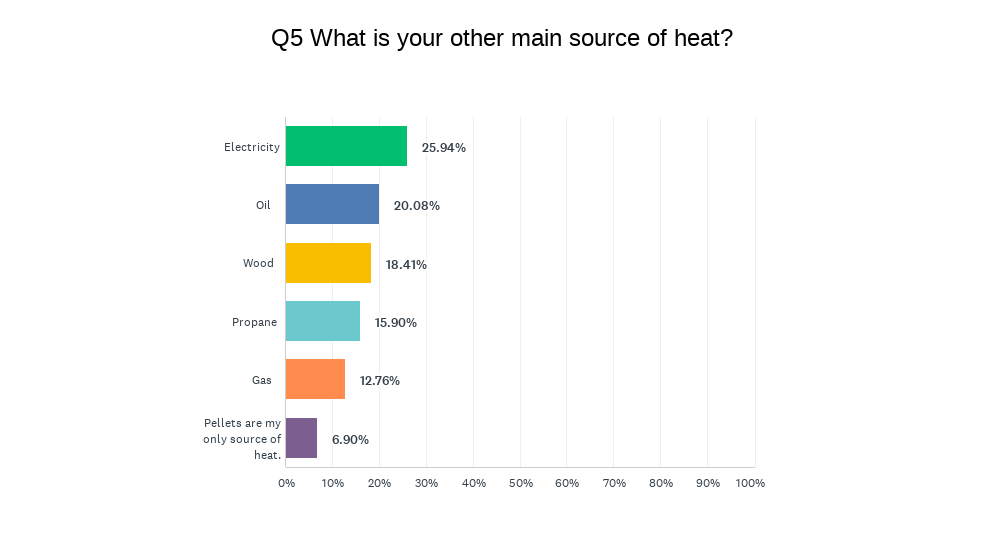
Twenty-six percent of households with pellet stoves displaced electric heat (both resistance and heat pumps) 20% displaced oil, and 18% displaced wood, 16% displaced propane and 13% displaced gas. This along with several other questions showed a high crossover with wood and pellet stoves, as many households that used to heat with wood have moved to pellet heat. In some cases, the reverse also happens with homes moving from pellets to wood fuel. 


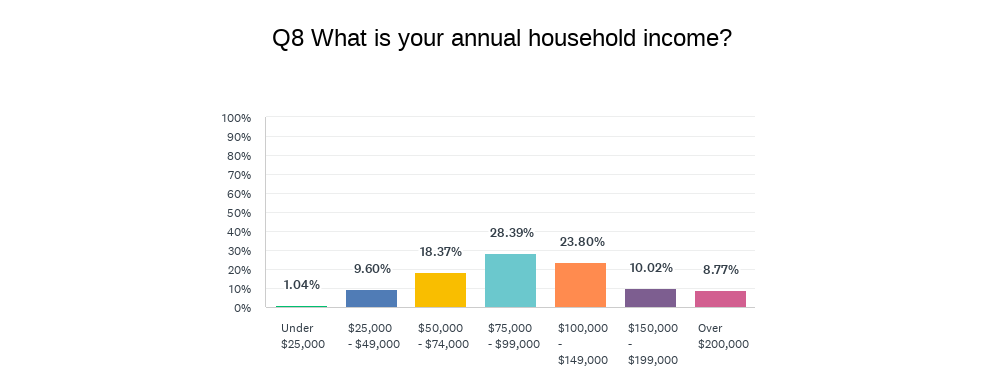
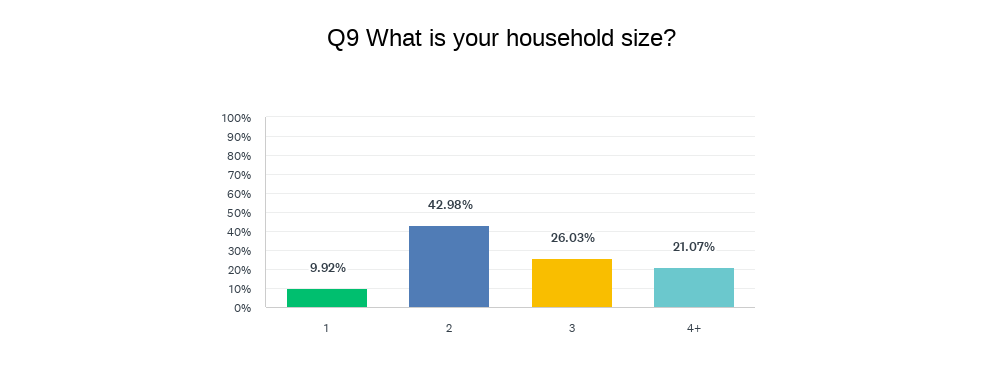
The median annual household income group was $75,000-$99,000, higher than than the national median ($74,580), and significantly lower than the median average income of homes with solar panels ($117,000 in 2022). The number of people per household was close to the national average with an average of 2.58. The national average is 2.51.


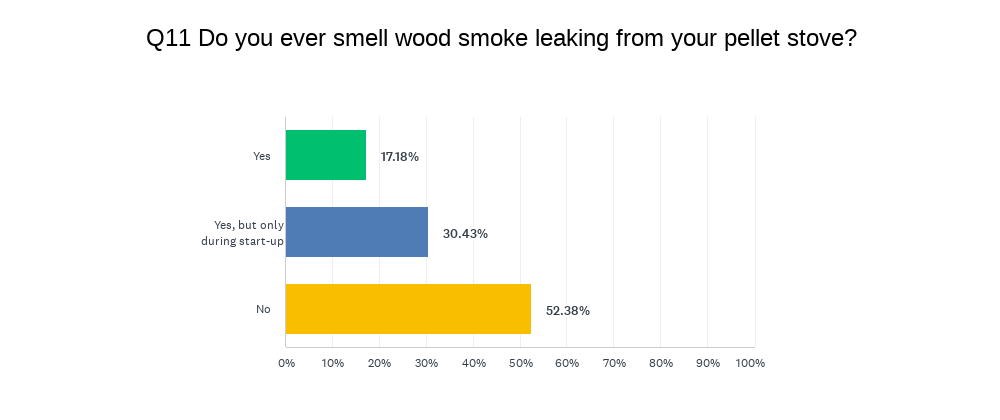
The survey also asked if pellet stove owners smelled smoke from their stoves and 17 % said they did, and 52% said they didn’t. In between those groups, 30% said they only smelled it during start-up which in most homes is no more than once a day. 


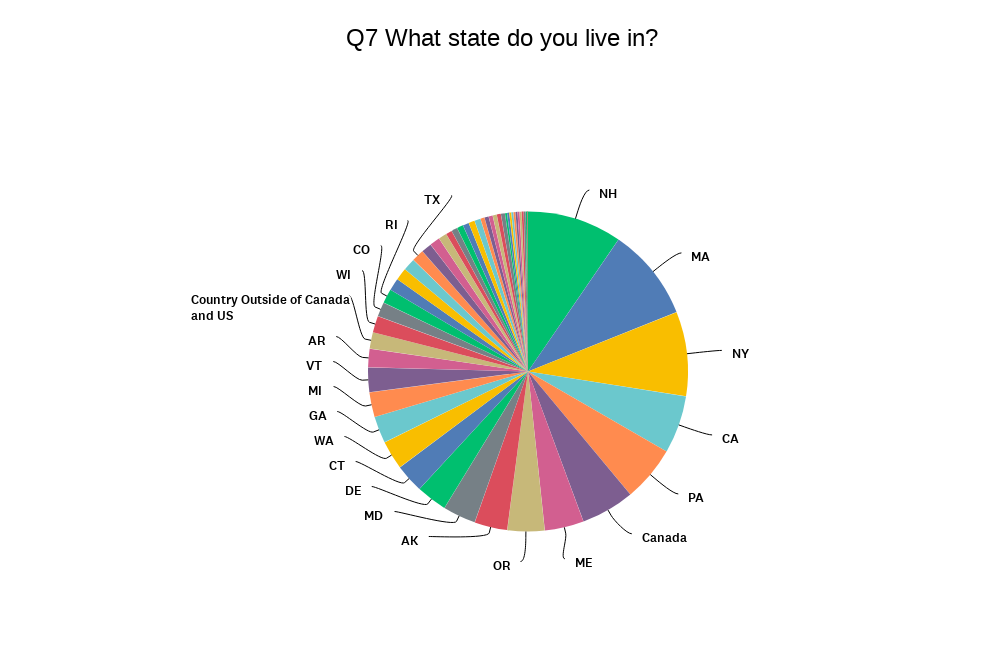
Survey respondents were from across the county, with respondents from every state except five, mostly in the deep south. The top 5 states were New Hampshire (10% of responses), Massachusetts (9%) and New York (9%), California (6%) and Pennsylvania (6%). Canada and countries outside of Canada and the US had 7% of responses. 


Scores of state and national studies show that small scale wood and pellet heat is enormously important to the transition away from fossil fuels both here and throughout Europe, in part because it does not strain the grid in the winter, and complements available renewable electricity.


Pellet heating has grown considerably in America, but public education lags, and there remains a lot of confusion about the export of pellets to make electricity versus the use of pellets for domestic heating.  The US Energy Information Administration publishes vital data about pellet production in America that can help clear up some of this confusion. 


Data from Each Question
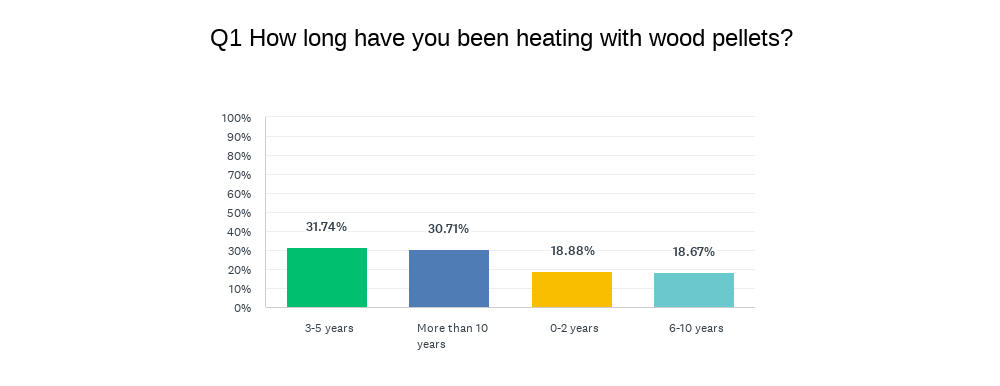
Q1. How long have you been heating with pellets? The responses show a range of households who are just starting to use a wood stove, to those who have used them for a long time. That indicates that there is continued interest by new people in starting to use pellet stoves.

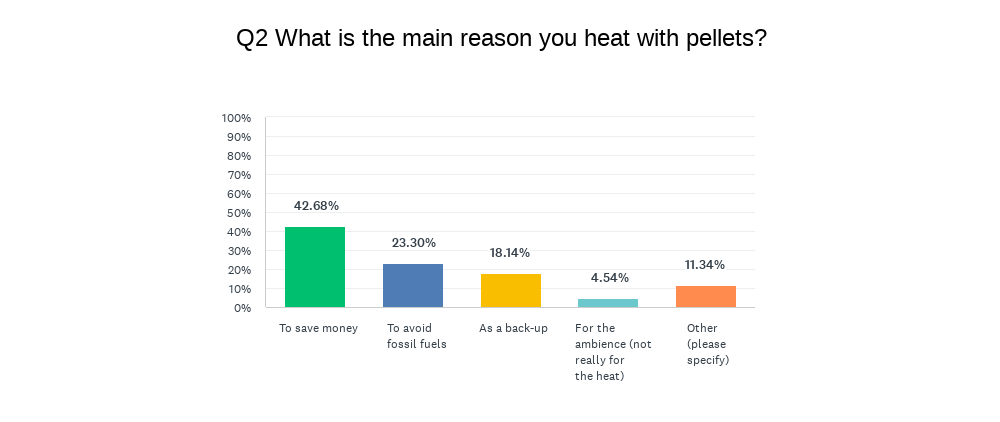
Q2. What is the main reason you heat with pellets? Respondents were only allowed to pick one answer. Predictably, “saving money” was the leading reason, with 43% choosing this as their main motivation. But the surprising aspect is that so many people chose avoidance of fossil fuel as their main motivation (23%). The 18% choosing “as a back-up” could either be a regular or periodica back-up to another heating system or an emergency back-up if their other heating system broke down. Or, it could be people who have battery back-ups or generators so they can use a pellet stove during a power outage.
The three most common “Other (please specify)” comments were related to the following categories:

  1. The ease of use and consistency of pellet heat over log wood heat with comments such as, “Switched from firewood. Easier to deal with,” “Wood-fired heat, but more controllable than a wood stove,” and “Too old for firewood.”

  2. It’s popularity in supplementing other heat or areas of home with comments like, “Heat compensation, my furnace doesn’t keep up with a big drafty house,” and “Supplement heat for my basement.”

  3. Those heating with pellets because they are associated with the industry (pellet stove dealers, engineers, etc.)


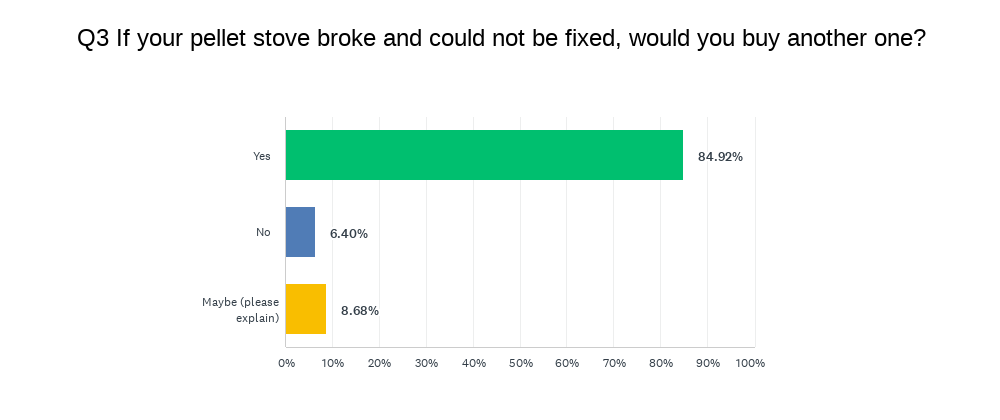
Q3. Would you buy another? This may be one of the most surprising results: 85% said they would buy another pellet stove if their current one could not be fixed, with another 9% choosing “Maybe.” This indicates a strong loyalty to the appliance. For those who selected “Maybe (please explain),” their answers were concerned with whether the price of pellets remained reasonable and if their health still allowed them to deal with the physicality of pellets. Another popular reason for explaining further was that they were confident they could fix their pellet stove if it ever stopped working: “I’d probably just fix it because they’re easy to repair.” 
Q4. Primary or Secondary Heat? That 61%so many respondents use their pellet stove as a primary heater is somewhat surprising, since nationally, the number of people who use wood or pellet as a secondary heat source is higher than primary heat source. This may be because we tapped into a more enthusiastic demographic, or it may be an indication that pellet stove users use their stove for primary heating more than wood stove users. We also didn’t ask about house size, though we did ask about the number of people in the household, which averaged only 2.58. Thus, it may be that people who completed this survey have smaller homes, possibly close to the national median of 2,299 square feet for a single family home.
Q5. Other Main Source of Heat? Nothing surprising here. Electricity is the highest percentage with 26%, and many of those are likely homes with electric resistance heat or early model heat pumps which are not nearly as efficient as modern ones. It may come as a bit of a surprise to some that 18% of pellet stove users have cord wood as their other main source of heat. Cord wood is the third most common “other main source of heat” after electricity and oil, another indication that we may have reached a more hardcore, dedicated biomass heat demographic.
Q6. Interest in Heat Pumps or Solar Panels. Respondents could choose multiple answers on this one. On average, a respondent chose 1.3 options. We found it somewhat surprising to see such high interest in heat pumps and solar panels.
Q7.State of residence. No surprises here. The fact that we had such a good demographic diversity shows that our data doesn’t just represent one part of the country. 
Q8. Household income. According to the US Census, the median household income was $74,580 and the average was $74,755 in 2022. Both fall right below the median income bracket of the respondents of our survey ($75,000 - $99,000). This shows a lower household income for this group compared to homes that have solar panels, or drive electric cars.

Q9.Household size. The average household size is 2.58, slightly larger than the national average of 2.51.
Q10. Is your stove reliable? The number of households who strongly agreed or agreed that their pellet stove is reliable is remarkably high (90.1%). 
Q11. Do you smell wood smoke? While a majority did not smell any smoke in their house, 30% smelled some on start-up. And the fact that 17% of this group say they smell it more regularly is significant enough to warrant further study into this problem. AGH has done some at-home testing and found start-up smoke to produce about the same amount of PM as making breakfasts or dinners that involve frying, using a griddle or making well-done toast. While this was not an in-depth study, AGH believes that the very small amount of smoke during start up could be partially caused by stoves not being sufficiently cleaned, or it may be a design flaw in some stoves that are not completely airtight and can leak.
Q12. Concern about health impacts of wood smoke. This question was not worked as well as it could have been, because it could be interpreted two ways: first, are you concerned about the health effects of wood smoke generally, or are you concerned about the health effect of wood smoke from your own pellet stove. Thus, someone could be extremely concerned about the health implications but answered that they weren’t concerned because they didn’t smell it in their own home. 


All of these tables can also be viewed on the Survey Monkey platform.


Overlaying Responses from Two Different Questions


Survey Monkey allows you to take the individual answers of a question and see how those people answered another question, because all answers are attached to an IP address. Thus, we were able to see how different demographics answered different questions.


Income and main reason to heat with pellets
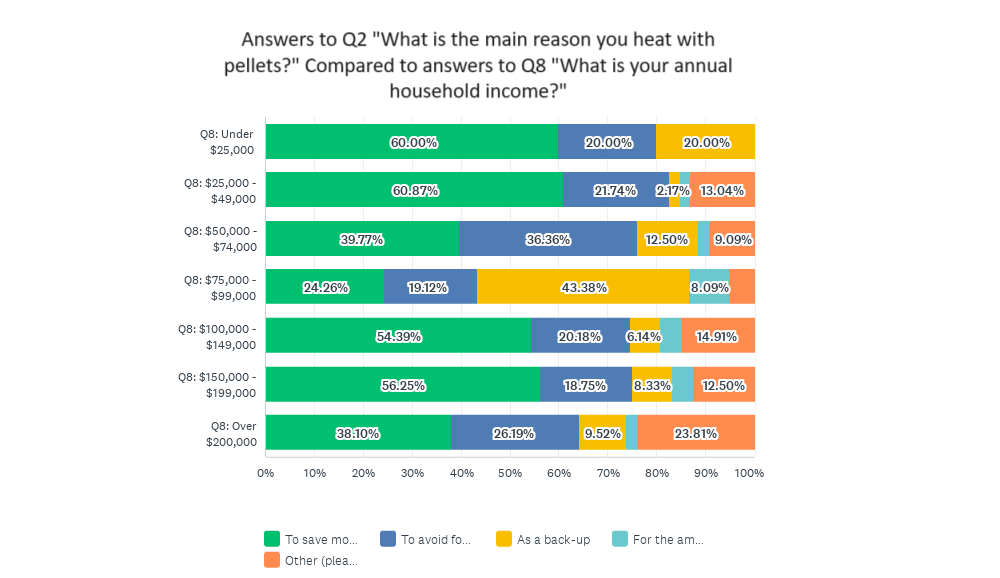

On Q2 overlaid with Q8, reasons for heating with pellets vs. income, saving money was the top rationale for all income categories exempt the middle, median income bracket. Lower income brackets favored saving money to some extent, and no one in the lowest bracket used their stove for ambience. As for being motivated to reduce fossil fuels, there is no clear pattern based on this sample of 486 people. 


Main reason to heat with pellets and interest in buying other appliances
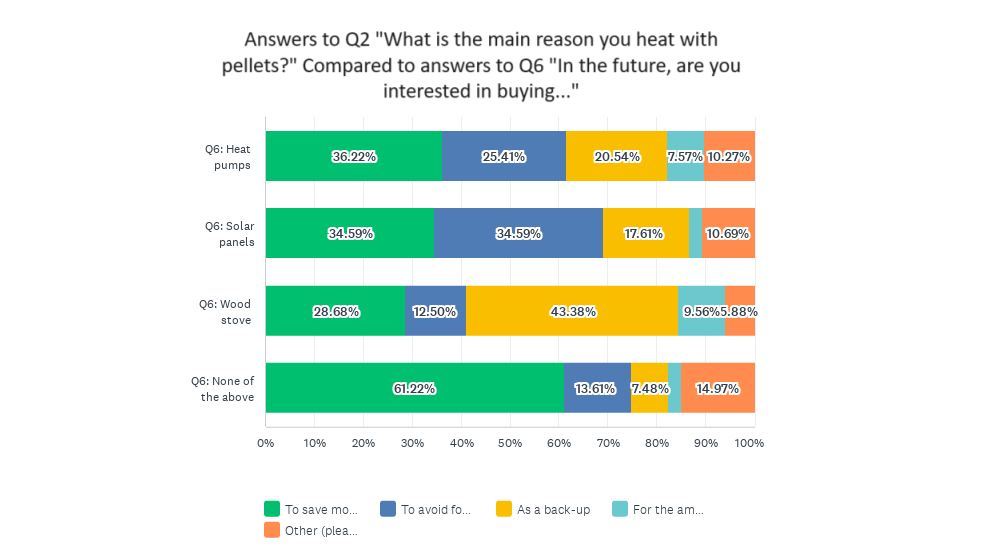


Comparing Q2 and Q6 unsurprisingly shows that people who heat with pellets who are more motivated to reduce fossil are the most likely to be interested in buying solar panels. And people who are more motivated to save money least interested in solar or heat pumps.


Reliability vs. interest in buying another pellet stove 
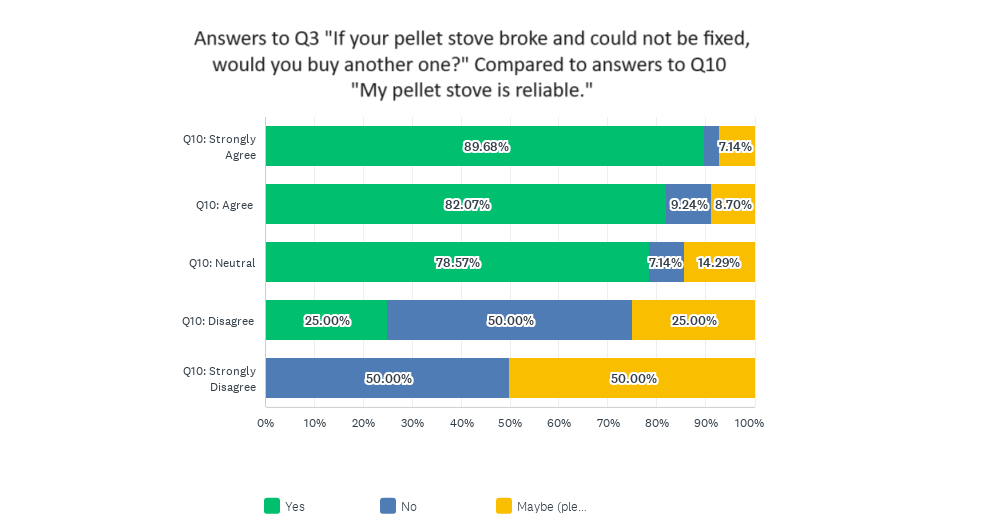


Unsurprisingly, overall those who agreed or strongly agreed that their pellet stove was reliable were most likely to want to buy another one if it broke down. Those who strongly agreed that their pellet stove was reliable were more than twice as likely to want to buy another. 


Reliability and length of ownership
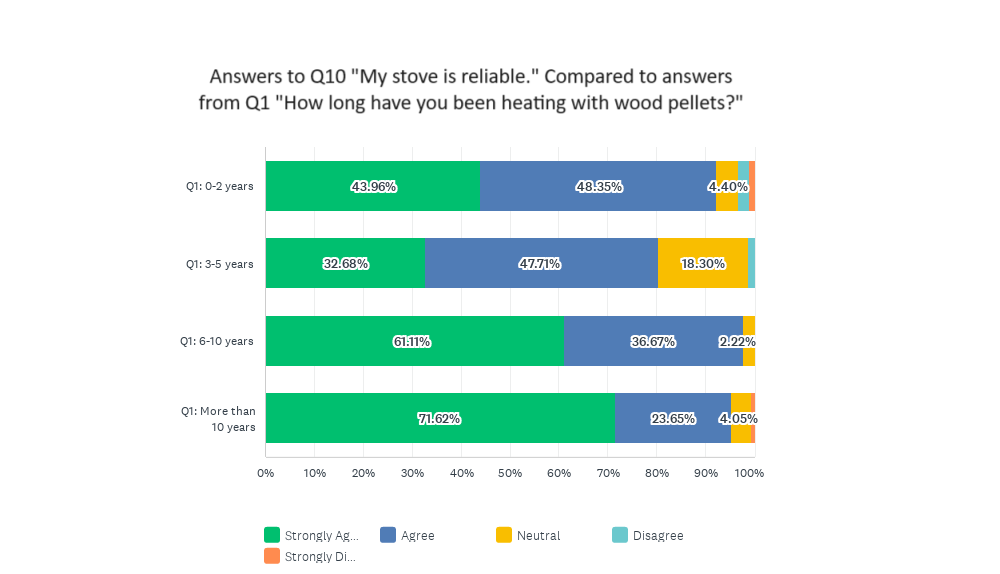

In this comparison, those who had their stove for longer than 10 years reported higher levels of satisfaction with reliability. And it was the group who owned stoves for 3 - 5 years who reported lower levels of satisfaction with reliability, possibly indicating that this is the period that repairs may be the highest.


Smelling smoke and length of ownership
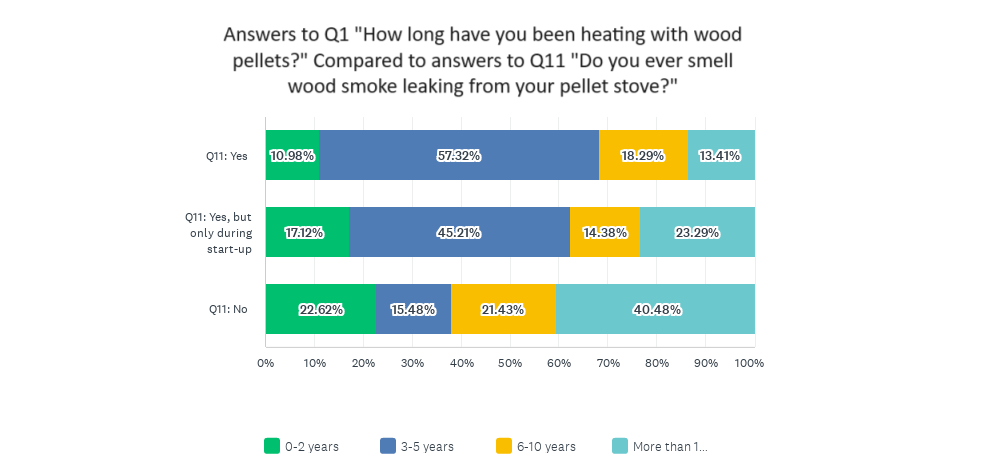

This indicates that the group who smells smoke the most is 3 - 5 year ownership and that the longer you own a stove the less smoke you report smelling. 


Overlap between smelling wood smoke and being concerned about it 
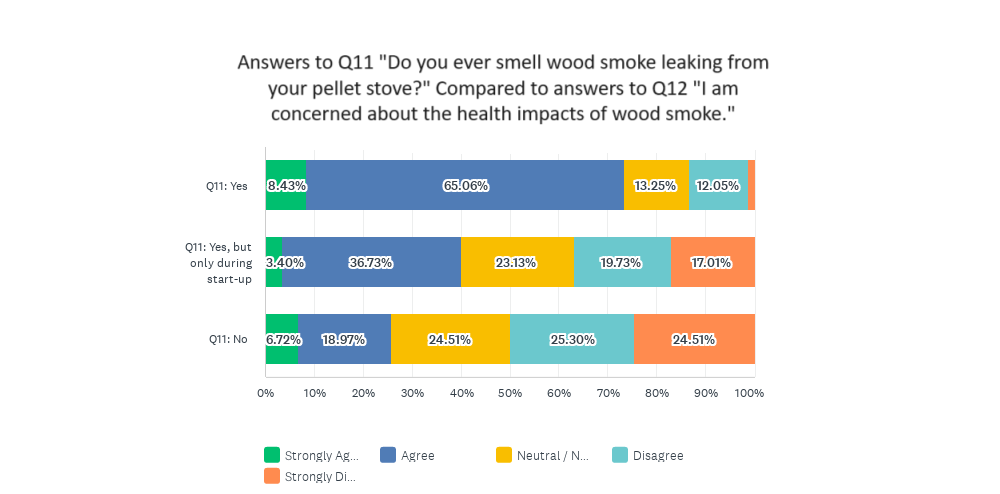

When comparing the answers of concern to those having reported that they were smelling smoke, a majority of those smelling smoke were also concerned about the impacts of wood smoke. Those who did not smell wood smoke from their stove were least likely to consider it a health issue. (Again, the ambiguous wording of Q12 makes this comparison less useful.)


Issues and Limitations of the Survey Data


AGH intentionally created a short and simple survey to increase respondent activity but this also naturally made it more susceptible to bot activity. In addition, we offered two $75 gift cards which likely increased bot activity even more. Survey Monkey also did not have an option to include a CAPTCHA at the end of the survey, which would have been a simple tool that could have stopped some bot activity. 


Where IP addresses were repeated, and where the states also differed, the data was excluded from the analysis. Out of the original 626 responses, 140 of these were excluded on that basis. Bot activity appeared to be especially prevalent from batches of respondents identifying as being from Guam that also consistently submitted the same answer, with only one variation, for each submission. The exclusion of these responses did not significantly alter the results of any of the answers. 


Friday, September 1, 2023

Comment on Massachusetts's Clean Heat Standard


The Alliance for Green Heat just submitted a comment to Massachusetts's Department of Environmental Protection concerning their Clean Heat Standard (CHS). To learn more about their CHS
check out this useful document. Ultimately, a CHS is a policy tool to require heating energy suppliers to gradually replace fossil heating fuels with cleaner heat over time by implementing clean heat or purchasing credits. Some would like to see the exit of advanced wood heating/automated wood heating from the CHS. The Alliance is in opposition to its removal. Please see our full comment below.

"The Alliance for Green Heat appreciates the opportunity to share comments regarding the Clean Heat Standard. We are a nonprofit that advocates for low- carbon heating strategies across the nation. We have a strong expertise in modern wood heating, heat pumps, and energy audits and weatherization, with a focus on low-to-middle-income households.

We believe that Massachusetts must keep advanced wood heating (AWH) technology in the Clean Heat Standard. AWH typically refers to pellet stoves and boilers at the residential level and can also include wood chips in larger systems. Residential wood stoves are not included in the definition of AWH because they do not have the automation to reduce particulate matter (PM) effectively and consistently. A similar term “automated wood heat” is often used and specifically excludes cordwood.

Advanced wood heating has a significant potential to be a complementary decarbonization technology that can increase electrification adoption for middle- income households and serves as an effective alternative heating source for energy providers to offer to customers.

Pellets for advanced wood heating are available locally in New England and are from sustainable sources, a mix of mostly sawdust from sawmills and wood chips from low grade wood. Many studies have investigated the use of woody biomass for local heating and have largely dismissed concerns that forest resources are being degraded to provide wood pellets. (See list of studies and peer reviewed scientific articles at the end of the comment.)

At the residential level, any state Clean Heat Standard should primarily focus on air source heat pumps – and weatherization services. In states with higher percentages of renewable electricity on their grids, heat pumps offer an excellent low carbon solution. However, there are still many drawbacks with heat pumps, many of which can be alleviated with back-up pellet stoves. High purchase and installation cost is of course one of the biggest issues with heat pumps. Pellet stoves can be installed for under $5,000 and can heat a home up to 2,000 square feet. Back-up wood stoves also provide an excellent source of heat when the grid goes down and gives rural consumers the confidence to switch to heat pumps (but we still do not advocate for including wood stoves as an eligible measure for obligated parties).

Because advanced wood heating systems use a fraction of the electricity that air source heat pumps require, its use in a house can reduce electric grid stress during the winter or reduce use of a back-up home battery. Wood pellet fuel has the added advantage of experiencing more price stability than both fossil fuels and electricity. For middle-income families trying to balance monthly costs, automated wood heating could provide a more consistent and affordable heating bill. Pellet boilers and stoves also have major disadvantages, including requiring far more maintenance and repair than heat pumps and repair technicians are not always easy to find. 

Equity concerns are significant for states designing Clean Heat Standards, and primary or back-up pellet heating is one measure that benefits rural low and middle income families. Giving those households the possibility of buying a more price stable fuel and one with an annual cost lower than air- source heat pumps is important. (Massachusetts Clean Energy Center). Another important measure is to ensure that energy auditors in Massachusetts include full inspections of wood and pellet stoves in energy audits. Old, unsafe polluting wood stoves should be eligible for removal but unless energy auditors are trained to do a safety inspection on them, this rarely happens. 

Pellet heating has a documented track record of delivering fewer CO2 emissions compared to electric baseboard heating, oil, propane, natural gas, and even air-source heat pumps with the current electricity grid (Massachusetts Clean Energy Center). (It is sometimes confused with carbon footprint studies on using pellets to make electricity in Europe, a far high carbon emitting application.) Removing a heating technology from the Clean Heat Standard that consistently performs just as well as other renewable energy and has the added benefits of greater price stability and local sourcing, would be misguided and not science based. In comparison, Vermont’s Clean Heat Standard includes automated wood heating. Vermont enthusiastically included this technology as their experience with the benefits of wood heating and ease of technology adoption has long been understood. 

Again, we thank the Department of Environmental Protection for this public comment opportunity. We hope that the Clean Heat Standard remains open to all viable low-carbon solutions to present the best possible outcome for Massachusetts to meet its clean energy and climate goals.

Further Resources:

Biomass Energy Resource Center. 2019. 2018 Vermont Wood Fuel Supply Study. https://fpr.vermont.gov/sites/fpr/files/Forest_and_Forestry/Wood_Biomass_Energy/Library/2018%20V WFSS%20Final%20Report%20with%20Letter.pdf.

Buchholz, Thomas, John S. Gunn, David S. Saah. 2017. Greenhouse gas emissions of local wood pellet heat from northeastern US forests. https://www.sciencedirect.com/science/article/abs/pii/S0360544217315451.

Biomass Energy Resource Center at VEIC. 2016. Wood Heating in Vermont. https://publicservice.vermont.gov/sites/dps/files/documents/Renewable_Energy/CEDF/Reports/AWH% 20Baseline%20Report%20FINAL.pdf.

Innovative Natural Resource Solutions LLC. 2007. Biomass Availability Analysis—Five Counties of Western Massachusetts. https://archives.lib.state.ma.us/bitstream/handle/2452/392593/ocn945986525.pdf?sequence=1&isAllow ed=y.

Olechnowicz, Casey, et al. 2021. Industry Leaders’ Perceptions of Residential Wood Pellet Technology Diffusion in the Northeastern U.S. https://www.mdpi.com/2071-1050/13/8/4178.

Maine Department of Agriculture, Conservation & Forestry. N.d. Wood Heat Maine. https://www.maine.gov/dacf/mfs/projects/woodheatmaine/index.html.

Renewable Energy Vermont and Biomass Energy Resource Center. 2018. Expanded Use of Advanced Wood Heating in Vermont. http://www.revermont.org/wp-content/uploads/FINAL-2030-Wood-Heat- Road-Map.pdf. " 

Tuesday, July 18, 2023

Comment on Massachusetts's H.3183 / S.2115, "An Act relative to the electrification of new and substantially remodeled or rehabilitated building,"

 AGH recently submitted another comment on proposed legislation in Massachusetts. "An Act relative to the electrification of new and substantially remodeled or rehabilitated building," (H.3183 / S. 2115) aims to establish a law requiring that "all newly constructed commercial buildings and substantially remodeled or rehabilitated commercial buildings and newly constructed buildings and substantially remodeled or rehabilitated buildings containing a residential dwelling unit shall use electricity instead of fossil fuels for space heating and cooling; cooking; and clothes drying; and, in the case of hot water, including for pools and spas, shall use electricity or thermal solar."

AGH is part of a coalition on non-profits, businesses and forest owners led by Chris Egan at the Massachusetts Forest Alliance who support modern wood heating systems.

Read below for the full comment: 

"Chairs Barrett and Roy:

The Alliance for Green Heat supports H.3183 / S.2115, "An Act relative to the electrification of new and substantially remodeled or rehabilitated building," provided that modern wood heating will not be excluded as a viable low carbon, renewable heating option in newly constructed or substantially remodeled residential dwelling units. Modern wood stoves play a highly beneficial role in the rural electrification movement because they are a preferred back-up heat for many people, giving households the confidence to install electric technologies like heat pumps.

Massachusetts is no stranger to electrical power outages. Earlier this year, the state experienced a brutal polar vortex. In the midst of dangerous, record cold, temperatures, a peak number of 60,000 households experienced power outages (Mass Live 2023).

Due to our changing climate, extreme winter events are set to increase (Union of Concerned Scientists 2023). In the inevitable moment when a household's heat pump could not run, wood stoves could provide essential heating for the hours or days that an electrical outage would drag on. This is particularly important for lower-income rural households. While the smoke from wood stoves can be problematic, pellet stoves offer a far cleaner and more efficient option, and they can easily run on a back-up battery. For homes that want to be as close to off-grid as possible, pellet stoves also draw very little energy compared to heat pumps.

We would like to commend the work that Massachusetts is attempting to carry out in order to promote the energy transition through H.3183 / S. 2115. But we urge the Joint Committee on Telecommunications, Utilities and Energy to take into account that modern wood heating as a technology has the potential to quell concerns over electrical outages for Massachusettsans as the state moves toward a more sustainable and cleaner residential energy profile. We hope you support H.3183 / S.2115 and urge that you consider language that would not inadvertently eliminate modern wood heating usage in the state."

Sincerely

John Ackerly, President

Darian Dyer, Policy Analyst


Friday, May 26, 2023

New York bans fossil fuels in new builds beginning in 2026: Implications for hearth retailers are still unfolding


By: Darian Dyer

On May 2nd, New York State lawmakers approved their FY 2024 New York State Budget. Embedded in this budget is a historic provision to electrify buildings and homes on a state-wide basis. The provision designates New York as the first state to pass legislation banning the installation of fossil fuel equipment in new buildings. The mandate comes into effect in 2026, initially applying to shorter buildings and then expands to encompass all new construction by 2028. Prohibited appliances in new buildings include gas, oil and propane space heating systems, gas dryers and gas water heaters, among others.

The hearth industry in New York, and especially hearth retailers, will experience little impact until 2030, when a ban on fossil fuel equipment includes installations in existing homes. Until then, they will likely experience more demand for gas appliances and have time to diversify into heat pumps or other products and services. Gas installers and technicians will have work maintaining existing equipment after 2030, but that will gradually contract over the ensuing decades, while other types of hearth installations grow.

The hearth industry, represented by the Hearth, Patio and Barbecue Association (HPBA), sells appliances that use any and all fuel— gas, propane, electric, wood, and pellets. However, they are now doubling down in defense of gas, aligning with major oil and gas lobbies. HPBA’s position statement on its website says they believe, “it is critical to lower carbon emissions based on solid science and technology. Requiring communities to be all-electric does not achieve the intended reduction due to inefficiencies with generation, distribution, and lack of storage.” However, many HPBA members, including the Alliance for Green Heat, strongly support electrification and the increased use of modern wood and pellet heating as a proven pathway to reduce fossil fuel heat. AGH’s President, John Ackerly, said, “We urge the new CEO of HPBA to provide the leadership for the hearth industry to evolve and attract and retain a younger and more diverse workforce who can thrive in the future.”


Wood and pellet stoves are not impacted by the NY policy other than possibly benefitting retailers with greater wood and pellet appliances sales, as gas fireplaces are phased out. Indoor gas fireplaces appear to be the hearth product that will be most impacted, and it is still unclear if piped natural gas to outdoor barbecues, pool heaters, and hot tubs, for example, will face restrictions after 2030. Most experts think appliances using outdoor portable propane tanks, like barbecues, firepits, and outdoor fireplaces will not be impacted after 2030. Karen Arpino, Executive Director for the Northeast Hearth, Patio, and Barbecue Association’s Board of Directors, expressed reservations in that the law stands more as a symbolic rule rather than a law to really impact New York’s GHG emissions.

Almost all stove retailers sell to the existing home market. The industries to be affected by this law are new home builders and smaller retail businesses focused on supplying appliances to new construction. These will likely be the hardest hit if they don’t diversify their business to include heat pumps, for example. A stove retailer in Rochester, New York, was more concerned about the precedent for other states than the impact on their own business. They, like others interviewed for this article, are planning on “just riding it out.”


Hearth retailers have steadily expanded their product lines and many now focus
more on outdoor patio items, most of which will not be impacted at all by the New York law.


The New York law, as in many states, relies on changes to building codes to be implemented. Thus, it will be the state fire prevention and building code council that will provide clarification and exemptions that determine some of the critical gray areas for outdoor hearth gas and propane uses, as well as what kind of electrical appliances could be installed. The Alliance for Green Heat is urging jurisdictions to put guardrails on baseboard electrical heating, especially in lower income homes and apartments, as it is less expensive to install compared to heat pumps, but far more expensive to run.

The Alliance for Green Heat reached out to some of the primary advocates of the ban to see whether they knew how it would impact specific indoor and outdoor hearth appliances. The Alliance for a Green Economy’s Executive Director, Jessica Azulay, said that the gradual phasing out process of fossil fuels allows time for the industry to familiarize itself with the required technology, educate installers, and ramp up the production of electric appliances. Patrick McClellan, the Policy Director for the New York League of Conservation Voters, underscored the importance of the phased approach, but neither were sure how outdoor gas and propane appliances would be treated. However, they did suggest that outdoor appliances are not the target.


Hearth industry ramifications in other electrification policies

While New York is the first state to put electrification of new buildings into law, several other municipalities, most notably in California, have approved pro-electric energy and building codes. For instance, Brisbane’s city council voted to amend their building code to require new residential buildings to be all electric in 2019. Notable exceptions to the code include the ability for residences to still incorporate non-electric cooking appliances and fireplaces in new buildings. Oakland, CA, amended their municipal code in 2020 to require “all-electric construction in newly constructed buildings.” This ordinance did not restrict portable propane appliances for use outside of the building envelope, including outdoor cooking and heating appliances. Marin County, CA, passed a similar ordinance amending their building code in 2022, making an exception for portable propane appliances outside of the building envelope. These are only three examples from over 50 cities in California that have similar electrification requirements in their building and energy codes.

Low carbon electric heat and the grid

Much of New York’s ban on fossil fuel equipment installation has to do with space and water heating, even though gas stoves often get more attention. The shift to heat pumps and heat pump water heaters will initially run mostly on electricity made by fossil fuel, but their extremely high efficiencies still significantly reduce carbon impacts. Currently, nearly 60% of the state’s electricity is generated from natural gas, accounting for 46% of its utility-scale in-state generation. Achieving lower carbon emissions in New York relies heavily on rapidly decarbonizing the energy grid. New York has developed a plan to address this challenge. By 2030, 70% of the grid load will be met with renewables, with the goal of 100% of the grid being powered by renewables and zero-emission sources by 2040.

New York’s restrictions on fossil fuel installations target buildings, the largest source of greenhouse gasses in the state.

New York will face scrutiny on whether an unjust energy burden materializes for low-to-moderate income (LMI) households living in existing buildings and whether all-electricity stands as an affordable option for everyday consumers. To support LMI households during this transition, the New York legislature has approved $200 million to help weatherize and electrify low-income homes. In addition to this, the NY Home Energy Affordable Transition (HEAT) Act is in the works, hoping to lead an equitable, neighborhood-scale decarbonization effort. It is currently sitting in the Senate Energy and Telecommunications Committee. Still, some construction companies say that mandating electrification in new builds will increase construction prices, further pushing LMI families off of the housing market.

Opportunity for wood and pellet stoves

For those producing wood and pellet stoves though, there doesn’t seem to be an obvious downside. NEHPBA’s Karen Arpino had discussions with New York legislators and many were eager to work on legislation to promote wood stove change-out programs in the state. NYSERDA used to offer rebates for pellet stoves if a household turned in an old wood stove.

While 108,202 households heat primarily with wood (1.4%) in the state of New York, its use in rural counties is substantial, providing a significant level of low carbon energy resilience and diversification without adding further stress to the grid. For example, in Schoharie county, 15% of homes use wood as a primary heat source and 20% in Hamilton, with far more homes using it as a secondary heat source. Wood stoves provide homeowners more confidence to electrify, and they are likely to become more popular in electrified homes if it is cheaper than using a heat pump in the coldest weeks or months of the year. If the grid becomes even more unreliable in rural areas, wood stoves are an obvious back-up option and as solar and battery options grow, pellet stoves could also be a back-up heat source.


Friday, April 28, 2023

Are wood stoves the back-up heating solution in our electrified future?

With longer and more frequent power outages, back-up heat options are limited


By Darian Dyer and John Ackerly

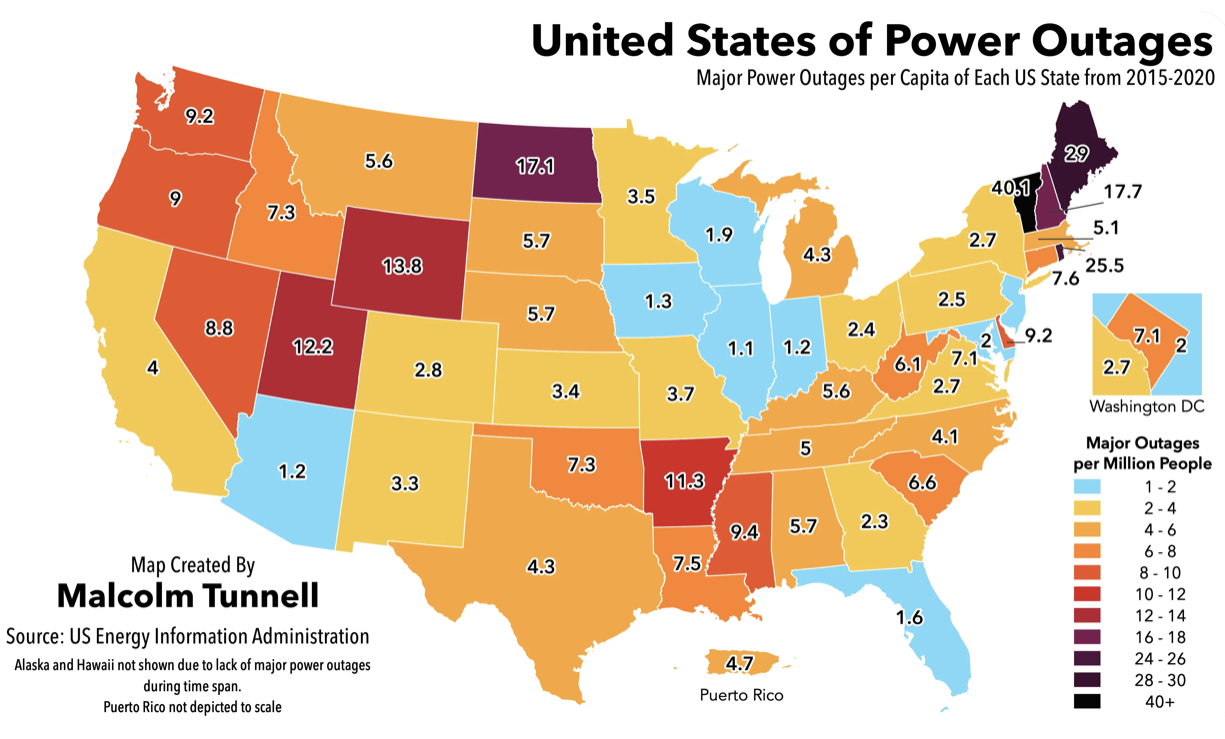
Heat pumps are now the second most common heating appliance in the United States after natural gas furnaces, and the Biden Administration is heavily promoting them to decarbonize home heating. But power outages are also more frequent. According to the U.S. Energy Information Agency, the average American spent twice as long in the dark in 2021 as they did ten years ago. 


The electrification of heat has become a global solution to avoid the direct use of fossil fuel heat. 

For Americans in colder parts of the country, back-up heat is essential and wood stoves are already the second most common source of secondary heat in the U.S. - after electricity. “Wood stoves may become more popular as more homes switch to heat pumps,” speculates Tom Butcher, a Research Engineer at Brookhaven National Lab in New York, who is a leading expert on oil and wood heat. 


The availability of back-up heat is one of many barriers to households shifting to heat pumps and few heat sources don’t need electricity other than wood stoves. While wood stoves are common and practical in rural areas, they are by no means an obvious, or desirable, choice for many in suburban areas, much less urban ones. 


Severe weather events are more common


Ice storms inevitably lead to a surge of sales in wood stoves, and nowhere was this more evident than northern New York and the Montreal area when an ice storm was so bad it brought down long-distance transmission lines in 1998. In the recent past, a 2022 December winter storm racked up 1.6 million outages across the United States. In September of 2022, Hurricane Ian caused 2.78 million outages. In early 2021, Texas saw 4.4 million outages from a winter storm that revealed just how fraught our energy infrastructure is as rolling blackouts were instated and fossil fuel infrastructure froze over.


The North American Electric Reliability Corporation (NERC) concluded that a “large portion of the North American BPS (bulk power system) [was] at risk of insufficient electricity supplies during peak winter conditions” in their 2022-2023 Winter Reliability Assessment. Currently, almost all of the colder parts of the US are at an elevated or high risk of insufficient electric supply during the winter months. NERC also projected the growth rates of electricity peak demand and energy in North America will increase for the first time in recent years.


The U.S. electricity customer was without electricity for 7 hours on average in 2021. But the average number of power outages, and the average length of power outages per state does not make distinctions between rural and urban outages. Rural and suburban areas are more vulnerable to outages, especially in remote areas, and these outages are usually far longer than urban ones. Some areas measure power outages not in hours, but in days.


Seasonal weather events are annual occurrences that many expect to affect them at some point, particularly in their access to electricity, no matter what state or territory they live in. However, this threat is only heightened by the likelihood that climate change is increasing the frequency and intensity of extreme weather events. In addition to extreme weather events, two concerns loom over the U.S energy grid when it comes to supporting our electrical energy needs: aging infrastructure and limited transmission capacity


Back-up heat options


There are few good back-up heating options, especially low-carbon ones. Gas or propane fireplaces, or stoves, can work without electricity, as do indoor kerosene heaters. Even more common than wood stoves, but far less effective, is the traditional open fireplace which radiates heat to people right in front of it, but does little to warm the rest of the house. 


Wood stoves are an obvious choice for many (or their far more expensive cousin, the masonry heater, which is an effective whole-house solution if you can afford it). The other obvious choice for tens of millions of Americans is a back-up gas generator, which can cost as little as $500. Again, most gas generators aren’t powerful enough to run heat pumps but can run a pellet stove, or even a gas furnace.


Home batteries, like Tesla Powerwalls, and electric vehicle batteries that can be run in reverse to provide power to a home, open up more back-up heat options. But home batteries or EV car batteries can run out quickly and many only provide 2-8 hours of juice if connected to a heat pump. However, they can easily run a pellet stove for several days, or indefinitely if they are being recharged during the day with solar panels. (There are a few gravity fed pellet stoves on the market but they can be more finicky.)


The average pellet stove uses about 100 kWh per month- as much electricity as a refrigerator or a heat pump water heater. Geothermal heat pumps can use 3 or 4 times that much in a month.


Wood stove retailers see the writing on the wall and many are adding heat pumps to their businesses. One major stove manufacturer, Napoleon, is the first to market their own line of heat pumps. Pellet stove manufacturers could do a better job marketing and selling back-up batteries which are available for $100 - $200 and will automatically take over if the power goes out when you are not at home. 


The other major consideration is stress on the grid during winter peak load events, which are occurring more frequently. As more homes electrify their heat and their cars, some grids will be under tremendous stress during cold snaps. Back-up heaters could be used during cold snaps and utilities could also incentivize their use by raising electric rates when electricity supply is limited. In the coming decades, many homes will still have legacy gas, propane, and oil heaters for their back-up heat. Wood and pellet stoves would be an excellent heating technology to help avoid collapsing the grid and reduce fossil fuel usage. In places like Vermont and Maine, where a quarter or more homes have wood or pellet stoves, the grid is already benefiting from their use during cold snaps. 


A French study found that among single-family homes in 2020, with an estimated 7 million wood log and pellet appliances in France, domestic wood heating covered 24% of the heating needs. Moreover, it found that more than 70% of wood and pellet appliances were in use before the 7 p.m. peak electricity demand. Similarly in Vermont, if 70% of wood and pellet heaters were in use during peak electric demand, it would take a significant load off the grid, as more homes switch to heat pumps, according to a presentation made by Adam Sherman,  Advanced Wood Heat’s Role in Renewable Energy and Clean Heating Policy, at Brookhaven National Lab.

Longer power outages will be a part of the future for many if not most Americans in both colder and more moderate U.S. climactic zones. Planning for back-up heat is not just a task for homeowners but also policy-makers promoting greater electrification.