Showing posts with label LMI. Show all posts

Friday, October 27, 2023

Maryland stove rebate aimed at low- and middle-income households may expire

Stakeholders urge state to keep stove program as it pursues electrification 

With little warning or stakeholder engagement, the Maryland Energy Administration (MEA) said it planned to sunset a stove rebate program that was established more than 10 years ago to help rural, low- and middle-income households who had the highest heat burden. 


A coalition of Maryland stakeholders wrote to MEA urging the agency to consider the impact on low and middle income households and to extend the program.


Maryland residents can still purchase eligible stoves through Jan. 4, 2024 and submit rebate applications up to March 31, 2023.  The program has been effective over the years and 80% of residents chose the higher rebate level to purchase a pellet stove. The rebate levels are $700 for a pellet stove, $500 for a wood stove, $1,000 for solar panels or shingles and $3,000 for geothermal systems.


A 2020 analysis of data from MEA showed that solar rebates primarily flowed to rich, more urban zip codes, and least likely to go to less affluent, rural zip codes, where wood and pellet heating are popular. 


“Its outrageous for millions of rebates to flow to wealthier homes for solar panels and geothermal systems while closing the only rebate program designed for rural low- and middle-income households,” said John Ackerly, President of AGH.  “During this climate crisis, we need to support renewable energy technologies that fit the budgets and preferences of everyone, not just well-to-do families.”
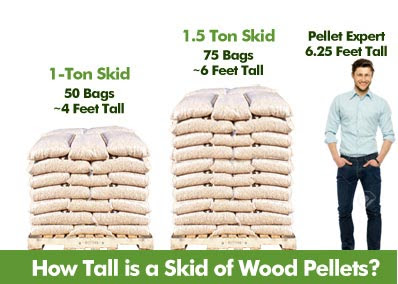
In Maryland, an average home needs 
about 2 tons of pellets as a primary or 
sole source of heat, which costs about
$550.

Low and middle income (LMI)  families are often marginalized, overlooked  and left behind in energy transitions and “the potential closure of this program is a classic case study of this.” Ackerly said. 


The Alliance for Green Heat is working with stakeholders to find out more about how the stove rebate program was assessed, why stakeholders were not engaged and whether changes can be made instead of closing it.  The Maryland Energy Administration said funds were getting tighter but there is no upper income limit to be eligible for solar and geothermal rebates.

Pellet stoves like this can cost up to
$4,000 and more basic ones cost
around $1,500

For years, the Alliance for Green Heat has urged to only allow rebates for pellet stoves, and not wood stoves.  AGH does not believe new cordwood stoves should be subsidized if installed in more densely populated areas.  AGH had also urged the MEA to correct confusing requirements like allowing eligible stoves to emit up to 3 grams an hour, a half gram higher than federal EPA limits, but the MEA decided not to align with EPA standards. These and other issues indicated to many that the rebate program designed for LMI households was not a priority. 


A wealth of data shows that electrification is perhaps the best way to address the climate crisis but there is also a high chance that many LMI communities will be left behind, in part because upfront costs of heat pumps are so high, and electric rates could continue to climb.  AGH is concerned that states may pursue electrification to the exclusion of program that can benefit certain demographics, potentially making the energy burden of some communities worse than before.

Pellet stoves can be very affordable and
in parts of Europe far more expensive
pellet boilers are routinely installed in
new construction, paired with solar,
battery storage and smart controls.

In many northern states, pellet stoves are being used along with solar panels so that a home can produce both renewable heat and electricity, lowering the carbon footprint of a home far more than either technology could alone. Solar panels, even with battery storage, can't produce enough electricity for heat pumps during the winter.  Pellet stoves also offer cheaper heat than heat pumps during the coldest weeks of the winter.


For one AGH staff member, Lilith Guzman, confronting this issue with MEA hits hard, and is personal. “I grew up in Minot North Dakota and my family has always been low-income. We were reliant on programs like SNAP, reduced school lunches, and clothing drives when the seasons turned. The native American community helped us get by too. I vowed to work on these issues when I graduated, but I didn’t expect this in Maryland.”


To make your voice heard, you can contact the head of the MEA, Director Paul Pinsky at paul.pinsky@maryland.gov. 


Friday, May 26, 2023

New York bans fossil fuels in new builds beginning in 2026: Implications for hearth retailers are still unfolding


By: Darian Dyer

On May 2nd, New York State lawmakers approved their FY 2024 New York State Budget. Embedded in this budget is a historic provision to electrify buildings and homes on a state-wide basis. The provision designates New York as the first state to pass legislation banning the installation of fossil fuel equipment in new buildings. The mandate comes into effect in 2026, initially applying to shorter buildings and then expands to encompass all new construction by 2028. Prohibited appliances in new buildings include gas, oil and propane space heating systems, gas dryers and gas water heaters, among others.

The hearth industry in New York, and especially hearth retailers, will experience little impact until 2030, when a ban on fossil fuel equipment includes installations in existing homes. Until then, they will likely experience more demand for gas appliances and have time to diversify into heat pumps or other products and services. Gas installers and technicians will have work maintaining existing equipment after 2030, but that will gradually contract over the ensuing decades, while other types of hearth installations grow.

The hearth industry, represented by the Hearth, Patio and Barbecue Association (HPBA), sells appliances that use any and all fuel— gas, propane, electric, wood, and pellets. However, they are now doubling down in defense of gas, aligning with major oil and gas lobbies. HPBA’s position statement on its website says they believe, “it is critical to lower carbon emissions based on solid science and technology. Requiring communities to be all-electric does not achieve the intended reduction due to inefficiencies with generation, distribution, and lack of storage.” However, many HPBA members, including the Alliance for Green Heat, strongly support electrification and the increased use of modern wood and pellet heating as a proven pathway to reduce fossil fuel heat. AGH’s President, John Ackerly, said, “We urge the new CEO of HPBA to provide the leadership for the hearth industry to evolve and attract and retain a younger and more diverse workforce who can thrive in the future.”


Wood and pellet stoves are not impacted by the NY policy other than possibly benefitting retailers with greater wood and pellet appliances sales, as gas fireplaces are phased out. Indoor gas fireplaces appear to be the hearth product that will be most impacted, and it is still unclear if piped natural gas to outdoor barbecues, pool heaters, and hot tubs, for example, will face restrictions after 2030. Most experts think appliances using outdoor portable propane tanks, like barbecues, firepits, and outdoor fireplaces will not be impacted after 2030. Karen Arpino, Executive Director for the Northeast Hearth, Patio, and Barbecue Association’s Board of Directors, expressed reservations in that the law stands more as a symbolic rule rather than a law to really impact New York’s GHG emissions.

Almost all stove retailers sell to the existing home market. The industries to be affected by this law are new home builders and smaller retail businesses focused on supplying appliances to new construction. These will likely be the hardest hit if they don’t diversify their business to include heat pumps, for example. A stove retailer in Rochester, New York, was more concerned about the precedent for other states than the impact on their own business. They, like others interviewed for this article, are planning on “just riding it out.”


Hearth retailers have steadily expanded their product lines and many now focus
more on outdoor patio items, most of which will not be impacted at all by the New York law.


The New York law, as in many states, relies on changes to building codes to be implemented. Thus, it will be the state fire prevention and building code council that will provide clarification and exemptions that determine some of the critical gray areas for outdoor hearth gas and propane uses, as well as what kind of electrical appliances could be installed. The Alliance for Green Heat is urging jurisdictions to put guardrails on baseboard electrical heating, especially in lower income homes and apartments, as it is less expensive to install compared to heat pumps, but far more expensive to run.

The Alliance for Green Heat reached out to some of the primary advocates of the ban to see whether they knew how it would impact specific indoor and outdoor hearth appliances. The Alliance for a Green Economy’s Executive Director, Jessica Azulay, said that the gradual phasing out process of fossil fuels allows time for the industry to familiarize itself with the required technology, educate installers, and ramp up the production of electric appliances. Patrick McClellan, the Policy Director for the New York League of Conservation Voters, underscored the importance of the phased approach, but neither were sure how outdoor gas and propane appliances would be treated. However, they did suggest that outdoor appliances are not the target.


Hearth industry ramifications in other electrification policies

While New York is the first state to put electrification of new buildings into law, several other municipalities, most notably in California, have approved pro-electric energy and building codes. For instance, Brisbane’s city council voted to amend their building code to require new residential buildings to be all electric in 2019. Notable exceptions to the code include the ability for residences to still incorporate non-electric cooking appliances and fireplaces in new buildings. Oakland, CA, amended their municipal code in 2020 to require “all-electric construction in newly constructed buildings.” This ordinance did not restrict portable propane appliances for use outside of the building envelope, including outdoor cooking and heating appliances. Marin County, CA, passed a similar ordinance amending their building code in 2022, making an exception for portable propane appliances outside of the building envelope. These are only three examples from over 50 cities in California that have similar electrification requirements in their building and energy codes.

Low carbon electric heat and the grid

Much of New York’s ban on fossil fuel equipment installation has to do with space and water heating, even though gas stoves often get more attention. The shift to heat pumps and heat pump water heaters will initially run mostly on electricity made by fossil fuel, but their extremely high efficiencies still significantly reduce carbon impacts. Currently, nearly 60% of the state’s electricity is generated from natural gas, accounting for 46% of its utility-scale in-state generation. Achieving lower carbon emissions in New York relies heavily on rapidly decarbonizing the energy grid. New York has developed a plan to address this challenge. By 2030, 70% of the grid load will be met with renewables, with the goal of 100% of the grid being powered by renewables and zero-emission sources by 2040.

New York’s restrictions on fossil fuel installations target buildings, the largest source of greenhouse gasses in the state.

New York will face scrutiny on whether an unjust energy burden materializes for low-to-moderate income (LMI) households living in existing buildings and whether all-electricity stands as an affordable option for everyday consumers. To support LMI households during this transition, the New York legislature has approved $200 million to help weatherize and electrify low-income homes. In addition to this, the NY Home Energy Affordable Transition (HEAT) Act is in the works, hoping to lead an equitable, neighborhood-scale decarbonization effort. It is currently sitting in the Senate Energy and Telecommunications Committee. Still, some construction companies say that mandating electrification in new builds will increase construction prices, further pushing LMI families off of the housing market.

Opportunity for wood and pellet stoves

For those producing wood and pellet stoves though, there doesn’t seem to be an obvious downside. NEHPBA’s Karen Arpino had discussions with New York legislators and many were eager to work on legislation to promote wood stove change-out programs in the state. NYSERDA used to offer rebates for pellet stoves if a household turned in an old wood stove.

While 108,202 households heat primarily with wood (1.4%) in the state of New York, its use in rural counties is substantial, providing a significant level of low carbon energy resilience and diversification without adding further stress to the grid. For example, in Schoharie county, 15% of homes use wood as a primary heat source and 20% in Hamilton, with far more homes using it as a secondary heat source. Wood stoves provide homeowners more confidence to electrify, and they are likely to become more popular in electrified homes if it is cheaper than using a heat pump in the coldest weeks or months of the year. If the grid becomes even more unreliable in rural areas, wood stoves are an obvious back-up option and as solar and battery options grow, pellet stoves could also be a back-up heat source.


Wednesday, February 22, 2023

Firewood bank leaders hold first national meeting

More than 30 leaders of firewood banks receiving Forest Service funding via the Alliance for Green met
online to discuss the challenges their banks face and how Forest Service funding can help them better serve low-income households in their communities. 

This was the first time that many of the funded firewood banks met the heads of other banks and realized that they were part of a much larger national network.


The meeting was convened by the Alliance for Green Heat and featured a short talk by Brian Brashaw, Assistant Director for Wood Innovations at the US Forest Service, who are providing the funding for this program.


The purpose of the meeting was to explore how firewood banks can support one another and share information that would help other banks.  


During the meeting, bank leaders described a wide variety of organizations and activities, not all of which were even called “firewood banks.”  The underlying commonality is that they all provided free firewood to needy households.  Beyond that, the differences may be greater than the similarities.  Several tribes ran operations that resembled a small firewood utility, an entity responsible for delivering heating fuel throughout the winter.  Other banks only provided firewood on an emergency basis, when a household ran out of all other fuel.  Another bank served families who had gone through a rigorous eligibility screening process run by a state-supported agency and who could also receive LIHEAP benefits.


The way in which each firewood bank procures wood is as diverse as their geographic locations. From simple plans like receiving donations from downed trees on town streets to working with loggers thinning forests at risk of wildfire.  One bank serving tribal homes had equipment and staffing to process 7 cords an hour.  At the other end of the spectrum were small banks who were able to stop splitting wood by hand and use hydraulic splitters with this year’s funding. Obtaining wood becomes its own case study as the public-private-community lines intersect.  


As firewood bank leaders shared their stories, we were reminded of how critical wood heating and access to firewood is for some households. Robin, with the Oglala Lakota Cultural and Economic Revitalization Initiative (OLCERI), shared with us that on the Pine Ridge Reservation in South Dakota where OLCERI operates, housing is “woefully inadequate for the cold,” and that “people literally die in their homes every year, they’re freezing to death.” Providing wood for their community is a lifesaving action. For as many “thank yous” that we received from the firewood banks during the meeting, a thousand “thank yous” are owed back to them for doing their incredible work.


One conclusion based on this year's funding is that there may be far more wood banks than anyone realized and there is no easy way to reach them.  Wood banks emerge from churches, tribes, non-profits, town and county offices because it is the cheapest way to provide heating fuel to homes, and households heating with wood are not well-served by federal and state low-income heating programs. For some firewood banks, providing wood for heating is a service they have offered in the last decade while others, like the Nez Perce tribe, have long relied on and supplied wood to their community. Howard Teasley Jr., Director of the Forestry and Fire Management Division of the Nez Perce Tribe, shared that they have “dealt with fuel wood since life immemorial,” serving around 350-400 homes per year. 


Map showing the location of firewood banks funded in this cycle. 
Yellow represents faith-based banks, purple represents tribal banks, 
and green represents non-profit banks.

While all these firewood banks provide free firewood, like food banks, each one is distinctive.  One bank provides firewood to people with terminal illnesses who have run out of money.  Some provide multiple deliveries to each house through the winter, while others just provide a single delivery. Some firewood banks take steps to verify heating needs before delivering wood while others approach distribution with a no-questions policy. If someone says they need it, they give it.     


Other stakeholders working with firewood banks attended the meeting including Larry Brockman of the EPA's Burnwise program, Clarisse Hart of the Harvard Forest, Jessica Leahy of the University of Maine, Sean Mahoney from the State of Massachussetts and others.


The $590,000 for first year grants is going to 47 banks and applications for this year are now closed.  Congress provided funding for a 5-year period and the Alliance for Green Heat expects to announce updated criteria for the second-year funding cycle in the spring.


To stay up-to-date on when the next funding becomes available, sign up for updates at the bottom of this page.


Further Information:
