Showing posts with label Danish. Show all posts

Tuesday, August 18, 2020

Tall wood stoves: an elegant tradition lives on, mostly in Europe

Tall stoves evolved in Europe partly because smaller homes and apartments had little space. Tall stoves also offer space for thermal storage, which is also more needed if your wood supply mainly consists of smaller diameter logs. 

Vertical fireboxes are still the norm in Europe but they rarely reach the heights they used to, except as masonry heaters. Today, the vertical European firebox style typically accommodates shorter and smaller pieces of wood, good for a evening fire, but not to hold heat overnight.  

The abundance of cheap wood in America led to less of a priority on thermal storage.  Instead of using less wood, and capturing more of the heat, Americans were able to design stoves that held logs big enough to slowly burn overnight in horizontal burn chambers.  

More vertically oriented stoves were common in America in the 1800 and 1900s in the iconic potbelly stoves, designed as much for coal as for wood.  All sorts of “parlour” stoves also had vertical shapes, designed as heat exchangers so that heat would be transferred to the room before going too quickly up the stack.  The poor man’s heat exchange used to be longer single walled pipe that would snake vertically and then horizontally through a room, often collecting and dripping creosote before exiting the room. 

Visit our other international photo essays on firewood collection and stacking, wood fired hot tubs, tiny stoves for  tiny homes boats & RVs, and typical wood stoves from countries around the world.


The original tall masonry stoves may have emerged in central and Eastern Europe in the 1600s but were rarely this ornate.  These would represent heaters built and used by very wealthy families but the inside design and operation was common in middle class families as well.  See more photos and histories on this site


Tiled masonry heaters like this emerged in the 1800s and were common in the 1900s.  They had cast iron and then steel doors, clean out caps, warming ovens and were site built to go as high as they could. 

In the 1960s and 70s, thousands of these hold masonry heaters were destroyed as fossil fuel became cheap and widely available.  And, despite their design to burn hotter and faster than modern steel stoves, as populations increased and cities and towns became larger all over Europe, they began to pose significant pollution problems.

Howell Harris, perhaps the world’s leading historian on wood stoves discusses the demand for very tall stoves, emphasizing their use in non-residential settings, “including "Halls, Nurseries, Nurseries, Churches, Public Offices, Stores, Counting and Green Houses, Work Shops, Steam Boats and Ships' cabins, &c. &c." and also of the shared interest of the inventor and his customers in maximizing heat output and fuel economy.   His site has as much or more detail than anyone could hope for along with scores of high-quality photos.


Many of these elegant, tall stoves, made either of cast iron or tile, were designed for coal, but could also use wood.


While stoves like this are available on the North American market they are almost all imported from Europe and remain far more popular there.
The Victorian Age is reflected in the designs and names of parlor stoves. These stoves simulate the architecture of castles, Gothic churches, and Italian villas. They are also lavish and intricate in design. Made at the height of cast iron technology, such stoves display some of the finest examples of casting known today.  Antiquestoves.com has many more examples. 


The evolution of Danish Morso stove designs from 1854 to 2008. around the turn of the century, when Morsø began to produce and provide tiled stoves and heaters to schools, churches, the railways, ministries and not least to the royal household. This put Morsø seriously on the map, and in 1915 Morsø received the coveted title of Purveyor to the Royal Court. In the 1950’s, the tiled stoves were replaced by central heating, but opened but opened space for wood-burning stoves in which you can see the flames,


Friday, August 17, 2018

Meet the teams: Wittus and German team bring the E-Stove to America

This is the final post in a series introducing the 12 teams participating in the 2018 Wood Stove Design Challenge in November.

By John Ackerly, Ken Adler, and Shoshana Rybeck, Alliance for Green Heat

Niels Wittus

Our final blog in this series is about a partnership between a US stove importer and a German thermoelectric stove manufacturer. Wittus-Fire by Design, lead by Niels Wittus in New York, is one of the premier retailers of higher end European stoves in America. He is working with a team of engineers at the German company, Thermoelect GmbH, to bring the “E-Stove” to the Design Challenge this November 9-14, 2018, and to the US market.

Niels and his wife, Alyce, started Wittus-Fire by Design in 1978 in the hopes of living out “the American Dream.”  The Danish couple Denmark found selling European stoves in the US to be the best way to combine their passion for their home and desire for an American life. Since the company’s creation, Niels and Alyce have internalized Hygge, the Danish term for “well-being” and the act of “enjoying life’s simple pleasures” in their work. From the beginning, their company was about much more than selling wood stoves, it was about supporting healthy environments and lifestyles. Niels truly believes that a wood stove is the “top Hygge product” that it is not only an “economical option” but also “the ultimate place where coziness, warmth and Hygge preside.”

Meet the technical guys

From left to right: Ingo
Hartmann, Frank Hoferecht, René Bindig
Horst Erichsen, Jonas Prell, Dr. Ingo Hartmann, René Bindig and Frank Hoferecht in Germany are responsible for all the technical elements of the E-Stove. Horst and Jonas together with their team designed and developed the basic elements of the E-Stove in the company Thermoelect GmbH. Ingo and René have worked together at the “German Biomass Research Center” (DBFZ Deutsches Biomasseforschungszentrum gemeinnützige GmbH), a government research institution, while Frank was previously working on developing combustion units for a start-up company, ETE EmTechEngineering GmbH. Frank, René and Ingo were brought together by a project in 2008 to design a very low emissions stove. Niels and his German counterparts had previously entered a stove in the Alliance’s 2013, 2014 and 2016 Design Challenges. Now, Ingo, René, and Frank are using their experiences to help Thermoelect GmbH create a very low emissions thermoelectric wood stove. Ingo and Frank have a world of experience in developing combustion units with low emissions. This will be their fourth time competing in the Wood Design Challenge and they are enthusiastic to see all of the US teams and products, as US wood stove technology and regulations are vastly different from those in Europe.

The E-Stove

Thermoelect’s E-stove is a very promising source of heat, electricity and hot water. They have achieved electricity yields of up to 250 watts in the past using a radiator, thermoelectric generator, and a battery to store the power. While their model can produce up to 250 watts, producing that much runs the possibility of producing too much heat for a single household room. So, Ingo says that their first step is to “produce 100 watts of power as a mean value over a day (24-hour period).” To generate greater power requires connecting the E-stove to a home’s hydronic heating system to distribute the heat to other rooms.

Team members holding thermoelectric
modules that make electricity.
The team credits much of their combustion efficiency as well as their subsequent emission reductions and heat and power generation to their novel down draft combustion unit with an integrated catalytic combustion system. Ingo says that catalytic emission control in wood combustion units has been “a point of focus in Germany for the past 10 to 15 years.” Ingo himself was brought to Thermoelect GmbH to research this type of emissions control and advance their stoves’ catalytic controls. However, what started as a project to create a stove with very low emissions became a project to create a highly efficient stove for producing electricity and heat. The team uses a radiator with the TEG, which is installed in the stove itself, and uses a pump to send the water throughout a home’s hydronic heating system. The stove runs with a large battery that is designed as backup power for the home, or potentially to augment a solar photovoltaic system.  
Thermoelect already has some units of the E-Stove running in German homes. Ingo says that the units that are in use have been working well, and that their main challenge is just ensuring the system does not produce too much heat when it produces high amount of power. The team is currently working on developing solutions to this problem in the lab. On the users’ end, the operator can control the heat for the water output system and has a permanent bypass at the catalytic combustion system, which is a mandatory feature for European stoves, so the user does not have to manually switch the bypass for the catalyst, including during cold start-up.

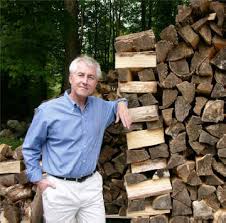
Niels Wittus with cordwood
From the beginning, all Team Wittus members have been working with wood stoves to create more efficient, clean, and affordable energy alternatives for consumers. The team believes that their recent progress advances “greener electricity” and address the needs of “people who do not have secure energy from the power plants.” For this reason, they work with wood logs, as pellets tend to be twice as expensive than cordwood in Germany, and many people have easy access to cordwood. Along with increasing affordability, the team is also always looking for new ways to give people even more reliable alternative energy. The E-Stove technology could be linked with solar power to give people living in boreal climates (e.g. Canada, the Northern US, and Scandinavia) power during times when solar power falls short.

Contact the team

Niels Wittus

Horst Erichsen

Dr. Ingo Hartmann

Frank Hoferecht