Showing posts with label uncertified. Show all posts

Saturday, May 14, 2022

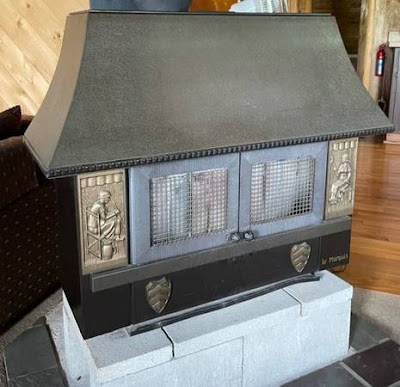
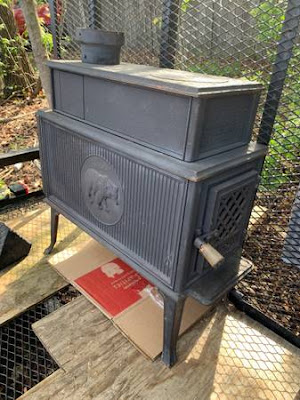
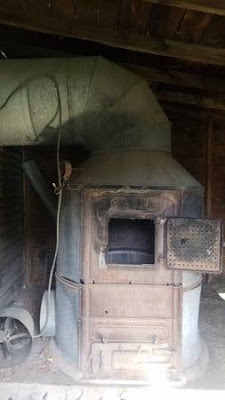
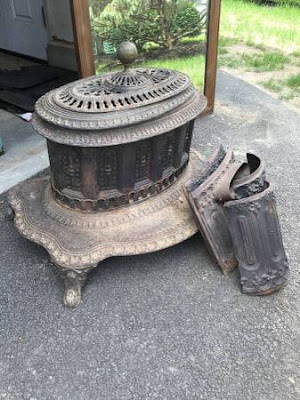
A snapshot of wood stoves on Craigslist: from collectors items, to illegal stove sales to just junk

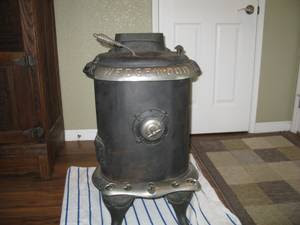
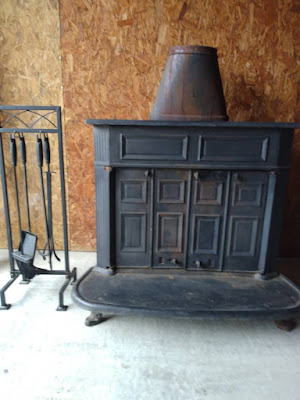
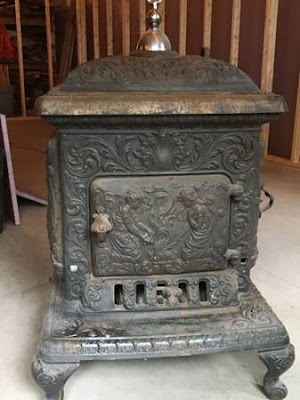
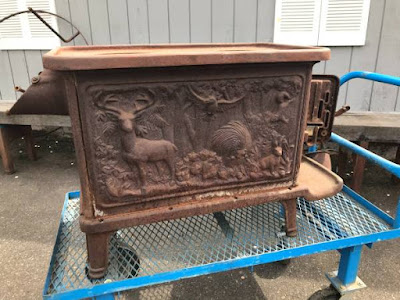
Craiglist is a popular site to buy and sell wood stoves and these 35 stoves represent a sampling of wood heaters on the market in May 2022 from all over the country.  Ordered from most expensive to least expensive, they tell a story of wood heating in America over the last century and many of these stoves represented the zenith of wood heating in their time.  Most of are operable although some are clearly beyond their lifespan and should be retired.  Many have been painstakingly restored, giving them a new lease on life.

Some new ones are being sold illegally as they do not meet current EPA regulations, which are required if the unit is sold new.  Others are being advertised and sold in states where it is illegal to advertise, sell, buy or install old uncertified stoves, like in Washington and Oregon. Many are exactly the kind of models that jurisdictions offer bounties for, to get them out of circulation.

In general, the Alliance for Green Heat does not support the sale and installation of wood stoves built before 1990, as most of these are more polluting than newer models, because they lack modern reburn technology.  However, if used with dry wood, and given enough air, some of these stoves can burn relatively cleanly in rural areas that do not experience frequent inversions and where the smoke will not impact neighbors.  The Alliance always recommends that stoves are permitted, where required and professionally installed, especially where they may need hefty clearances from combustibles.

In their lifetimes, many of these units may have displaced hundreds of tons of carbon from fossil fuel and some will continue to do so.  A few of these stoves belong in museums or collections or just used as decoration, not as heaters.  We hope you enjoy this tour down wood stove memory lane.

See our other photo essays on typical wood heating stoves around the world, tiny stoves,  and wood fired hot tubs,  
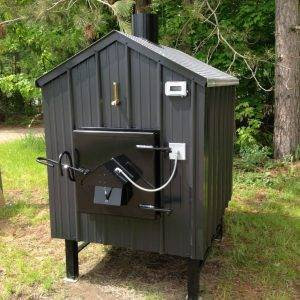
$6,699, New Central Boiler EZ Classic (uncertified), Big Rapids, MI


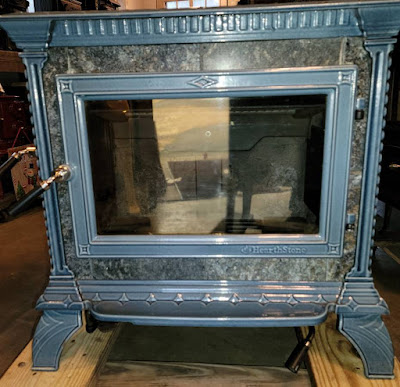
$3,995, Hearthstone, Catskills, NY


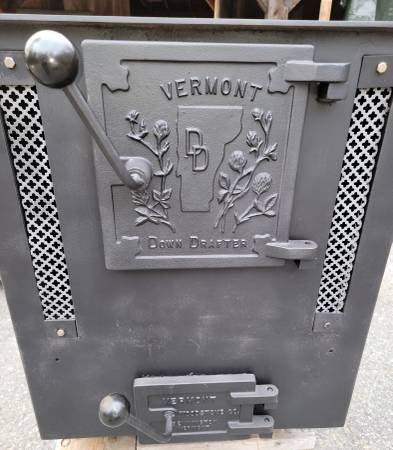
$2,800, Vermont Down Drafter, Keene, NH
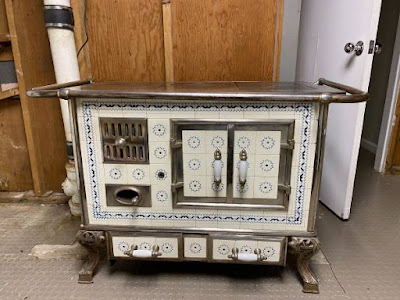

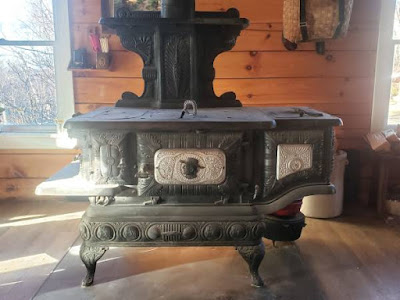
$2,000, antique Belgian cook stove, Roslyn NY

$1,995, Harman stove, Delaware

$1,800, Lange Harmony, Cranford, RI

$1,650, New Ashley stove, Hazelton, PA

$1,250, Shipmate boat stove, Brookhaven NY


$1,200, Taylor outdoor boiler, Meadville PA

$1,100, Comforter, Kingston, NH

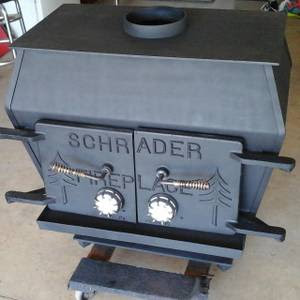
$1,000, Schrader, Everret, WA

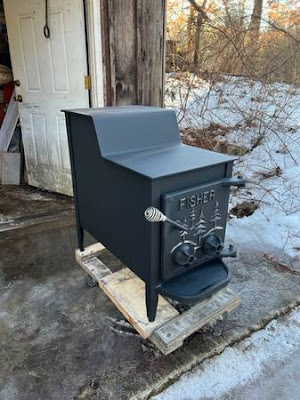
$895, Fisher Mama Bear, Western MA

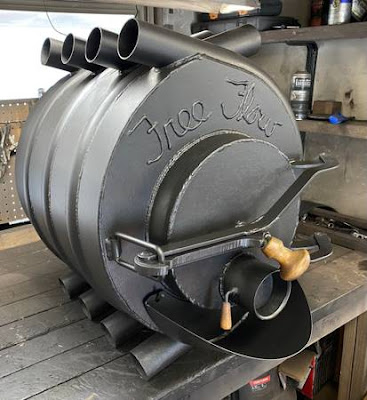
$675, Free Flow stove, Craftsbury VT

$500, cook stove, Jackson NH

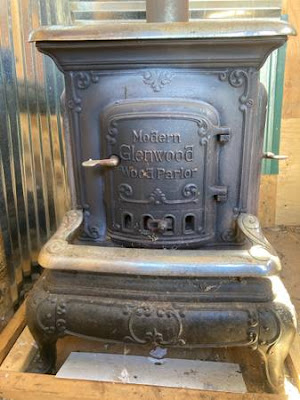
$500, Glenwood parlor stove, Keene NH

$485, Basement wood stove, Fitchburg, MA


$518, New Victor, Baltimore MD

$500, Wedgewood, Sacramento CA

$500, tiny Cubic stove, Lockport NY


$425, Danish Lange, Catskills, NY


$400, Timberline, Delaware


$329, Franklin style stove, Canton, OH


$300, Portland stove, Effingham, NY


$300, Cawley-Lemay Stove, Portland, OR


$300, Trailblazer, Wasilla AK
$295, wood stove, Danville, VT

$275, Jotul, Berkeley Springs WV


$250, Sterling wood furnace, Rochester NY
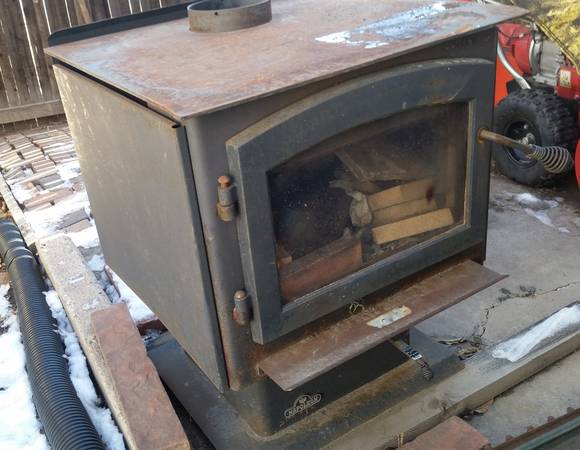
$249, Napoleon, Denver CO

$225, antique stoves, Albany NY


$200, Frankfort stove, Utica, NY


$200, Anchor coal stove, Schenectedy, NY


$125, wood stove, Livingston MT

$125, Sandia, East Hartland, CT

$100, Morso, Washington DC

$100, Hearthstone, Waterbury VT
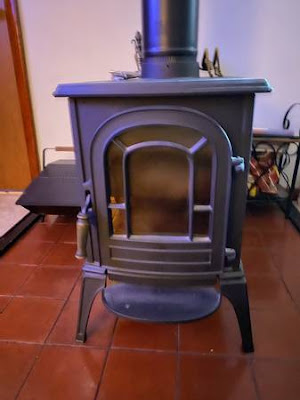
$100, Vermont Castings, Delaware

$40, wood stove, Kirkland, WA


Monday, March 15, 2021

An open letter to Mayors of Comox, Cumberland and Courtney about wood smoke

Dear Mayors Arnott, Baird and Wells,


As representatives of a pro-wood heating non-profit, the Alliance for Green Heat, we are writing to express concerns about information in the “Overturn the Ban” website.


We want you to know that there are many members of the hearth industry that support reasonable, health-based restrictions on wood stoves. We understand that the primary restriction in your towns are disallowing new installs of wood stoves, which is an imperfect, but reasonable strategy. Allowing or even requiring homes with existing stoves to upgrade to a new one and destroy the old one, is also reasonable. However, we do urge towns and cities not to restrict or ban the new installation of pellet stoves, as they burn consistently cleanly, something the Overturn the Ban site omits to mention. We also urge jurisdictions not to restrict or ban masonry heaters because they are typically very clean and efficient, though very expensive.

All renewables have limitations, and in communities with frequent inversions, wood stove installation and usage often need to be limited. Wood and pellet heaters have an important role to play in providing renewable energy in North America, but that does not mean they are well-suited for every community.  They are usually least well-suited in densely inhabited urban centers, but even in rural areas that experience frequent inversions, reasonable restrictions make sense.

The adjoining towns of Comox,
Cumberland and Courtney are at the  
center of this map on Vancouver
Island, British Columbia.

One troubling half-truth promoted by the website is that new wood stoves operate far more cleanly than old ones.  Any wood stove that is loaded with wet wood and/or not given enough air is more likely smolder  and thereby smoke terribly and easily emit 25 grams of PM2.5 per hour. Some estimates say that up to 50% of stove users do not use seasoned wood. An operator of a brand-new stove causing it to produce high emissions is unfortunately not a rare occurrence.  If an old and a new wood stove get the same dry wood or even semi dry wood, the new one will almost always burn cleaner.  However, that stove can still emit 5 grams an hour of PM or more, which is excessive during an inversion. 


New EPA regulations require that stoves not emit more than 2.5 grams an hour in a very controlled lab setting and in the hands of trained experts.  The EPA standard is not an estimate of emissions produced by homeowners, who may rarely achieve an average of 2.5 grams an hour. With pellet stoves, the emissions measured in the lab are consistent with the emissions in consumers' homes because the fuel is consistently dry and uniform, and the combustion chamber is automated.  


Masonry stoves tend to be consistently clean not just because of their design, which makes the fuel burn hot and fast, but also because of the culture of users of this niche technology. Their main distinguishing feature is the ability to store the heat from a short hot fire for slow release over a daily heating cycle. Seasoned cordwood burned this way has been demonstrated in real world testing to have PM2.5 emissions in the same range as pellet stoves


You should also know that most wood stove companies had a very good sales year in 2020, despite what they feared when Covid-19 began.  And, in the US Congress just passed a 26% tax credit for the most efficient stoves, so sales in the US by all the major manufacturers will be bolstered for the next three years.  


Possibly the top consumer education website on wood heat in North America is a Canadian one, Woodheat.org.  It wisely begins by saying, “wood heating can be done badly or well. Firewood can be harvested poorly, burned dirty and its heat wasted.”  Wood heating is done well depending on three things: a good stove, an experienced and attentive operator and seasoned wood.  


Please let us know if you have any questions and know that many of us who burn wood and pellets are responsible environmentalists.


Sincerely,


John Ackerly,

President

Maryland, US


Norbert Senf

Chairman of the Board

Quebec, Canada

Monday, January 13, 2020

EPA fines stove retailer, pursues informal enforcement with many others

In 2019, the EPA issued a $8,250 fine to a Seattle based company, Keller Supply Company,  for selling five uncertified residential wood stoves in Alaska, California, Oregon and Washington. That appears to be the only formal enforcement action in recent years amid an ongoing effort by the EPA to ensure the wood heater regulations are followed.

Almost all of the recent efforts of the EPA enforcement office fall under the term “informal enforcement,” consisting of phone calls, emails, on site visits and other communications that regularly result in corrective measures that bring manufacturers and retailers into compliance.   

In some cases, companies put uncertified stoves on the U.S. market, in violation of the EPA
The uncertified Lion pellet stove has
on the market for up to a year.
requirement that all residential wood and pellet stoves be certified by an EPA approved lab.  One example is Lion Energy, who has been importing a small pellet stove from China since at least March of 2019.  The Lion Pellet Heater is listed at $699 on the company’s website and is also sold by many online retailers for lower prices.  Amazon sold it for several months but their page on the product now says “currently unavailable.”  The stove has five reviews on Amazon including one that gave the stove one out of five stars and said, “This stove doesn’t appear to be state certified and our homeowners insurance will cancel us if we use this stove.”  

This uncertified Wanme stove is made
 in China and available to import to
the US.
The EPA office of enforcement has known about the Lion stove since at least August of 2019. The Lion Pellet Heater is the cheapest pellet stove on the US market, undercutting manufacturers who follow EPA regulations and still available from many online retailers, including the importer, Lion Energy, based in Utah.  A representative of the company told AGH that they had not heard about this issue before.  Emails to the company’s owners have not been answered.

Another pellet stove that appears to be uncertified under the name Wanme was being sold on internet sites for many months.  The online retail giant Wayfair recently removed the stove after being contacted by the Alliance for Green Heat.  However, it may still be on the market via smaller internet retailers.
Uncertified products were often
adverstised as using wood and coal after
the 2015 regulations took effect, requiring
certification for stoves using wood.

In December 2019, on a conference call with staff from the Office of Enforcement and Compliance Assurance (OECA), the Alliance for Green Heat urged the EPA to do more to make public their enforcement activity and assure stakeholders that it was following up on tips and infractions.  EPA staff relayed instances of numerous site visits and interactions with manufacturers and retailers in 2018 and 2019 that led to changes in advertising and other activities.  EPA staff explained that the EPA actively sends emails and make phone calls to manufacturers, retailers and test labs when deficiencies are identified through audits or public complaints/tips.  They also send non-compliance letters.

Tips from industry and the public resulted in scrutiny of and changes by several companies who were
Some fireplaces were advertised as "EPA
compliant" and having greater heating
capacities than many certified
wood stoves.
advertising fireplaces as heater-rated wood stoves in 2019 or uncertified stoves that could use wood or coal.  Under EPA regulations, any stove that advertises wood as a fuel must be certified.  Companies were also asked not to display the full barrel stove, when only certain parts of it were being sold.

The EPA confirmed that it had sent out what is known as “Section 114 letters,” to five or six wood heater manufacturers in 2016.   Section 114 of the Clean Air Act allow EPA to require regulated entities to submit information on a one-time basis.  It is not clear if or when the content of those letters and the responses would be public or could be through a Freedom of Information Action (FOIA) request.  However, letter requests to collect information that can be used in a potential rulemaking, investigation or enforcement action. Many of the submissions often end up being used by third parties in litigation. Responding to these requests can require the recipient to conduct testing and generate new data.


The Alliance for Green Heat often posts examples of misleading adverstisements in our free monthly e-newsletter.  If you are concerned about an enforcement issue with residential wood heaters, you can contact Rafael Sanchez at the EPA's Office of Enforcement at Sanchez.Rafael@epa.gov.

Monday, May 19, 2014

Best Practices in Change Out Programs (and Why Some Programs Underperform)

Updated: May 2022 - Change-out programs are now commonplace in the wood stove community, particularly in the Northwest, with Libby, MT being the highest profile one.  In Libby and elsewhere, changing out old uncertified stoves to new EPA certified stoves has demonstrably contributed to cleaner air quality.  Typically, wood stove change-out programs start with government funding, and then leverage in-kind donations from wood stove manufacturers, stove retailers and others.  (An updated list of "best practices" for stove change-out programs is available here.)

However, change-out programs sometimes provide fewer air quality benefits than expected.  And, per ton of particulate matter removed from the environment, they can be very expensive.  Raw numbers from Washington State based on money they spent versus estimated emission reduction came to nearly $50,000 per ton of particulate.  When Washington State uses the EPA methodology for calculating cost per ton, the mean cost was between $14,000 and $19,000 per ton


In addition to the classic change out program designed to reduce excessive smoke in particular town, valley or region, change out programs can simply help rural households more efficiently use a local renewable energy source.  Also, manufacturers and retailers can undertake them in the slow, summer season.


In assessing the effectiveness of change-out programs, the Alliance for Green Heat found a lack of rigorous analysis or debate about how to best achieve air quality improvements. Some states are starting to develop more innovative features in incentive programs instead of following the pattern set by the EPA and HPBA. Here are eight strategies that will improve change out programs.  Virtually none of these strategies, that many consider key parts of change outs, can be found on the EPA or HPBA change out pages.  Expect push back from local government agencies, HPBA and/or retailers on some of these points, but all of them are becoming more and more accepted.

1. Controlling future installations of wood appliances
Too many change out programs occur in places were people are still allowed to install old, second hand stoves or even outdoor boilers.  Reports touting the success of change-outs in Pennsylvania, Indiana and the Great Lakes states don’t even mention that while old stoves are being removed, uncertified outdoor wood boilers were being installed in the very same communities.  In Vermont and Keene, NH, more uncertified wood stoves may have been installed since their programs ended than were removed.  Before spending limited dollars on change-outs, funds should be focused in areas where the locality has enough commitment to clean air to stipulate that old, uncertified stoves and unqualified outdoor boilers cannot be installed in the future. In urban areas where wood smoke is bad, local governments should consider banning the new installation of all wood stoves and only allow pellet stove installations.

2.  Prioritize which stoves get changed out first
We believe that some programs inappropriately used a first-come, first-served approach when stoves used as a primary of sole heating source in more densely populated areas could have been targeted first.  While this does not apply to valleys with inversions like Libby, where every stove is equally important, in places like Massachusetts and southern New Hampshire, where funds can run out quickly, stoves in the middle of towns which are used as a primary heating device should be given priority.  Some new epidemiology research is coming out saying that stove change-outs do not necessarily improve indoor air quality and the main benefit is to improve outdoor air quality that impacts the community at-large.  In change-outs that cover multi-county areas, or even statewide, as in Vermont's program, we think focusing on stoves in towns is warranted.  Last priority should be stoves in isolated houses that only use wood as a secondary heat source.  Fairbanks may be the best example of effective prioritizing based on location instead of using a first-come, first-serve model.  A related best practice that has been implemented by HPBA, EPA and others is giving priority or higher rebates to low income households. While this is a practical necessity in order for them to participate, it also helps the program ensure that they are getting more stoves that are primary heating appliance of the house.
3.  Focus on wood, not just stoves
Some experts are now wondering if a $150 rebate to help build a wood shed to keep wood dry may produce similar air quality results as a $1,000 rebate for a stove.  It’s well known that the equipment is only half the battle, and the other half is the fuel and the operator.  Requiring firewood dealers to bring a moisture meter when delivering wood and writing down moisture content on the sales receipt may also be a good strategy. Change out programs could prioritize homes with woodsheds, to help ensure that subsidizing a new stove will result in reduced smoke from the home.  Or homes with woodsheds could receive a higher rebate, which incentivizes proper storage and educates people about its importance.

4. Right-size the rebate and require partial payment
When rebates disappear in a few hours or even a few weeks, it likely means the rebate was too generous and a lesser rebate could have resulted in more change outs.  Also, rather than provided a fixed amount, programs that provide 50% or even 35% of the new stove should be considered, where possible.  When smaller, more targeted populations are involved like Keene, NH, larger rebates are required, as they also are with low-income populations.

5. Integrate wood stove inspections in energy audit and weatherization process
If your state is particularly interested in retiring older stoves, it is important that state subsidized energy audits and weatherization programs require that the auditor inspect the wood stove, just like they check other HVAC equipment.  Auditors can educate homeowners about the importance of upgrading to safer, more efficient equipment, spot dangerous installations, assist in removing dangerous stoves and sometimes help get stove upgrades to be subsidized through low interest loans or other programs.  The Building Performance Institute (BPI) is taking the lead to develop guidelines for energy auditors to inspect wood stoves.  In recent years, energy auditors have failed to include wood stoves in hundreds of thousands of homes.

8. Ensure big box stores are included in the program
As long as professional installation is being required in a change out or incentive program, including stoves from big box stores can make funding go much further and enable more low and middle-income households to participate.  Allowing purchases from hardware chain stores can make all the difference for lower income families to trade out that old stove and afford a new one.  Good quality stoves can start around $1,000. One of the highest rated pellet stove brands, Pel Pro, sell for about $1,300 at outlets like Tractor Supply and Northern Tool. Professional installation can be done by CSIA accredited chimney sweeps if local NFI trained staff at specialty hearth stores will only install their own products.  Especially if larger rebates are not provided to low-income families, this is a vital way to help them overcome high upfront costs and help stretch program funding and change out more stoves.

9. Include heat pumps and gas stoves, with efficiency requirements
Most change out programs now offer non-wood or pellet appliances, as they should.  Consumers should be given a selection of the cleanest appliances that meet their needs.  If gas appliances are included, require that they be at least 70% efficiency based on the Canadian gas appliance database.  The US offers to reliable database of efficiency on gas appliances and manufacturer and retailer information is often mistaken, wrong, absent or confusing. Consumer education on gas stoves is crucial. See here for AGH public comments on why the DOE should regulate gas stoves and their efficiency.

Background
Based upon an informal survey of 10 change out programs in 2014, we found the average rebate for a new wood stove was $627 dollars, but ranged from $300 to $1,050 per stove and much more for low-income change outs. The median rebate was $670.  Nine out of the ten programs surveyed offered additional assistance to low -income applicants, and three out of ten offered full rebates.

Change out programs, depending on their size and scope, can cost a great deal of money to run and advertise. Buy back or bounty programs that just pay to remove stoves and do not replace them, are increasing in popularity and should be considered alongside change outs.  They are far cheaper, require much less administration, and can be run on a year round ongoing basis.  The average cost per change out varies greatly between programs. Libby, Montana had a large budget and was servicing a low-income population so the cost per stove was higher.  Pittsburgh program’s average cost was relatively low, at $770 per change out.   Higher costs per stove do not necessarily mean they were less efficiently run, as there are so many variables and so much need for costly educational programs that target homeowners who are not changing out stoves, but may be emitting a lot of excess smoke. 

[Afterward: Sylvia Shultz of Clean Air Fairbanks took issue with part of this blog and you can read her response here.]


Click for larger version.


Postscript

Up until 2020, when EPA regulations changed, AGH had urged change-out programs to adopt practices that are no longer relevant.  We keep them here for historical interest and context.

* Require that new stoves meet stricter emissions and efficiency standards
Almost all change-out programs now require that the new EPA certified stove be 4.5 grams or less, but some are starting to require 3 or 2.5 grams an hour or less. Pellet stoves, which operate in the field much more like they did in the testing lab than wood stoves, should be held to 2.5 or 2 grams an hour at the most.  Some states, with varying degrees of success, are starting to experiment with minimum efficiency requirements and this is likely to be a standard requirement sometime in 2015.  Oregon provides a greater rebate level for stoves made by companies who agree to share verified efficiencies with their customers.  Most stove manufacturers will not release this information, preferring to use unverified and often exaggerated numbers.  Maryland requires a maximum of 3 grams for wood stoves and 2 for pellets. (The Maryland program is a renewable energy program and does not require the change out of an old stove, but about half the old stoves are disabled and destroyed anyway.)

Require both wood and pellet stoves be EPA certified
Few programs have required that pellet stoves be EPA certified although there are substantial benefits of this.  EPA certified pellet stoves are usually more efficient than their exempt counterparts because exempt pellet stoves often use the 35 to 1 air to fuel ratio loophole to avoid certification but all that air reduces efficiency.  Some pellet stoves are as low as 40% efficient, and many are in the 50s and 60s, when they easily can be in the 70s.  Households should not be unwittingly subsidized to buy a low-efficiency pellet stove that will saddle them with much higher fuel costs for years to come.  Unfortunately, large and small pellet stove manufacturers currently self-report efficiencies and are notoriously adept at exaggerating and inflating their efficiency numbers.  The EPA and DOE have done little to counteract this and have at times contributed to the problem.