Showing posts with label Maryland Energy Administration. Show all posts

Friday, October 27, 2023

Maryland stove rebate aimed at low- and middle-income households may expire

Stakeholders urge state to keep stove program as it pursues electrification 

With little warning or stakeholder engagement, the Maryland Energy Administration (MEA) said it planned to sunset a stove rebate program that was established more than 10 years ago to help rural, low- and middle-income households who had the highest heat burden. 


A coalition of Maryland stakeholders wrote to MEA urging the agency to consider the impact on low and middle income households and to extend the program.


Maryland residents can still purchase eligible stoves through Jan. 4, 2024 and submit rebate applications up to March 31, 2023.  The program has been effective over the years and 80% of residents chose the higher rebate level to purchase a pellet stove. The rebate levels are $700 for a pellet stove, $500 for a wood stove, $1,000 for solar panels or shingles and $3,000 for geothermal systems.


A 2020 analysis of data from MEA showed that solar rebates primarily flowed to rich, more urban zip codes, and least likely to go to less affluent, rural zip codes, where wood and pellet heating are popular. 


“Its outrageous for millions of rebates to flow to wealthier homes for solar panels and geothermal systems while closing the only rebate program designed for rural low- and middle-income households,” said John Ackerly, President of AGH.  “During this climate crisis, we need to support renewable energy technologies that fit the budgets and preferences of everyone, not just well-to-do families.”
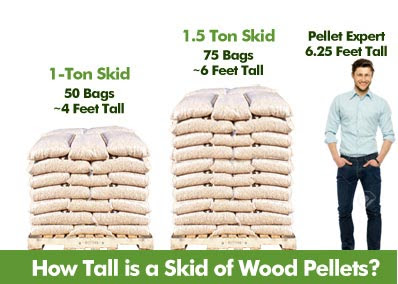
In Maryland, an average home needs 
about 2 tons of pellets as a primary or 
sole source of heat, which costs about
$550.

Low and middle income (LMI)  families are often marginalized, overlooked  and left behind in energy transitions and “the potential closure of this program is a classic case study of this.” Ackerly said. 


The Alliance for Green Heat is working with stakeholders to find out more about how the stove rebate program was assessed, why stakeholders were not engaged and whether changes can be made instead of closing it.  The Maryland Energy Administration said funds were getting tighter but there is no upper income limit to be eligible for solar and geothermal rebates.

Pellet stoves like this can cost up to
$4,000 and more basic ones cost
around $1,500

For years, the Alliance for Green Heat has urged to only allow rebates for pellet stoves, and not wood stoves.  AGH does not believe new cordwood stoves should be subsidized if installed in more densely populated areas.  AGH had also urged the MEA to correct confusing requirements like allowing eligible stoves to emit up to 3 grams an hour, a half gram higher than federal EPA limits, but the MEA decided not to align with EPA standards. These and other issues indicated to many that the rebate program designed for LMI households was not a priority. 


A wealth of data shows that electrification is perhaps the best way to address the climate crisis but there is also a high chance that many LMI communities will be left behind, in part because upfront costs of heat pumps are so high, and electric rates could continue to climb.  AGH is concerned that states may pursue electrification to the exclusion of program that can benefit certain demographics, potentially making the energy burden of some communities worse than before.

Pellet stoves can be very affordable and
in parts of Europe far more expensive
pellet boilers are routinely installed in
new construction, paired with solar,
battery storage and smart controls.

In many northern states, pellet stoves are being used along with solar panels so that a home can produce both renewable heat and electricity, lowering the carbon footprint of a home far more than either technology could alone. Solar panels, even with battery storage, can't produce enough electricity for heat pumps during the winter.  Pellet stoves also offer cheaper heat than heat pumps during the coldest weeks of the winter.


For one AGH staff member, Lilith Guzman, confronting this issue with MEA hits hard, and is personal. “I grew up in Minot North Dakota and my family has always been low-income. We were reliant on programs like SNAP, reduced school lunches, and clothing drives when the seasons turned. The native American community helped us get by too. I vowed to work on these issues when I graduated, but I didn’t expect this in Maryland.”


To make your voice heard, you can contact the head of the MEA, Director Paul Pinsky at paul.pinsky@maryland.gov. 


Friday, July 14, 2017

New York and Maryland add efficiency requirement to stove incentive program


Updated: August 2020

In July 2017, New York became the first state in the country to set a minimum efficiency requirement in an ongoing pellet stove incentive program.  The State will now only provide its $1,500 - $2,000 rebates to pellet stoves that are listed as 70% efficiency (HHV) or higher on the EPA’s list of certified stoves.

In September 2017, Maryland followed suit by offering larger incentives to stoves that have EPA listed efficiencies.  It used to provides a $500 - $700 rebates to stoves with listed efficiencies and only $250 - $350 for stoves whose manufacturers have not yet disclosed their efficiency.  As of February 1, 2020, it will only provide rebates to stoves that are listed at 70% efficiency or higher, matching the New York requirements.

Three other state programs have used efficiency values.  Oregon provided far higher rebates to stoves with higher efficiencies, but the program ended in 2018.  Massachusetts’ annual change-out program, now lapsed, gives an additional rebate if the stove is listed at 65% or higher on the EPA stove list.  A lapsed southern Vermont change out required stoves to be listed at least 70% and be 2 grams an hour or less.

The change in New York’s program, run by the New York State Energy and Research Development Agency (NYSERDA), will limit the number of currently eligible pellet stoves to about 30 models.  Both New York and Maryland also requires that pellet stoves emit no more than 2 grams an hour and that the home does not have access to natural gas.

Last year, NYSERDA gave rebates to help install about 500 pellet stoves and the Maryland program averages about 800 pellet stoves per year.  In both states, this is a significant boost to pellet stove sales.  One of the biggest differences between the two programs is that New York requires the trade-in of an old wood stove, unless you are a low income household, but the Maryland program does not.

Part of the motivation by states and programs to require that stoves have an efficiency listed on the EPA list of stoves is to counter the widespread misinformation provided by manufacturers to consumers.  The Alliance for Green Heat has consistently urged incentive and change out program managers to include efficiency and other best practices in program design. 

This can be particularly problematic with lower income families who may have tried to calculate savings when purchasing a pellet stove, and are relying on manufacturer claims to get one of the higher efficiency stoves.  Incentive and change out programs that give larger amounts to lower income households may be helping those families purchase pellet stoves that are under 60% efficient, saddling them with higher fuel costs for the lifetime of the appliance.

The New York program provides a rebate of $2,000 for lower income households compared to $1,500 for others, and now protects them from misleading information about efficiencies.  A large portion of the NYSERDA rebate recipients are low-income households.  Both New York and Massachusetts qualify lower income families if they earn less than 80% of median income.  The Massachusetts program was the first to use efficiency in a change out program, giving an additional $500 for stoves listed at 65% or higher on the EPA list of certified stoves.  Stoves made by manufacturers who do not disclose actual, tested efficiencies to the public are not eligible for the bonus in Massachusetts or for anything in New York.  Massachusetts also gives a higher rebate amount if you purchase an automated wood stove.

Many New York retailers welcome the change, as they are often caught between manufacturer efficiency claims and confused consumers.  Colin Miller of Mallarney's Garden Center in North Bangor NY says he supports the changes because they help his customers save money "with more efficient stoves and its good for the environment."

The Maryland program initially chose not to exclude any stoves on the basis on efficiency, but simply to "encourage" consumers to choose a stove with a known efficiency value, even if it is a low one. "However, it is likely that the overwhelming majority of consumers who take the rebate will now choose stoves with listed efficiencies," said John Ackerly, President of the Alliance for Green Heat, who had been urging Maryland to make the change. 

The main hearth industry association representing residential wood and pellet stoves, the Hearth, Patio & Barbecue Association, does not recommend only incentivizing cleaner and more efficient stoves, and urges program managers to "incentivize replacing old stoves with anything that is cleaner burning." HPBA provided this statement about the changes in the NYSERDA program: “Unfortunately, there are some very clean, and potentially very efficient, pellet stoves that were certified before efficiency data was required by the new NSPS, but NYSERDA's program requirements exclude them from consumers' options.”

For the New York program, of the approximately 30 pellet stoves that are 2 grams an hour or less and 70% efficiency or more, there are a wide range of more expensive brands carried by specialty hearth stores and very inexpensive ones carried by big box stores.  And more than a third emit no more than 1 gram an hour.  The most efficient pellet stoves on the EPA list, from the Italian Extraflame line, are 87% and 85% efficiency, but do not appear to be on the US market yet.

There are more than 500 models of wood and pellet stoves on the market and more than 150, or 25%, had  listed efficiencies in summer 2017.  Two years later, about 268 models, or about half of all stoves had listed efficiencies.  As of the August 2020, under the New EPA rules, all 232 EPA certified stoves have listed efficiencies.  In 2016 Alliance for Green Heat found that the average listed efficiency of a wood and pellet stove are the same - 73%.  The average pellet stove with a listed efficiency emits 1.2 grams an hour and the average wood stove emits 2.6 grams as of June 2016.  However, as of Aug. 2020, the median average is still 73%, but wood stoves only have 4 models, all catalytic, over 80% efficiency and pellet stoves have 16 models over 80% efficiency.

For consumer tips on how to choose a wood or pellet stove, this website offers advice on stove selection, installation, rebates in your state and how to know when a stove needs replacing.


Thursday, November 13, 2014

Dec. 4 Webinar: Best Practices in Wood and Pellet Stove Programs

The University of Maryland Extension Woodland Stewardship Education program will host a one-hour webinar on Thursday, December 4th from 12:00 p.m. to 1:00 p.m. to provide an overview of the “best practices” in wood and pellet stove incentive programs across the United States. 
Sign up here.
As renewable energy programs grow around the country, more and more states are including incentives for wood or pellet boilers and stoves. Unlike other household appliances, such as refrigerators, furnaces or washing machines, wood heating equipment have no “Energy Star” labels for consumers to consult to make energy efficiency comparisons. Consequently, several states have devised a range of methods to determine the eligibility of cleaner and more efficient stoves and boilers.
This webinar will explore the features of these programs, and will use Maryland’s stove incentive program as an example of how one state met its goals for ensuring consumers purchase the most efficient appliances available. The speakers will identify what they see as emerging best practices in stove and boiler incentive programs as these initiatives become more mainstream.
This webinar features presentations from Jonathan Kays, University of Maryland Extension Natural Resource Extension Specialist; John Ackerly, President of the Alliance for Green Heat; and Emilee Van Norden, Clean Energy Program Manager of the Maryland Energy Administration.
The webinar is free and open to the public.  Sign up now to reserve a spot.
For related content: 

Friday, September 20, 2013

Maryland raises rebate amount and indefinitely extends wood and pellet stove program


The Maryland Energy Administration (MEA) announced that it extended the rebate program for wood and pellet stoves indefinitely, and raised the rebates amounts to $500 for wood stoves and $700 for pellet stoves.

Initial data from the program showed that Marylanders used the rebates for pellet stoves twice as often  Pellet stoves are usually used as a primary or sole heat source of an average sized home, and typically save consumers $400 to $800 each year in heating costs.
as for wood stoves, defying national trends.

The program provides rebates to Marylanders who heat their home with oil, propane or electricity, which accounts for about half the state’s population and almost all of the rural population. Homes that heat with natural gas, usually in urban and suburban areas, are not eligible.

“We want to thank the Director of the MEA, Abby Hopper and her staff for helping rural Marylanders use an affordable renewable energy and keep their energy dollars local,” said John Ackerly, President of the Alliance for Green Heat.

In a press release from the MEA on Sept. 16, 2013, MEA said, "Third party analysis of the program found that the most grants on a per capita basis have gone to rural counties that have been hit hardest by the economic recession. This grant further improves the already impressive economics of wood stove systems and provides incentives for the cleanest stoves on the market." 

The average cost for buying and installing a stove in Maryland is about $4,000. Although, according to MEA data, some project costs were under $3,000. For an average $4,000 project, the wood stove rebate of $500 covers 12% of the costs and the $700 rebate for a pellet stove covers 17% of the cost. A $300 federal tax credit that ends on December 31 of 2013 provides an additional incentive this year.

Extending the program indefinitely gives the wood and pellet stove grant program parity with the residential solar and geothermal programs.  Advocates, including the Alliance for Green Heat, had argued that ordinary rural Marylanders were being left out of a program that was mainly benefiting wealthy urban and suburban families.

Eligible stoves must meet emissions requirements than are significantly stricter than the EPA’s. Homeowners are not required to turn in an existing, uncertified stove. However, about half the families that had older, uncertified stoves recycled them, according to data collected by MEA.

The push to add wood and pellet stoves in Maryland’s residential renewable energy grant program was championed by Delegate Heather Mizeur of District 20 and a host of other Delegates.  The Alliance for Green Heat organized a coalition of environmental and renewable energy groups and small businesses. The MEA voluntarily began the funding using existing resources in September 2012.

For information about how to apply for the rebate, click here
http://energy.maryland.gov/residential/Pages/incentives/woodstoves.aspx

For common Questions & Answers about the program, click here. http://www.forgreenheat.org/consumer_resources/mdrpqa.html#B

Tuesday, March 26, 2013

Pellet Stoves Make Huge Gains in Market Share

Pellet stoves nearly outsold wood stoves in 2006 and 2008

Alliance for Green Heat, March 26, 2013 - In 1999, pellet stoves only had an 11% share of the stove market. Nine years later in 2008, they had a nearly 43% market share. Today, for every three stoves sold, two use cordwood and one uses pellets. For a technology that was only invented in 1980s, this is a remarkable innovation success story.

The large percentage of pellet stoves sold today is great news for air quality agencies since they operate far cleaner in homes than almost all wood stoves. It’s also great news for the renewable energy community since a pellet stove burns 24/7 and is usually a home’s primary heat source. Pellet stoves typically make as much or more energy than residential solar panels and drastically reduce a home’s fossil fuel use.

Manufacturers shipped 48,277 pellet stoves to sell in the U.S. in 2012, according to the Hearth, Patio & Barbeque Association (HPBA), a trade association that tracks the annual shipments of wood, pellet and gas stoves. While 2012 sales were slow, the average pellet stove sales over the last five years was nearly 90,000 per year, according to HPBA data.

By contrast, wood stoves and wood stove inserts have sold an average of 137,000 units over the last five years. Pellet stoves have not yet ever sold more than wood stoves, but they came close in 2006 and 2008. It is likely only a matter of time before they top annual wood stove sales. Ten years from now, it is not impossible that pellet stoves would start outselling wood stoves on a regular basis.

Pellet stoves and pellet fuel did not take hold until the mid 1990s, when the component parts of the stoves became more standardized, interchangeable and less expensive, according to Scott Williamson, one of the country’s foremost experts on pellet stoves. Since then, reliability has improved and install costs are lower than wood stoves, giving them an edge in the marketplace, says Williamson.

Changing demographics also is likely to favor pellets. “As our population ages, more and more people will be switching from wood to pellets,” says Charlie Niebling, a thought leader in the pellet industry and board member of the Biomass Thermal Energy Council (BTEC). “Programs to change out old wood stoves usually give higher rebates for people to install pellet stoves instead of a new wood stove, and that has helped the market share of pellet stoves,” Niebling adds.

Despite their lower particulate matter emission profile, pellet stoves get an extra $100 or $200 in rebates, but rebate and incentive programs rarely just focus on pellet stoves and not wood stoves.  The federal tax credit has always applied equally to wood and pellet stoves and the ongoing state incentive programs in Idaho, Maryland, Montana and Oregon provide incentives to both wood and pellet appliances.

A recent example of the surge in popularity of pellet stoves is from a stove rebate program run by the State of Maryland. Maryland residents chose pellet stoves twice as often as wood stoves. “We are pleased to see rebates for pellet stoves were more popular because we know that pellet stoves are more likely to be used as a primary heating device and are usually cleaner,” said Kyle Haas, the Bioenergy Program Manager at the Maryland Energy Administration.

“This is an example of a new and effective renewable energy technology getting off the ground without significant government assistance,” says John Ackerly, President of the Alliance for Green Heat. “While this proves pellet technology can succeed in the market on its own, if it was treated like solar and geothermal in the federal tax code, many more consumers would have a very affordable way to reduce fossil fuels. Solar, geothermal and wind are great for wealthier families, but pellet technologies are a way to scale up residential renewables far more quickly” Ackerly said.

Pellet appliances are incentivized in Europe more often than cord wood appliances and have benefited from various green label programs, similar to the US Energy Star label. There is no regional or national green label in the US that recognizes the cleanest and most efficient pellet or wood stoves, which likely adds to the sluggish sales of these appliances, compared to Europe.

For the first time, the EPA will regulate pellet stoves as of next year. In 1990, when the EPA first regulated wood stoves, it exempted pellet stoves. This will mean that all pellet stoves have to be tested and certified by EPA approved test labs. The EPA’s draft regulations, which are far from final, do not set strict emission limits. The average pellet stove emits under 2 grams or particulates an hour. The EPA’s draft requires pellet stoves to emit under 4.5 grams per hour.

While pellet stoves have about a 30% market share in the US, in Canada pellet stove sales are only about 10% of the market, according to HPBA. Data on pellet stoves is tracked by number of stoves that are shipped by manufacturers that year. The data HPBA produces is conservative in nature and that "the numbers HPBA produces for the industry are conservative, containing the vast number of units shipped, although the actual shipment numbers are probably slightly higher,” according to Don Johnson, Research Director for HPBA. Pellet and wood stove shipments also include pellet and wood stove inserts. Most of the wood stove shipment data produced by HPBA does not include inexpensive wood stoves not certified by EPA.

The pellet stove market in the US is way behind the market in Europe and not just in terms of volume of sales. For example, reliable, verified efficiencies are not reported by manufacturers of pellet stoves in the US, which may reduce consumer confidence and satisfaction for those who unknowingly buy more inefficient appliances. And, there is no standardized way to report decibel levels on pellet stoves in the US and noisy fans are one of the biggest complaints of consumers.

Two major developments that will help propel the industry forward is a pellet fuel standardization program and new regulations by the EPA that will require pellet stoves to report their efficiency.
