Showing posts with label Morso. Show all posts

Saturday, May 14, 2022

A snapshot of wood stoves on Craigslist: from collectors items, to illegal stove sales to just junk

Craiglist is a popular site to buy and sell wood stoves and these 35 stoves represent a sampling of wood heaters on the market in May 2022 from all over the country.  Ordered from most expensive to least expensive, they tell a story of wood heating in America over the last century and many of these stoves represented the zenith of wood heating in their time.  Most of are operable although some are clearly beyond their lifespan and should be retired.  Many have been painstakingly restored, giving them a new lease on life.

Some new ones are being sold illegally as they do not meet current EPA regulations, which are required if the unit is sold new.  Others are being advertised and sold in states where it is illegal to advertise, sell, buy or install old uncertified stoves, like in Washington and Oregon. Many are exactly the kind of models that jurisdictions offer bounties for, to get them out of circulation.

In general, the Alliance for Green Heat does not support the sale and installation of wood stoves built before 1990, as most of these are more polluting than newer models, because they lack modern reburn technology.  However, if used with dry wood, and given enough air, some of these stoves can burn relatively cleanly in rural areas that do not experience frequent inversions and where the smoke will not impact neighbors.  The Alliance always recommends that stoves are permitted, where required and professionally installed, especially where they may need hefty clearances from combustibles.

In their lifetimes, many of these units may have displaced hundreds of tons of carbon from fossil fuel and some will continue to do so.  A few of these stoves belong in museums or collections or just used as decoration, not as heaters.  We hope you enjoy this tour down wood stove memory lane.

See our other photo essays on typical wood heating stoves around the world, tiny stoves,  and wood fired hot tubs,  
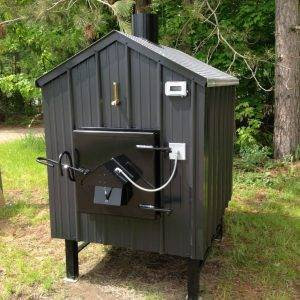
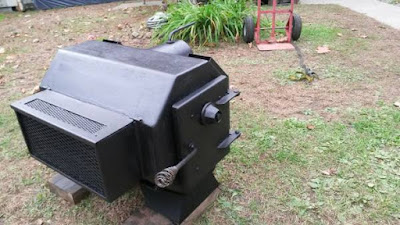
$6,699, New Central Boiler EZ Classic (uncertified), Big Rapids, MI


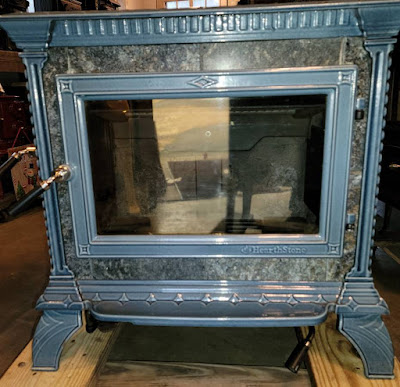
$3,995, Hearthstone, Catskills, NY


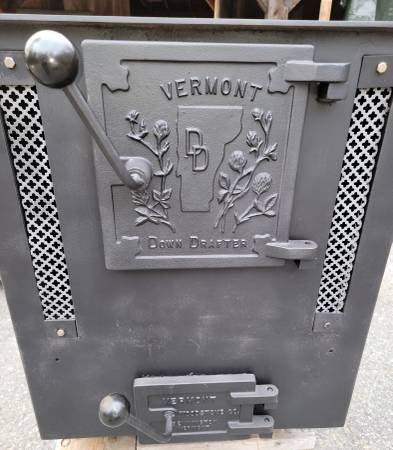
$2,800, Vermont Down Drafter, Keene, NH
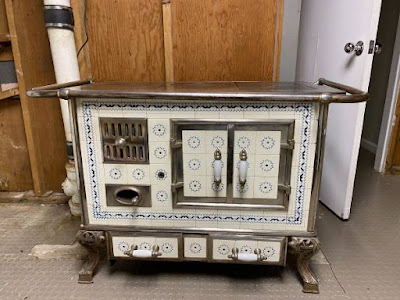

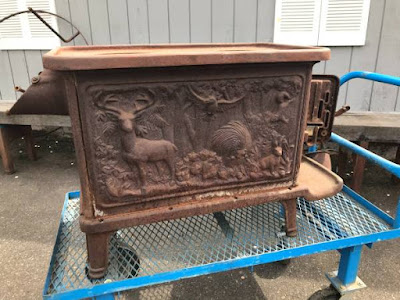
$2,000, antique Belgian cook stove, Roslyn NY

$1,995, Harman stove, Delaware

$1,800, Lange Harmony, Cranford, RI

$1,650, New Ashley stove, Hazelton, PA

$1,250, Shipmate boat stove, Brookhaven NY


$1,200, Taylor outdoor boiler, Meadville PA

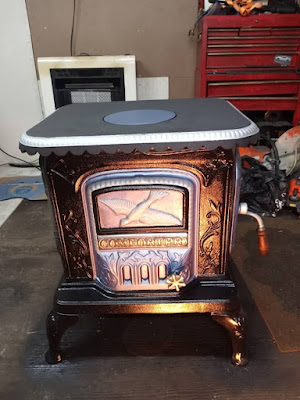
$1,100, Comforter, Kingston, NH

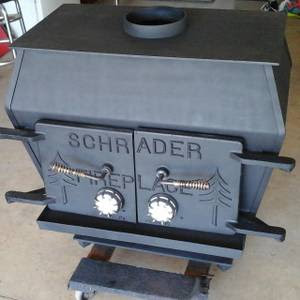
$1,000, Schrader, Everret, WA

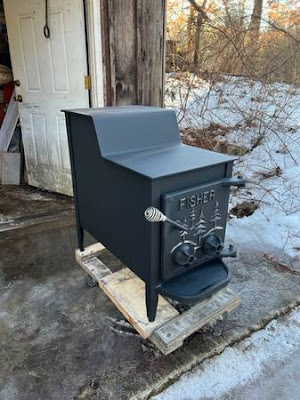
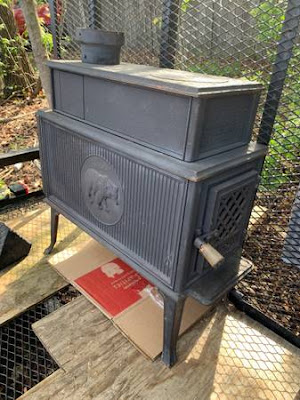
$895, Fisher Mama Bear, Western MA

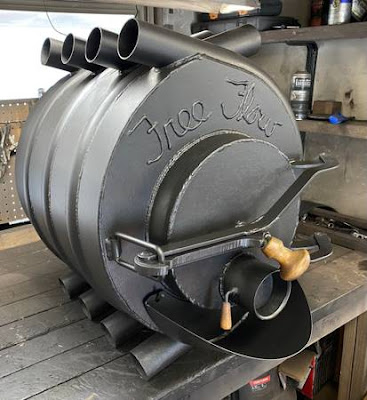
$675, Free Flow stove, Craftsbury VT

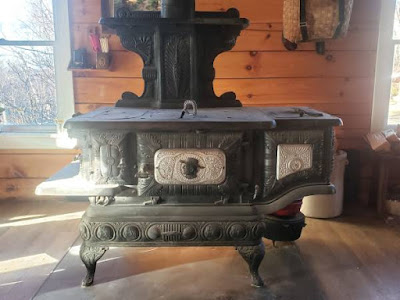
$500, cook stove, Jackson NH

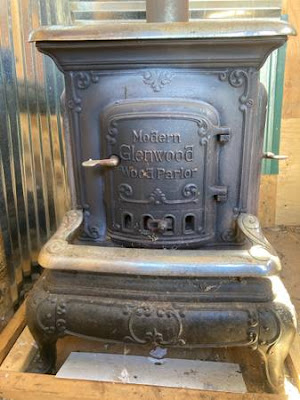
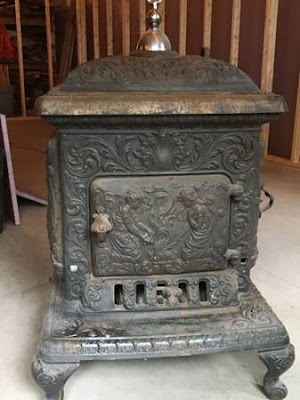
$500, Glenwood parlor stove, Keene NH

$485, Basement wood stove, Fitchburg, MA


$518, New Victor, Baltimore MD

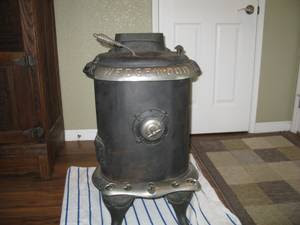
$500, Wedgewood, Sacramento CA

$500, tiny Cubic stove, Lockport NY


$425, Danish Lange, Catskills, NY


$400, Timberline, Delaware


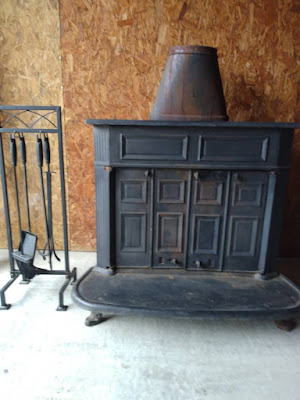
$329, Franklin style stove, Canton, OH


$300, Portland stove, Effingham, NY


$300, Cawley-Lemay Stove, Portland, OR


$300, Trailblazer, Wasilla AK
$295, wood stove, Danville, VT

$275, Jotul, Berkeley Springs WV


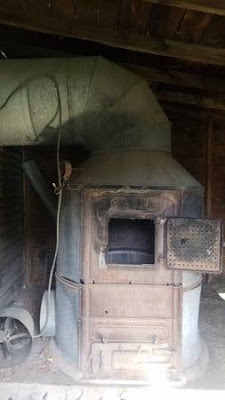
$250, Sterling wood furnace, Rochester NY
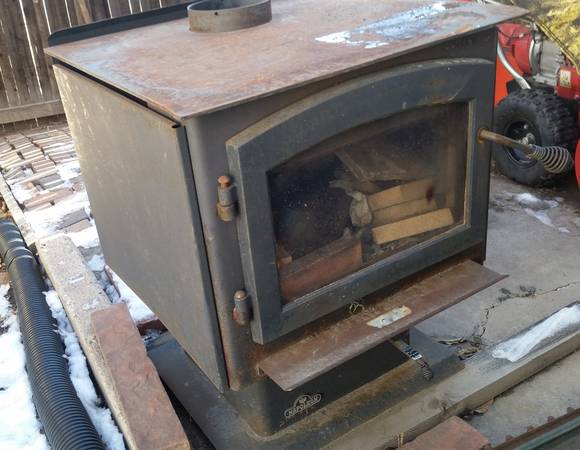
$249, Napoleon, Denver CO

$225, antique stoves, Albany NY


$200, Frankfort stove, Utica, NY


$200, Anchor coal stove, Schenectedy, NY


$125, wood stove, Livingston MT

$125, Sandia, East Hartland, CT

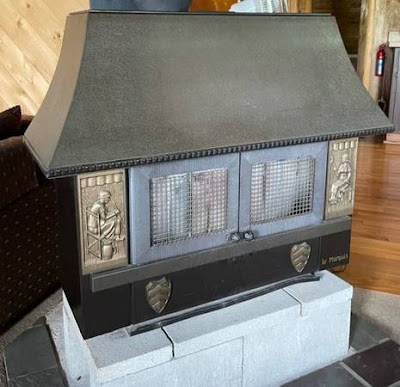
$100, Morso, Washington DC

$100, Hearthstone, Waterbury VT
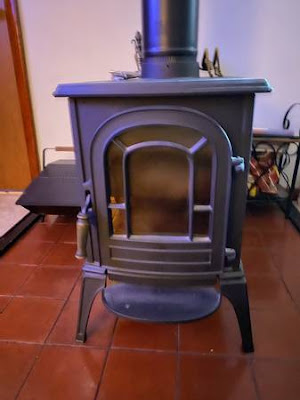
$100, Vermont Castings, Delaware

$40, wood stove, Kirkland, WA


Tuesday, August 18, 2020

Tall wood stoves: an elegant tradition lives on, mostly in Europe

Tall stoves evolved in Europe partly because smaller homes and apartments had little space. Tall stoves also offer space for thermal storage, which is also more needed if your wood supply mainly consists of smaller diameter logs. 

Vertical fireboxes are still the norm in Europe but they rarely reach the heights they used to, except as masonry heaters. Today, the vertical European firebox style typically accommodates shorter and smaller pieces of wood, good for a evening fire, but not to hold heat overnight.  

The abundance of cheap wood in America led to less of a priority on thermal storage.  Instead of using less wood, and capturing more of the heat, Americans were able to design stoves that held logs big enough to slowly burn overnight in horizontal burn chambers.  

More vertically oriented stoves were common in America in the 1800 and 1900s in the iconic potbelly stoves, designed as much for coal as for wood.  All sorts of “parlour” stoves also had vertical shapes, designed as heat exchangers so that heat would be transferred to the room before going too quickly up the stack.  The poor man’s heat exchange used to be longer single walled pipe that would snake vertically and then horizontally through a room, often collecting and dripping creosote before exiting the room. 

Visit our other international photo essays on firewood collection and stacking, wood fired hot tubs, tiny stoves for  tiny homes boats & RVs, and typical wood stoves from countries around the world.


The original tall masonry stoves may have emerged in central and Eastern Europe in the 1600s but were rarely this ornate.  These would represent heaters built and used by very wealthy families but the inside design and operation was common in middle class families as well.  See more photos and histories on this site


Tiled masonry heaters like this emerged in the 1800s and were common in the 1900s.  They had cast iron and then steel doors, clean out caps, warming ovens and were site built to go as high as they could. 

In the 1960s and 70s, thousands of these hold masonry heaters were destroyed as fossil fuel became cheap and widely available.  And, despite their design to burn hotter and faster than modern steel stoves, as populations increased and cities and towns became larger all over Europe, they began to pose significant pollution problems.

Howell Harris, perhaps the world’s leading historian on wood stoves discusses the demand for very tall stoves, emphasizing their use in non-residential settings, “including "Halls, Nurseries, Nurseries, Churches, Public Offices, Stores, Counting and Green Houses, Work Shops, Steam Boats and Ships' cabins, &c. &c." and also of the shared interest of the inventor and his customers in maximizing heat output and fuel economy.   His site has as much or more detail than anyone could hope for along with scores of high-quality photos.


Many of these elegant, tall stoves, made either of cast iron or tile, were designed for coal, but could also use wood.


While stoves like this are available on the North American market they are almost all imported from Europe and remain far more popular there.
The Victorian Age is reflected in the designs and names of parlor stoves. These stoves simulate the architecture of castles, Gothic churches, and Italian villas. They are also lavish and intricate in design. Made at the height of cast iron technology, such stoves display some of the finest examples of casting known today.  Antiquestoves.com has many more examples. 


The evolution of Danish Morso stove designs from 1854 to 2008. around the turn of the century, when Morsø began to produce and provide tiled stoves and heaters to schools, churches, the railways, ministries and not least to the royal household. This put Morsø seriously on the map, and in 1915 Morsø received the coveted title of Purveyor to the Royal Court. In the 1950’s, the tiled stoves were replaced by central heating, but opened but opened space for wood-burning stoves in which you can see the flames,