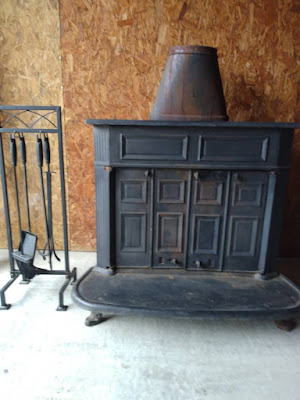
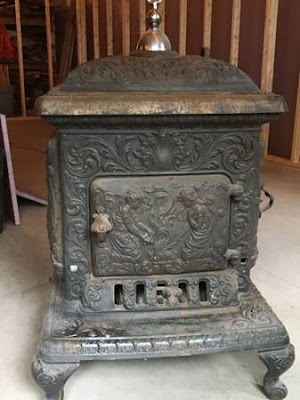
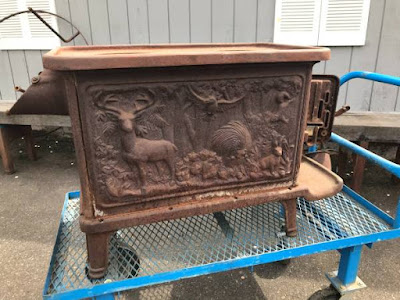
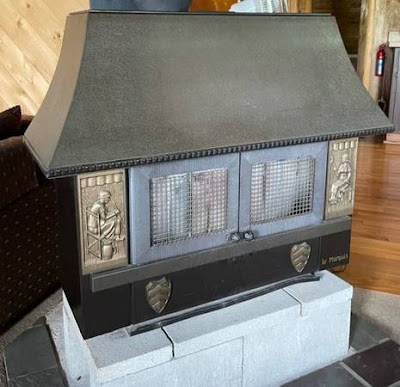
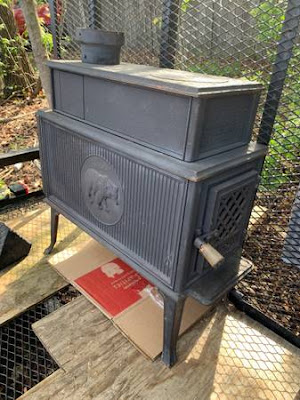
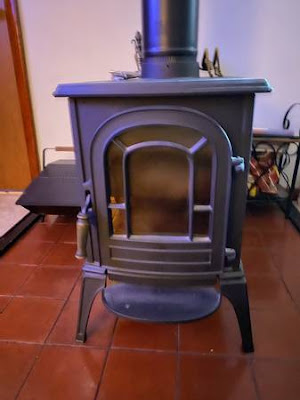
The idea of “closed” or “airtight” wood or cook stoves were far from reality for most Americans, even though they were beginning to emerge and take hold in Europe. Part of the challenge was economic: it was cheaper to build a stone hearth and chimney that to buy a steel stove. But part of the challenge was cultural and emotional: many people believed the open flame was healthier than flames in a closed box.
The man in the middle of these debates was none other than Ben Franklin, one of the core founding fathers of America, who was also an inventor, tinkerer and publisher. To have such a renowned founding father so intimately connected with the lowly wood stove has been a complex legacy. The Alliance for Green Heat has often commented on this complex legacy because those complexities live on today: millions of Americans want an open flame in their living room, just as Ben Franklin did, despite the negative health impact.
As we celebrate America’s 250th anniversary, we should remember that Ben Franklin’s role was far
greater than most of us appreciate. He was the only founding father to sign four of the key documents that enabled us to be the independent country we are today. The declaration of independence in 1776 was just the beginning. We still had to win the war, and Franklin was the architect of our relationship with France, a decisive ally. He was a signatory of the Treaty of the Alliance with France in 1778, the Treaty of Paris in 1783, and finally, the US Constitution in 1787. Not to mention that during this entire period, he kept tinkering on wood stove designs when living here, in London and in Paris. Of all his tinkering, the wood stove was the one he stuck with all of his life, as it was such an important technology.Franklin’s reputation as an inventor of the wood stove is larger than what he actually invented. Nothing that he invented sold well, and nothing really survived other than what was adapted by others. He never even invented a “stove.” He tried to invent a more efficient fireplace but it was a commercial failure because it had a downdraft that didn’t work, filling the room with smoke. The most famous inventor who took the Franklin and adapted the design was David Rittenhouse, who got rid of the downdraft and added folding doors. But because of Franklin’s name and popularity, and because he purposely did not patent the device, the Rittenhouse stove lived on as the Franklin stove and still lives on today.
 |
| Franklin's original design. |
As we celebrate the 250th anniversary of our country, its worth remembering that energy supplies have always been vital for America and it began with wood. In the 1770s wood was the primary domestic fuel in towns and cities. Just like today, prices and availability varied seasonally (higher in winter) and by proximity to woodlands and navigable transport. Urban centers like Philadelphia, Boston, and New York relied on timber brought in by wagon or boat, so haulage/boat freight often added more to the retail price than the raw timber did.
The Revolutionary War also disrupted the firewood trade, provoked requisitions and impressment of
The Revolutionary War also disrupted the firewood trade, provoked requisitions and impressment of
 |
| Today, this is the Franklin stove model, with folding doors and no downdraft. |
supplies by both armies. Boston’s port closure (1774) and wartime blockades created acute local shortages and relief drives for firewood.
But it was a period of change away from a renewable carbon based fuel and towards non-renewable carbon fuels. By the 1880s–1890s coal (anthracite and bituminous), manufactured gas, and later coke and electricity were displacing cordwood in many cities.
Rapid urban industrialization and expansion of railroads made coal cheaper and more convenient for heating, cooking, and industry. Cities shifted from cordwood toward anthracite/bituminous coal and manufactured gas for lighting/heating; rural households and small towns often remained wood-dependent longer and some still do.
Railroads also helped the firewood trade, enlarging supply regions and smoothing seasonal shortfalls. Where rail access was good, wood prices tended to fall or stabilize; where railroads were absent or local woodlands were depleted, prices rose.
More efficient, closed stoves reduced per-household wood consumption and coal- and gas-burning appliances further cut demand for cordwood in urban homes. The reliance on firewood in the 1700s, and heavy demand through most of the 1800s created devastating deforestation, and our forests didn’t begin to recover until he late 1800s–early 1900s. Full recovery was uneven by region and continued through the mid‑ to late‑20th century.
But it was a period of change away from a renewable carbon based fuel and towards non-renewable carbon fuels. By the 1880s–1890s coal (anthracite and bituminous), manufactured gas, and later coke and electricity were displacing cordwood in many cities.
Rapid urban industrialization and expansion of railroads made coal cheaper and more convenient for heating, cooking, and industry. Cities shifted from cordwood toward anthracite/bituminous coal and manufactured gas for lighting/heating; rural households and small towns often remained wood-dependent longer and some still do.
Railroads also helped the firewood trade, enlarging supply regions and smoothing seasonal shortfalls. Where rail access was good, wood prices tended to fall or stabilize; where railroads were absent or local woodlands were depleted, prices rose.
More efficient, closed stoves reduced per-household wood consumption and coal- and gas-burning appliances further cut demand for cordwood in urban homes. The reliance on firewood in the 1700s, and heavy demand through most of the 1800s created devastating deforestation, and our forests didn’t begin to recover until he late 1800s–early 1900s. Full recovery was uneven by region and continued through the mid‑ to late‑20th century.
 |
| If we hadn't discovered coal, our forests would have been cut down far more than they were. |