Showing posts with label Ferguson. Show all posts

Friday, January 21, 2022

EPA reverts to stricter wood stove testing

Agency scuttles one problematic test method, while backing another

The EPA announced that it was withdrawing the most commonly used test methods to certify wood stoves to EPA emission standards.  Those methods, ALT-125 and ALT-127, were developed by an ASTM committee and were the first ever designed to certify wood stoves using cordwood, instead of 2x4s and 4x4s, known as “cribs.” 

To hasten the transition from crib testing to cordwood testing, the EPA allowed cordwood tests to meet a looser 2.5-gram ceiling on particulate matter instead of 2.0 grams with cribs.  The protocol quickly gained favor with stove manufacturers as it was easier to meet the EPA threshold for fine particles in wood smoke.

By withdrawing those methods, the majority of stoves will have to be retested over the next 5 years with a different method, an expensive and time-intensive process for manufacturers.  Normally, the EPA rubber-stamps waivers from retesting for stove certifications every 5 years, and manufacturers have come to expect that, potentially allowing them to sell the same model for decades based on the original certification testing.

The EPA will honor certification tests using ALT-125 or ALT-127 completed prior to Feb. 23, 2022, the effective date for withdrawal of these alternative test methods.  The EPA released details of the withdrawal were released Jan. 21 and will appear in the Federal Register on Jan. 24, 2022.

Nine states had petitioned the EPA to withdraw ALT-125 and 127.  The EPA summarized the reasons cited by the states, saying the “method allows far too much flexibility within the methodology, such that a test lab can ‘explore’ in its testing to find approaches for passing any appliance, regardless of design, ultimately resulting in a certification program where a manufacturer simply pays the lab to provide a passing test, rather than to measure the actual emissions from their appliance without such positioning.”

Crib testing, on the right has been 
used since 1988 to certify stoves.
ALT-125 and 127 used the more
realistic fuel, cordwood, on the left.

The agency is standing behind another problematic test protocol, ALT-140, indicating a trend of approving test protocols before it sufficiently understands and reviews the data that supports them. Tom Morrissey, head of Woodstock Soapstone, studied the ALT-140 method and says it is “unusable” in its current condition and blasts the EPA for approving a method designed in secrecy and does not disclose underlying data.

The EPA’s move is part of a multi-year trend of EPA relying more on the expertise and data developed by air quality groups, and less on the expertise and data from the main industry association, the Hearth, Patio and Barbecue Association (HPBA). The EPA appears to have been approving alternative methods before they have been used to certify stove models based on the work of the stakeholder group that wants the approval of the test method.

The withdrawal will involve manufacturers going back to testing with cribs after making the much-heralded transition to using cordwood, which is what homeowners use. The ALT-140 test method uses cord wood but no manufacturer has used it and none are likely to use it, based on the more secretive way that it was developed and lack of data showing that it works.  ALT-140 was developed by NESCAUM through funding from NYSERDA and sources say that NYSERDA may not be allowing release of the data, even to the EPA.

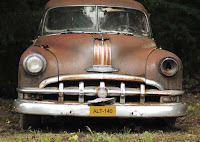
Morrissey included this image to 
illustrate his analysis of ALT-140
Tom Morrissey released a paper accusing the EPA of a “bait and switch” tactic by approving a method that allowed a higher particulate matter threshold and then revoking it.  Many manufacturers consider the underlying ASTM method sound but concede that the method could be tightened up to reduce its flexibility, rather than revoking it.  A manufacturer could still tighten up the ASTM method and try to get the EPA to accept it again, but that can be a long, expensive and uncertain process.  It is not uncommon for the EPA to revise methods and it is highly likely that ALT-140 will have to be revised.

The EPA approved the ASTM protocol for certifying wood stoves in 2018 after a lengthy and transparent 4-year development process by an ASTM committee dominated by industry insiders.  Many EPA and state officials were part of that process, but few had voting rights. Most were monitoring the process from the sidelines, and few had any background in test method development.  The EPA did not conduct any of its own tests to verify the method and NESCAUM was just building its own internal expertise.

 Within a few years, a majority of the stove models sold in the United States and Canada had been certified using the ASTM protocol, instead of the traditional Method 28 protocol that has been in place for decades.  The new ASTM method was being used to meet the stricter 2020 emission standards that required manufacturers to go from 4.5 grams of particulates an hour to 2.5 or less.  Currently, 90 out of 154 wood stoves were tested in EPA approved labs with the ASTM protocol. This rapid shift to cordwood testing began to draw scrutiny as reports emerged from a program run by the State of Alaska and NESCAUM.  Other reports emerged that some stoves did not have to change their design to cut their PM emissions in half, if they used the ASTM method. 

The intensive scrutiny from the state of Alaska found scores of deficiencies in most test reports, sending shock waves through the industry and the EPA offices that should have caught those errors.  In the process, regulators for the first time realized that the ASTM method allowed too much flexibility in key parts of the multi-day testing process.  Shortly after NESCAUM and the State of Alaska released details about the lack of EPA oversight of the stove certification program, the EPA’s Office of Inspector General announced it was conducting an internal investigation of the EPA’s certification program.  The results of that investigation will be made public later this year. 


Saturday, January 31, 2015

Flurry of Lobbying on Furnaces and Test Methods on Eve of New Stove Rules

The Office of Management and Budget
is in the Old Executive Office Building
next the White House.
Sources confirmed that the EPA is set to announce the new wood heater rules on Tuesday, February 3rd, the court ordered date.  After years of debate and anticipation about cost impacts and emission standards for stoves and outdoor boilers, the issue that has become the most contested on the eve of the announcement is warm air furnaces.

The Office of Management & Budget (OMB) cleared the rule on Feb. 1 "with changes" setting the stage for it to be signed by Administrator McCarthy and publicly released.  (Rules often take 2 - 4 weeks to appear in the Federal Register after they are publicly released by an agency.)

Even though the big decisions were all supposed to be made last fall, there has been intensive lobbying by stakeholders right up until Friday afternoon, January 30th - one business day ahead of the expected announcement. At least 2 groups met with the Obama Administration through the Office of Management & Budget on Friday, January 30th. During January, interest groups had at least six other meetings with OMB, lobbying for last minute changes to the proposed rule.

The patterns, attendees and paperwork left behind at OMB meetings this month offer a unique glimpse into some of the most contested areas of the rule. Thanks to sunshine laws that make records of meetings with government agencies public, the public can see a list of who met with the OMB in the weeks leading up to the announcement of the rule.

The short term fate of warm air furnaces (WAF) appears to be the top priority of the hearth industry because they represent the only product category where most existing models cannot be made or sold for a period of time after the rule becomes law and before they become certified. HPBA participated in two meetings in January along with their legal counsel and consultant, Jack Ferguson, and various of their member companies, including US Stove, Central Boiler, Hardy, Heatmor and Hawken Energy.

Jack Goldman, CEO of the Hearth Patio & Barbecue Association, said in a letter to EPA that this is "clearly a death sentence" to most of the companies making warm air furnaces. The EPA says that they do not have the legal authority under the Clean Air Act to delay implementation of emissions standards. Warm air furnaces are the only class of wood heaters that will be required to meet emission standards, but are still unregulated and have little ability to be tested and certified until the rule is announced.  US Stove Co may be the leading manufacturer of warm air furnaces in the U.S. and they often sell for less than $2,000 - less than most wood stoves.

Another hot topic that emerged in recent months is a dispute over the opposite end of the spectrum from unregulated hot air furnaces - high performance indoor boilers, often made in Europe, but now being made in the US. The EPA certified test labs refuse to use a test method for these appliances developed by DOE's Brookhaven National Lab and funded by NYSERDA, which captures some start-up emissions and uses cord wood instead of cribs. This is emblematic of a long simmering rift between test methods for outdoor wood boilers and European style indoor boilers with thermal storage, which offer the potential for cleaner combustion. NYSERDA and Econoburn, a NY manufacturer who makes these furnaces ask, "Who should really benefit? Those who innovate or those who refuse to?"

Other meetings in January with OMB and key stakeholders include one with about a dozen air quality agencies and states; with representatives of the Pellet Fuels Institute and a pellet testing facility; and with Intertek Test labs. Attendees in meeting between OMB and indoor and outdoor boilers and furnace manufacturers, and with NYSERDA and New York manufacturers are also in the public record.

If participants of the meetings provided OMB with documents, those documents are also public. Three key documents were provided this month, two from HPBA on a their legal argument (PDF) to delay compliance for hot air furnaces and a survey (PDF) commissioned by HPBA of HPBA member retailers on sell through trends. Four of the groups that met with OMB did not leave materials and there is as of now no record of the topics raised at those meeting. The only other document from the final month of intensive lobbying was from NYSERDA, NESCAUM and New York based companies (powerpoint).

Wednesday, August 20, 2014

New Paper Undermines Stove Industry Variability Study

A new paper written by Woodstock Soapstone, a New Hampshire wood stove manufacturer, calls a key stove industry study misleading and flawed.  The industry study says the inherent variability in wood stove testing suggests that the EPA cannot lower emissions standards below 4.5 grams an hour. 

The EPA posted the 7-page Woodstock Soapstone paper today as part of the official record that the EPA can use to determine the final rule due in February 2015.  It was written by the company’s CEO, Tom Morrissey, and says the industry variability study is “based on a data sample that is small, old and deeply flawed.” 

The late Paul Tiegs from OMNI
 test labs was a  prominent
critic of variability being caused
mainly by fuel.
Morrissey’s paper argues that variability has much more to do with whether a manufacturer is paying for emission certification than inherent variability in the combustion process. “When a manufacturer pays for certification testing, why are the results so much better than at any other time the same stove is tested?” Morrissey asks.  The Alliance for Green Heat believes, as the Morrissey paper also suggests, that test labs have a range of operating procedures allowed by the EPA that can result in variable emission results.  The late test lab icon Paul Tiegs, a founder of Omni test labs, became a champion of tightening testing protocols to achieve consistency in testing, and rejected the notion that variability was mainly caused by solid fuel, as the industry study argues.

If the EPA, states, and air agencies take the Woodstock Soapstone paper seriously, it could unhinge a major industry legal strategy in the fight against stricter air pollution limits.  Many officials in the EPA and state air agencies were already critical or at least skeptical of the industry variability study.  However, there has not been such a detailed critique from inside (or outside) the stove industry before this.

The variability study was produced and written by Rick Curkeet, a hearth products engineer at the Intertek testing lab and Robert Ferguson, a consultant who is now working for HPBA on the proposed EPA regulations.  It was released in October 2010 in anticipation of the proposed EPA regulations and is called the “EPA Wood Heater Test Method Variability Study: Analysis of Uncertainty, Repeatability and Reproducibility.” 

[Update: Rick Curkeet submitted a rebuttal to the Morrissey paper on Sept. 10 and it should be posted in the EPA docket soon. His 7-page rebuttal defends his original study and he concludes that he stands by his "analysis and conclusions."]  

The study showed that there is a very wide range of variability between proficiency testing and certification testing of wood stoves.  HPBA contends that “it is arbitrary for EPA to define ... a value that is lower than the precision range” of the test method.  HPBA says the minimum justifiable emission limit is 4.5 grams an hour, which Washington State adopted in 1995 and has since become a de facto national standard.  The variability study does not say who paid for it but HPBA confirmed that they provided partial funding and extensively vetted early drafts in late summer and early fall of 2010.

While Morrissey’s paper is by far the most direct critique of the variability study, most experts agree that the understanding of variability in wood stove testing can be assessed in many more ways than the data set used by this industry study.  For example, compliance test data could be used.  The EPA requires that all stoves be retested after they produce between 2,500 and 10,000 units.  This data, if it could be obtained from the EPA, would provide possibly a more important data set than the one the industry study chose to use.  Another data set will be from the “K list” changes.  Most stove manufacturers are re-certifying their stoves in advance of the new EPA rules so they will have 5 years before they have to test again.  HPBA has been encouraging its members to recertify stoves with “K list” changes as they are allowed to do by the EPA so that they won’t have to face higher testing costs that include cord wood testing and the uncertainty of a new test method that may be harder to pass.  HPBA had urged the EPA to grandfather all stoves under 4.5 grams an hour until 2020.  In any case, these retests will provide a new and better data set to assess variability.

Even if high variability could be established and confirmed using various approaches and data sets by independent experts, the poor relations between industry and state air agencies and other key players has undermined the ability of the two sides to agree on much.  At a November 2012 meeting in Minneapolis convened by NESCAUM, Greg Green of the EPA left the room and urged the two sides to talk more amongst themselves.  That strategy did not work and very little productive communication occurred for more than a year, a result that is likely not beneficial to the interests of HPBA industry members. 
Greg Green, Alison Simcox and Gil 
Wood of the EPA listening to testimony 
at the Boston hearing on the NSPS.

The hard line approach to critics is what prompted Morrissey to write his rebuttal of the variability study which begins as a defense of test reports of his own stoves that had been called into serious question by HPBA, Rick Curkeet and Roger Purinton at Jotul stoves in formal comments to the EPA.  Ironically, proof that catalytic or non-catallytic wood stoves can be consistently clean has become the biggest threat to the mainstream stove industry that HPBA represents.  This conflict between cleaner catalytic stoves and not-as-clean non-catalytic stoves became very heated and public in an EPA hearing in Boston on February 26, 2014.  But it was preceded by the release of study in 2013 by non-catalytic makers that dismissed the effectiveness of catalytic stoves to reduce wood smoke in real world settings.  If this public rift within HPBA had not happened, the stove industry would likely have made it through the EPA rule making with a much more unified voice. 

According to interviews with non-catalytic stove manufacturers, they felt it was vital for the EPA to understand that very low emission numbers from catalytic stoves in testing labs did not accurately reflect emissions in peoples’ homes as catalysts often clog, are not replaced, and are not properly engaged and used by consumers.  This issue has proved to be key because the EPA proposed emission limits of 1.3 grams an hour in 2020, a number that only a few catalytic stoves can appear to meet.  The company that has produced tests showing it can meet it is Woodstock Soapstone.

The Woodstock Soapstone defense of its test results and critique of the variability study comes at an important time when the EPA is finalizing its new wood heater standards, known as the New Source Performance Standards (NSPS).  It is believed that as of September or October, the EPA staff will have made most of their key decisions to send to Washington for review and approval by senior EPA officials and EPA lawyers.  Attempts between HPBA and air agencies to reach any agreements behind the scenes could still be fruitful, but time is running out.  And even if any agreements could be reached, the EPA may not adopt them.

The regulation and emission limits for outdoor wood boilers are also hotly contested but the testing variability for boilers is not a big issue, nor is it an issue with pellet stoves.  One solution, supported in part by the Alliance for Green Heat, would be to set separate emissions standards for pellet stoves, catalytic stoves and non-catalytic stoves, based on how clean each technology has become.  The argument for separating pellet stoves from cat and non-cat wood stoves may be even stronger because they use a different and very uniform fuel and are burned in a much more controlled combustion setting.  The Catalytic Hearth Caucus, of which Woodstock Soapstone is a member, strongly opposed separate emission limits for cat and non-cat stoves as well.  Ultimately, HPBA did not recommend setting separate emission limits that Jotul and other non-catalytic manufacturers initially appeared to support.  At this point in the process, the EPA may have already decided to set a single emission standard for these very different technologies, as they had proposed.

If senior leadership at EPA sees reliable data that at least one stove can consistently be tested under 1.3 grams an hour, they now have a better legal foundation to stick to their proposed 1.3 gram an hour standard.  And this is the nightmare scenario that HPBA and non-catalytic stove manufacturers fear.

Stove experts like Tom Morrissey, Robert Ferguson and Rick Curkeet are not only savvy about how stoves are tested, they are also skilled number crunchers.  Interpreting stove test data is like any other data set: it can yield very different conclusions based on what data is used, how it is interpreted and what statistical methods are applied.  The EPA in turn has to assess the reliability of each study and they can reasonably expect that their assessments will be challenged in court.

Tom Morrissey, top, 2nd from right and
the team that designed and built the
Ideal Steel for a 2013 competition
The stove that Tom Morrissey says is reliably and consistently less than 1.3 grams an hour was specifically built to win the 2013 Wood Stove Design Challenge, and it did. The Wood Stove Decathlon judged stove on 5 categories: emissions, efficiency, affordability, consumer appeal and innovation.  The Ideal Steel Hybrid is certified by the EPA at 1.0 grams an hour and gets 82% efficiency.  A second place winner, the Cape Cod, was a similar hybrid stove by Travis Industries that is certified at even lower  0.5 grams an hour.  Travis however does not say that they can reliably or consistently test at such low emission numbers, particularly with cord wood.  Woodstock Soapstone says testing shows that their Ideal Steel Hybrid is as clean with cord wood as it is with crib wood.

The Alliance for Green Heat promotes cleaner and more efficient residential wood heating to reduce our reliance on fossil fuels and help families affordably heat their homes.  Founded in 2009, the Alliance is based in Takoma Park, Maryland and is registered as a non-profit, 501c3 educational organization.


Friday, June 6, 2014

A Review of Heating Fuel Calculators: The best and the biased


 Updated on August 22, 2016 - Most people who heat with wood or pellets do so partly because it saves them money.  To demonstrate this, stove manufacturers and retailers often include heating fuel calculators on their websites so consumers can estimate their actual savings.  So far so good.  The problem is that unlike fossil fuel furnaces, wood and pellet stove efficiencies are reported in a variety of ways and most stove manufacturer calculators are biased.  If you are a consumer, this blog will help you find reliable calculators and reliable typical efficiencies of hearth products.

The Alliance for Green Heat reviewed scores of the most popular fuel calculators and found many of them to be hard to use and biased.  Not surprisingly, we found that most heat calculators on commercial sites were biased in favor of the fuel or the stove technology that they were connected with.  Of the dozens of calculators we reviewed, we recommend two that are good for calculating savings with wood and pellet heating appliances: the USDA Forest Service and Hearth.com. (We used to also recommend the Energy Information Agency calculator, but they removed it because of too many controversies over efficiency values, especially from the air source heat pump sector.)

 1.  Hearth.com,  is run by independent hearth professionals and uses efficiency values that are based on available data, extensive knowledge and experience. The efficiency values are on the conservative side, reflecting estimated real world efficiency over time.   Users enter their own price for cord wood or pellets and then can use the suggested efficiencies provided by Hearth.com.   Unlike the USDA calculator, hearth.com uses an estimated 60% efficiency for EPA certified non-cat stoves and for older, uncertified stoves they estimated between 25 and 50% efficiency, depending on if its air tight or not. They provide realistic estimate of 55 - 65% efficiency for uncertified pellet stoves and 65 - 80% for certified pellet stoves.

2. The newly updated USDA Forest Service calculator is notable for including estimated values for both commercial and residential wood and pellet systems.  Like hearth.com, it also provides more options for wood and pellet heaters, such as for uncertified (exempt) pellet stoves, so we recommend it over the EIA calculator. It also uses the outdated EPA default efficiencies, so we recommend using the updated efficiencies below, or the more conservative ones in hearth.com.

We think it’s important for heating fuel calculators to be transparent and show what stove efficiencies and fuel prices they are using, something many industry calculators usually don’t do.   While consumers can easily put in their own fuel costs, it is usually impossible for a consumer to put in an accurate efficiency level of a particular stove.  Few major US manufacturer provide a reliable efficiency of their stoves to their consumers that are clearly American (HHV), not European (LHV) heating values. Consumers should not rely on the efficiency numbers posted by manufacturers. We encourage consumers to use the average efficiency values listed below.

Many fuel calculators that focus on wood and pellet stoves do not disclose the efficiency numbers they use in the calculation so the consumer cannot know what the values and assumptions are.  Harman,  Quadrafire and Travis calculators are a good example of this.  HPBA and most industry calculators do not include a separate efficiency value for catalytic stoves, which have consistently higher efficiencies if they are used properly.

Data on Efficiency

There are some datasets based on standardized wood stoves testing.  Studies from Houck & Tiegs, Robert Ferguson, and OMNI labs are among the best sources available as of now (they are listed below).  Those studies and data sets indicate that non-cat stoves average between 68 and 72% efficient, significantly above the 63% EPA default efficiency that was set in the late 1980s.  There is little data on catalytic stoves, but we think the EPA default of 72% may not be too far off the mark.  We suspect the average today may be in the 75% range, and the most efficient ones that are listed on the EPA list average around 80%.

Theold   EPA default of 78% efficiency for pellet stoves is by far the most misunderstood, because that 78% only applied to EPA certified pellet stoves, not their less efficient cousins, the exempt pellet stoves.  We now know that the default efficiency was too high for both certified and uncertified pellet stoves.  New, certified pellet stoves average about 72% efficiency. An OMNI study found the average to be 68% and EPA tests referred to in paper by Jim Houck estimate 56% for exempt pellet stoves.  There is extensive misleading information about pellet stove efficiency not only from industry, but also from some US government sites.

Efficiencies of Phase 2 EPA qualified boilers range from 39% to 78%, with an average of 65% according to the EPA list of boilers.  An Intertek report cited a 55% average efficiency for Phase 2 boilers and the State of Maine gave them a 65% average.  Efficiencies for European pellet boilers certified to the EN303-5 standard are likely to be in the 75 – 85% range, although some that are oversized or without any thermal storage could be lower.

Non-cat wood stoves tend to be bunched between 65 - 75% efficiency.  However, pellet stoves can range from 45 - 80% efficiency.  Higher efficiency ones are more likely to be the EPA certified or the European pellet stoves.  Unlike non-cat and pellet stoves, catalytic stoves are much more likely to have reliable, actual efficiency levels posted on the EPA certified stove list and that is an excellent resource to select one of the highest efficiency catalytic stoves on the market today.

Wood stove efficiencies discussed here are derived from tests in strictly controlled lab settings.  For consumers, to get similar, optimal efficiencies it is vital to use seasoned wood (about 20% moisture content).

Our Recommendations

Our recommendations for heating fuel calculator efficiencies reflect values of a new appliance when it is being used with seasoned wood. After a year or two, appliances can lose 5 - 15 points in efficiency if they are not properly maintained, particularly boilers, pellet stoves and cat stoves which need periodic cleaning to maintain the average efficiencies listed below:  

EPA certified non-cat stove         70%
EPA certified cat stove                75%
EPA certified pellet stove            70%
Exempt/uncertified wood stove   54%
Exempt pellet stove                     65%
EPA Phase 2 outdoor boiler        65%
Exempt outdoor boiler                 45%
EN 303-5 pellet boiler                 80%

References

Ferguson, Robert. An Evaluation of Overall Efficiency for EPA Certified Non-catalytic Wood Heaters. Rep. Ferguson, Andors & Company, prepared for the Hearth Patio and Barbecue Association (HPBA)., 21 July 2011.

Houck, James E., and Paul Tiegs. Residential Wood Combustion Technology Review. Tech. no. EPA-600/R-98-174a. OMNI Environmental Services, prepared for the EPA Office of Research and Development, Inc., Dec. 1998. Web. .

Houck, James E. "Pick a Number, Any Number." Hearth & Home. N.p., Mar. 2009. Web. .

Li, Victor S. Conventional Woodstove Emission Factor Study. Rep. no. Study. Environmental Protection Operations Division,, n.d. Web. .

The Engineer’s Guide to Efficiency Requirements for Wood Burning Appliances. Rep. no. BPEE201-11. Intertek, n.d. Web. .
